• Skip to primary navigation
  • Skip to main content
  • Skip to primary sidebar

Carnegie Museum of Natural History

One of the Four Carnegie Museums of Pittsburgh

  • Visit
    • Buy Tickets
    • Visitor Information
    • Exhibitions
    • Events
    • Dining at the Museum
    • Celebrate at the Museum
    • Powdermill Nature Reserve
    • Event Venue Rental
  • Learn
    • Field Trips
    • Educator Information
    • Programs at the Museum
    • Bring the Museum to You
    • Guided Programs FAQ
    • Programs Online
    • Climate and Rural Systems Partnership
  • Research
    • Scientific Sections
    • Science Stories
    • Science Videos
    • Senior Science & Research Staff
    • Museum Library
    • Science Seminars
    • Scientific Publications
    • Specimen and Artifact Identification
  • About
    • Mission & Commitments
    • Directors Team
    • Museum History
  • Tickets
  • Give
  • Shop

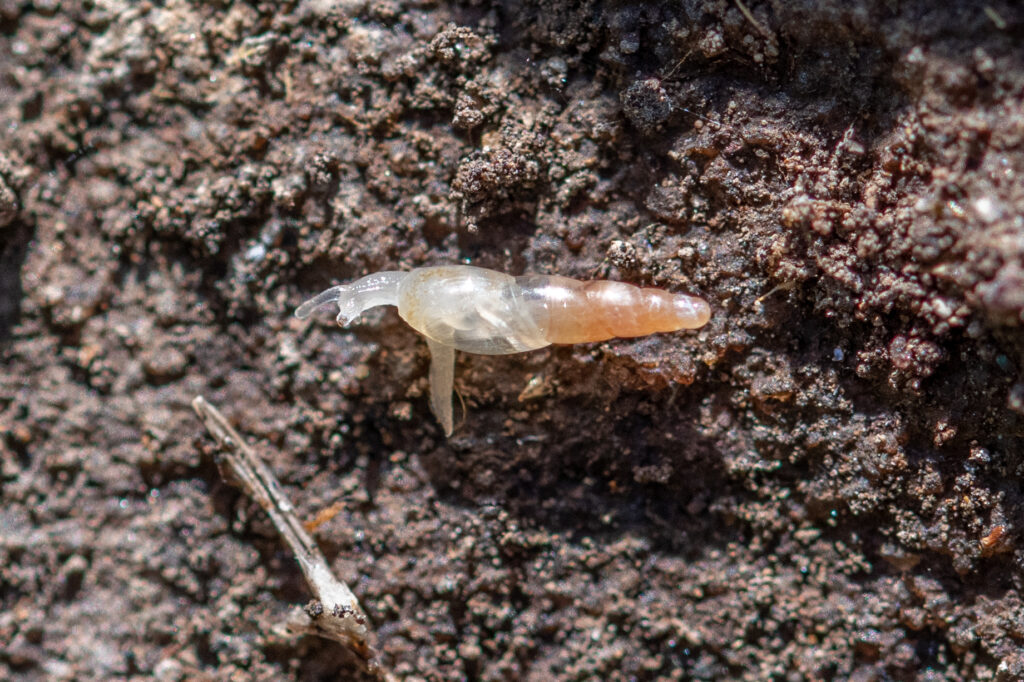
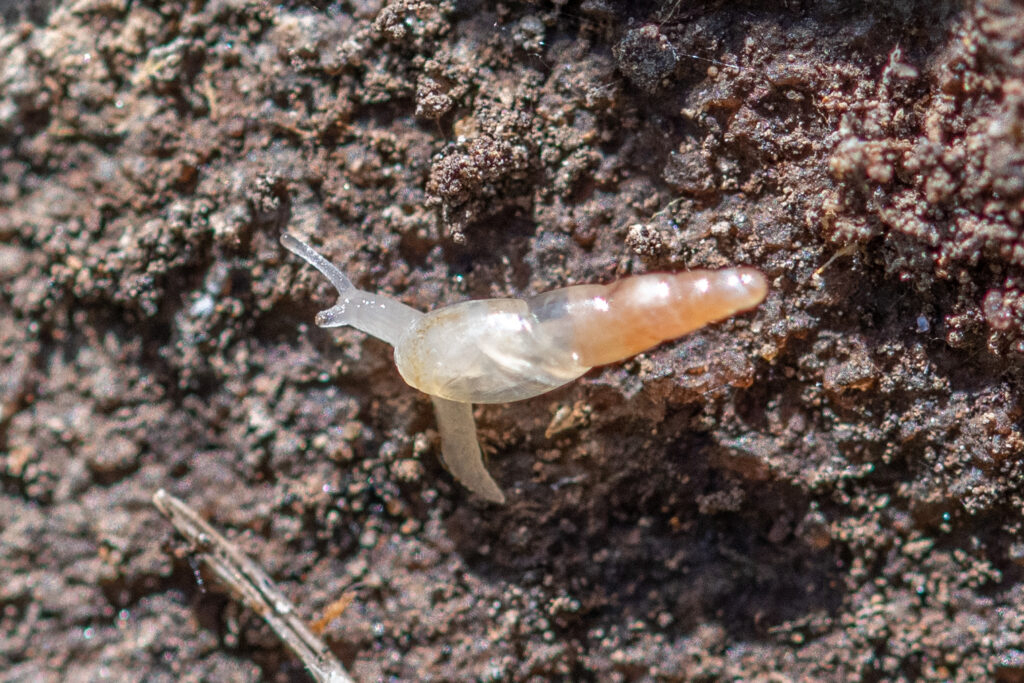
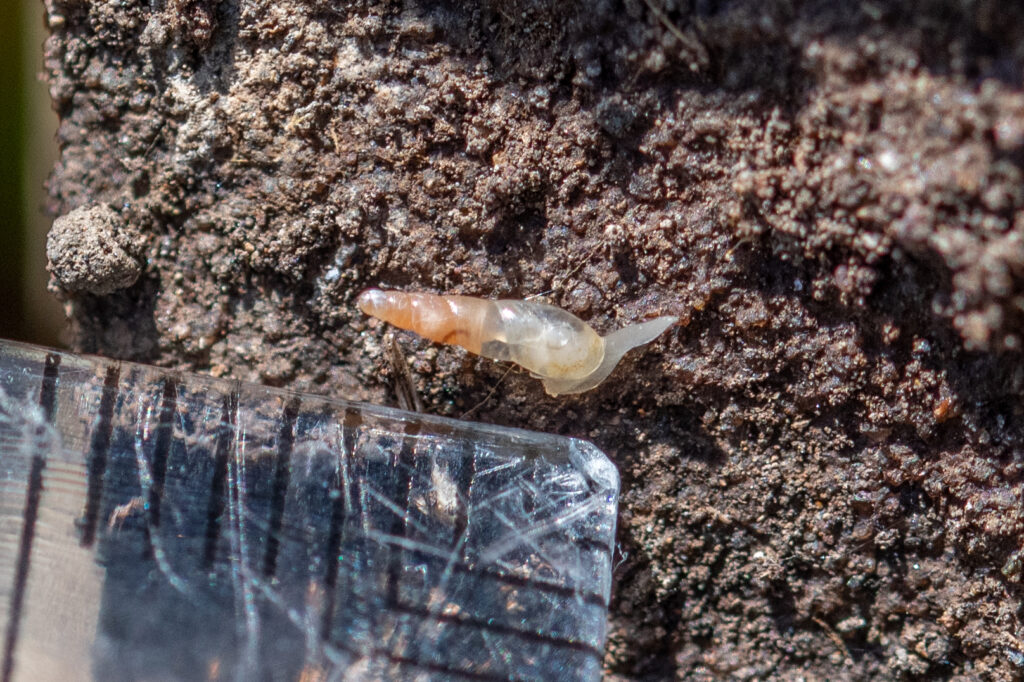
Cecilioides acicula

Image Usage Information

  • lizard–o_o
  • CC BY-NC 4.0 DEED
  • Additional information about this specimen

Family: Ferussaciidae

Common name: Blind Awlsnail

Discovery: Müller, 1774

Non-native

Identification

Width: 1.2 mm
Height: 4.5-5.5 mm
Whorls: 5+

Cecilioides acicula has an extremely long, narrow shell ending in a blunt apex. During the animal’s life the thin shell is glossy, transparent, and colorless; after death the shell becomes opaque and white. The columella comes to an abrupt end when it reaches the edge of the basal lip (Pilsbry 1948, Kerney and Cameron 1979).

Ecology

In the United States, C. acicula has only been reported as dead shells among drift debris along small creeks (Pilsbry 1948, NatureServe, 2012). In Europe it is known as a subterranean species that lives underneath root masses or deep in rock crevices, usually in calcium-rich environments (Kerney and Cameron 1979).

Taxonomy

Cecilioides acicula has also been known as Buccinum aciculums, Caecilianella acicula, and Caecilioides acicula.

Distribution

This snail is a native of Europe and has been introduced to parts of the Atlantic coast of the United States. It has only recently been discovered in Virginia (Örstan 2007), where it was found next to a creek in Shenandoah County.

Conservation

NatureServe Global Rank: G5, Secure.

sidebar

About

  • Mission & Commitments
  • Directors Team
  • Museum History

Get Involved

  • Volunteer
  • Membership
  • Carnegie Discoverers
  • Donate
  • Employment
  • Events

Bring a Group

  • Groups of 10 or More
  • Birthday Parties at the Museum
  • Field Trips

Powdermill

  • Powdermill Nature Reserve
  • Powdermill Field Trips
  • Powdermill Staff
  • Research at Powdermill

More Information

  • Image Permission Requests
  • Science Stories
  • Accessibility
  • Shopping Cart
  • Contact
  • Visitor Policies
One of the Four Carnegie Museums | © Carnegie Institute | Privacy Policy | Terms of Use | Accessibility
Rad works here logo