• Skip to primary navigation
  • Skip to main content
  • Skip to primary sidebar

Carnegie Museum of Natural History

One of the Four Carnegie Museums of Pittsburgh

  • Visit
    • Buy Tickets
    • Visitor Information
    • Exhibitions
    • Events
    • Dining at the Museum
    • Celebrate at the Museum
    • Powdermill Nature Reserve
    • Event Venue Rental
  • Learn
    • Field Trips
    • Educator Information
    • Programs at the Museum
    • Bring the Museum to You
    • Guided Programs FAQ
    • Programs Online
    • Climate and Rural Systems Partnership
  • Research
    • Scientific Sections
    • Science Stories
    • Science Videos
    • Senior Science & Research Staff
    • Museum Library
    • Science Seminars
    • Scientific Publications
    • Specimen and Artifact Identification
  • About
    • Mission & Commitments
    • Directors Team
    • Museum History
  • Tickets
  • Give
  • Shop

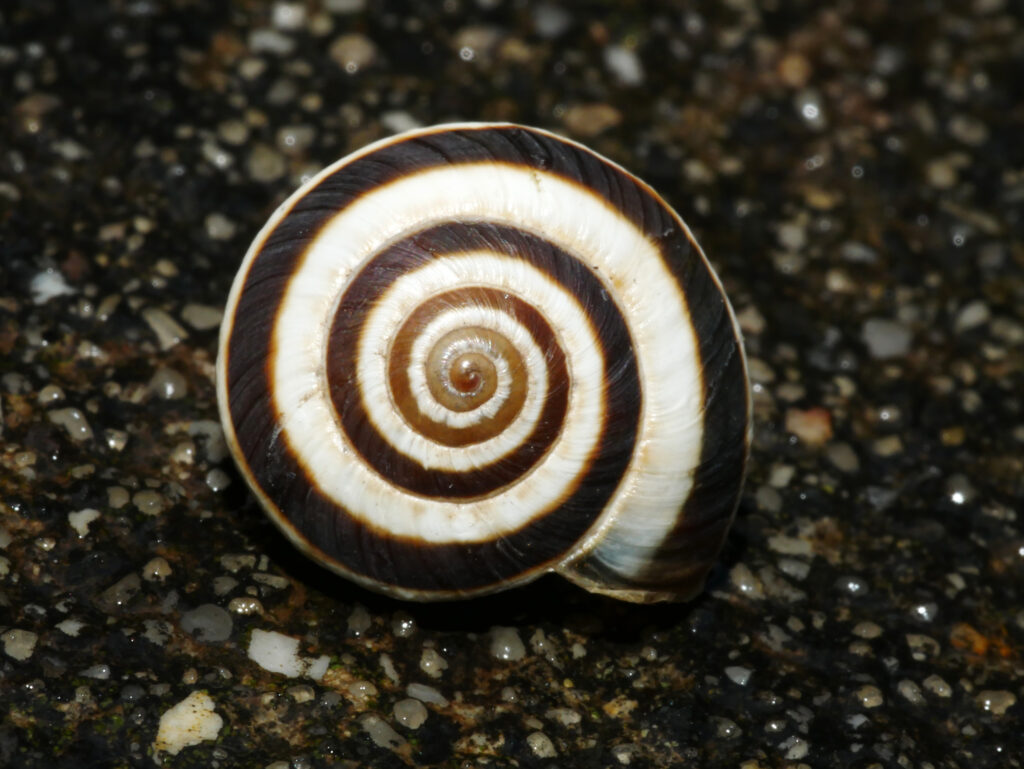
Cernuella virgata

Image Usage Information

  • Cathy Powers
  • CC BY-NC 4.0 DEED
  • Additional information about this specimen

Family: Geomitridae

Common name: Vineyard Snail

Discovery: da Costa, 1778

Non-native

Identification

Width: 8-25 mm
Height: 6-19 mm
Whorls: 5-7

The shell of Cernuella virgata is globe-shaped with a rounded aperture and a narrow umbilicus. Just inside the lip is a rib-like callus. The shell is decorated with a variable pattern of bands – one to several reddish-brown spiral bands on an off-white background, though they may be absent, or sometimes overlapped by series of radial bands or blotches.

Ecology

It prefers open, dry, calcium-rich habitats including sand dunes, grasslands, and hedgerows (Kerney & Cameron, 1979). It is a pest of fodder plants such as clover in fields, and may contaminate field crops or jam machinery (Godan, 1983). In South Australian fields C. virgata has two breeding periods each year, and spring abundance was mildly correlated with rainfall (Baker, 2012).

Taxonomy

Synonyms for C. virgata include Helicella virgata and Cernuella cisalpina.

Distribution

This animal is a Mediterranean and western European native, introduced to North America and Australia. Cernuella virgata was not recognized as a member of the North American fauna by Pilsbry (1939), nor as part of the Virginia fauna by Beetle (1973). However, Leslie Hubricht had found this animal in vacant lots in Norfolk as early as 1943, and it was also found by Tim Pearce on Chincoteague Island in 2000 (unpublished museum specimen records, FMNH; DMNH).

Conservation

NatureServe Global Rank: not ranked
NatureServe State Rank: not ranked

sidebar

About

  • Mission & Commitments
  • Directors Team
  • Museum History

Get Involved

  • Volunteer
  • Membership
  • Carnegie Discoverers
  • Donate
  • Employment
  • Events

Bring a Group

  • Groups of 10 or More
  • Birthday Parties at the Museum
  • Field Trips

Powdermill

  • Powdermill Nature Reserve
  • Powdermill Field Trips
  • Powdermill Staff
  • Research at Powdermill

More Information

  • Image Permission Requests
  • Science Stories
  • Accessibility
  • Shopping Cart
  • Contact
  • Visitor Policies
One of the Four Carnegie Museums | © Carnegie Institute | Privacy Policy | Terms of Use | Accessibility
Rad works here logo