• Skip to primary navigation
  • Skip to main content
  • Skip to primary sidebar

Carnegie Museum of Natural History

One of the Four Carnegie Museums of Pittsburgh

  • Visit
    • Buy Tickets
    • Visitor Information
    • Exhibitions
    • Events
    • Dining at the Museum
    • Celebrate at the Museum
    • Powdermill Nature Reserve
    • Event Venue Rental
  • Learn
    • Field Trips
    • Educator Information
    • Programs at the Museum
    • Bring the Museum to You
    • Guided Programs FAQ
    • Programs Online
    • Climate and Rural Systems Partnership
  • Research
    • Scientific Sections
    • Science Stories
    • Science Videos
    • Senior Science & Research Staff
    • Museum Library
    • Science Seminars
    • Scientific Publications
    • Specimen and Artifact Identification
  • About
    • Mission & Commitments
    • Directors Team
    • Museum History
  • Tickets
  • Give
  • Shop

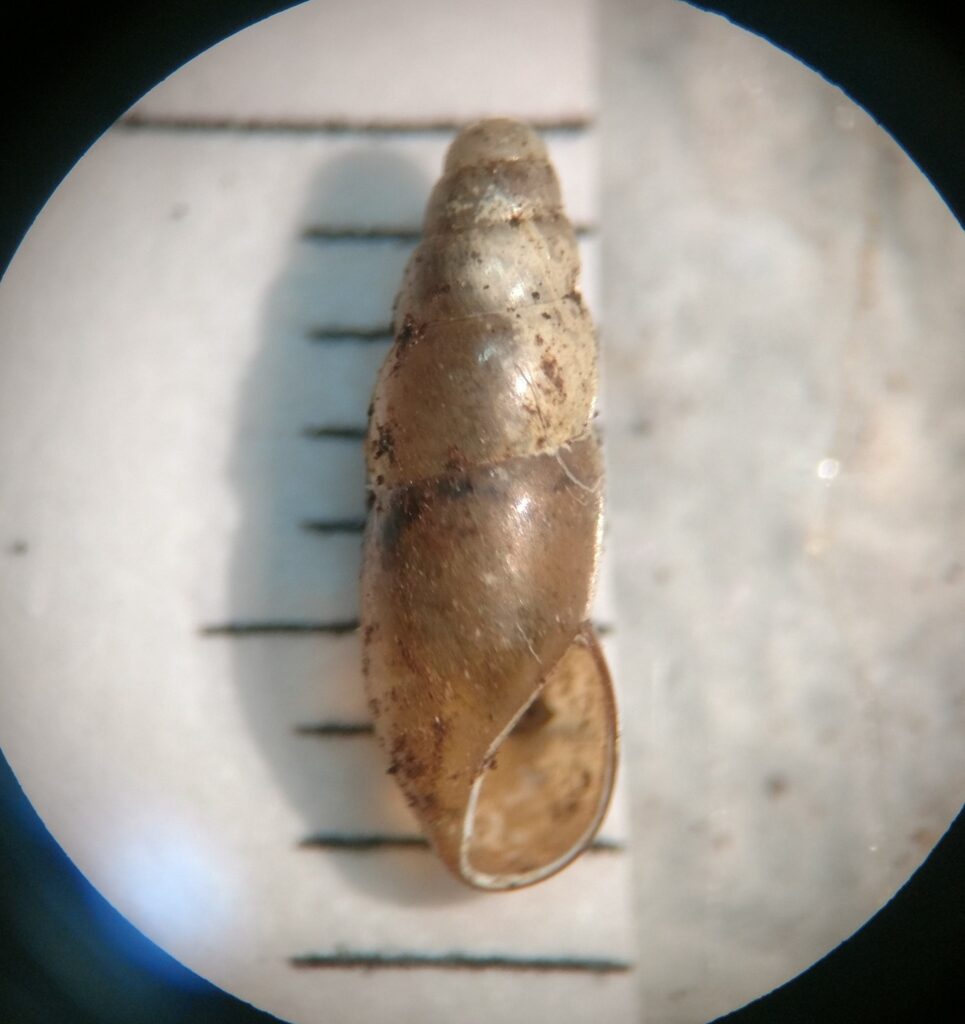
Cochlicopa morseana

measured shell of appalachian pillar snail, at just over 7mm long from aperture to spire

Image Usage Information

  • Barb Graham
  • CC BY-NC 4.0 DEED
  • Additional information about this specimen

Family: Cionellidae

Common name: Appalachian Pillar

Discovery: Doherty, 1878

Identification

Width: 2.3- 2.5 mm
Height: 6.6- 7.2 mm
Whorls: 5+

This animal’s shell is columnar, with impressed sutures and an obtuse apex. It may be colored yellow to dark amber. This shell stands out among leaf litter and other shells because of its glossy shine and elongate shape. It is taller and browner than Cochlicopa lubrica.

Ecology

Cochlicopa morseana is a forest animal that occurs in the leaf litter of cool, ma­ture woodlands.It tends to occur at low densities in deep leaf litter. In Tennessee it was found in leaf litter and log microhabitats (Coney et al, 1982).

Taxonomy

Cochlicopa morseana has also been known as Cionella morseana, Cochlicopa lubrica appalachicola, C. l. morseana, and Ferussacia subcylindrica.

Distribution

This is an Eastern species occurring from Québec south to northern Alabama and Arkansas. In Virginia it is found in the western highlands.

Conservation

NatureServe Global Rank: G5, Secure.

Author: Ken Hotopp, Meegan Winslow
Publication date: 9/2012

sidebar

About

  • Mission & Commitments
  • Directors Team
  • Museum History

Get Involved

  • Volunteer
  • Membership
  • Carnegie Discoverers
  • Donate
  • Employment
  • Events

Bring a Group

  • Groups of 10 or More
  • Birthday Parties at the Museum
  • Field Trips

Powdermill

  • Powdermill Nature Reserve
  • Powdermill Field Trips
  • Powdermill Staff
  • Research at Powdermill

More Information

  • Image Permission Requests
  • Science Stories
  • Accessibility
  • Shopping Cart
  • Contact
  • Visitor Policies
One of the Four Carnegie Museums | © Carnegie Institute | Privacy Policy | Terms of Use | Accessibility
Rad works here logo
