• Skip to primary navigation
  • Skip to main content
  • Skip to primary sidebar

Carnegie Museum of Natural History

One of the Four Carnegie Museums of Pittsburgh

  • Visit
    • Buy Tickets
    • Visitor Information
    • Exhibitions
    • Events
    • Dining at the Museum
    • Celebrate at the Museum
    • Powdermill Nature Reserve
    • Event Venue Rental
  • Learn
    • Field Trips
    • Educator Information
    • Programs at the Museum
    • Bring the Museum to You
    • Guided Programs FAQ
    • Programs Online
    • Climate and Rural Systems Partnership
  • Research
    • Scientific Sections
    • Science Stories
    • Science Videos
    • Senior Science & Research Staff
    • Museum Library
    • Science Seminars
    • Scientific Publications
    • Specimen and Artifact Identification
  • About
    • Mission & Commitments
    • Directors Team
    • Museum History
  • Tickets
  • Give
  • Shop

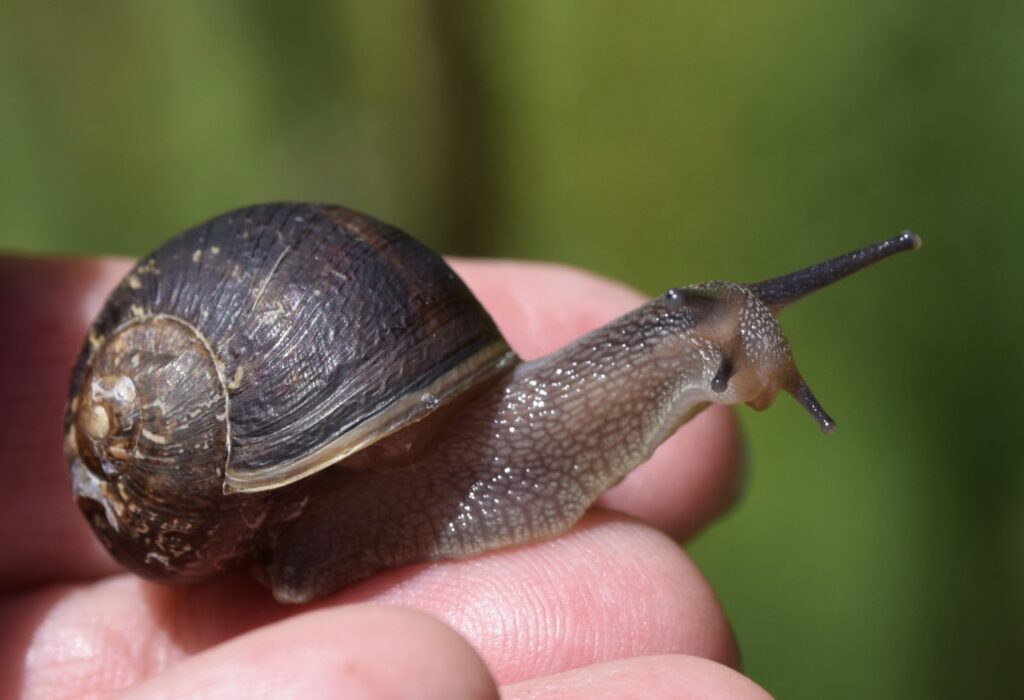
Cornu Aspersum

Image Usage Information

  • Chris Evers
  • CC BY-NC 4.0 DEED
  • Additional information about this specimen

Image Usage Information

  • qpezzolesi
  • CC BY-NC 4.0 DEED
  • Additional information about this specimen

Image Usage Information

  • NHMLA Community Science Program
  • CC BY-NC 4.0 DEED
  • Additional information about this specimen

Family: Helicidae

Common name: Brown Gardensnail

Discovery: Müller, 1774

Identification

Width: 25-35 mm
Height: 25-40 mm
Whorls: 4.5+

The shell of Cornu aspersum is globe-shaped with a reflected lip and a closed umbilicus. The shell is light brown or yellowish with a variable number of dark brown spiral bands that are often interrupted with lighter radial streaks or spots. The lip is whitish. The animal is a medium-brown or gray.

Ecology

Cornu asperum is a European and Mediterranean native found in almost any habitat, from parks and gardens to woodlands, scrub, grasslands, or dunes (Kerney & Cameron, 1979). Although it isa globally popular edible snail, it is also a pest of vegetables, grains, flowers, and fruit trees (in White-McLean, 2011). In North America it lives on rich soils in gardens and farmland (Pilsbry, 1939).

Taxonomy

Synonyms for Cornu aspersum include Helix aspersa, and Pomatia aspersa. In recent years, some workers have classified it in the genera Cantareus or Cryptomphalus.

Distribution

This animal is found on every continent except Antarctica. In North America, Pilsbry (1939) reported it only from locations in California, Louisiana and South Carolina, but NatureServe (2013) now reports C. aspersum from 16 states and two provinces. In Virginia specimens are reported from both ends of the state – Accomack, Chesapeake, and Wise Counties.

Cornu aspersum is an agricultural pest in several states, especially California.

Conservation

NatureServe Global Rank:G5, Secure.

sidebar

About

  • Mission & Commitments
  • Directors Team
  • Museum History

Get Involved

  • Volunteer
  • Membership
  • Carnegie Discoverers
  • Donate
  • Employment
  • Events

Bring a Group

  • Groups of 10 or More
  • Birthday Parties at the Museum
  • Field Trips

Powdermill

  • Powdermill Nature Reserve
  • Powdermill Field Trips
  • Powdermill Staff
  • Research at Powdermill

More Information

  • Image Permission Requests
  • Science Stories
  • Accessibility
  • Shopping Cart
  • Contact
  • Visitor Policies
One of the Four Carnegie Museums | © Carnegie Institute | Privacy Policy | Terms of Use | Accessibility
Rad works here logo