• Skip to primary navigation
  • Skip to main content
  • Skip to primary sidebar

Carnegie Museum of Natural History

One of the Four Carnegie Museums of Pittsburgh

  • Visit
    • Buy Tickets
    • Visitor Information
    • Exhibitions
    • Events
    • Dining at the Museum
    • Celebrate at the Museum
    • Powdermill Nature Reserve
    • Event Venue Rental
    • Gift Cards
  • Learn
    • Field Trips
    • Educator Information
    • Programs at the Museum
    • Bring the Museum to You
    • Guided Programs FAQ
    • Programs Online
    • Climate and Rural Systems Partnership
  • Research
    • Scientific Sections
    • Science Stories
    • Science Videos
    • Senior Science & Research Staff
    • Museum Library
    • Science Seminars
    • Scientific Publications
    • Specimen and Artifact Identification
  • About
    • Mission & Commitments
    • Directors Team
    • Museum History
  • Tickets
  • Give
  • Shop

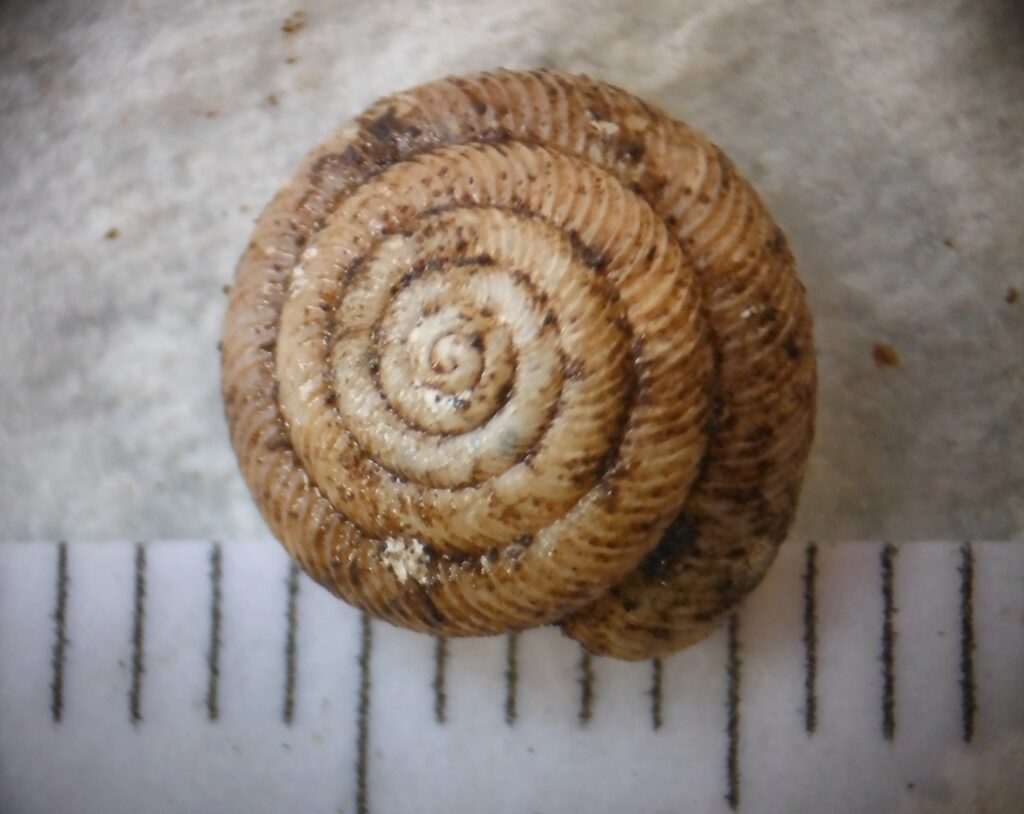
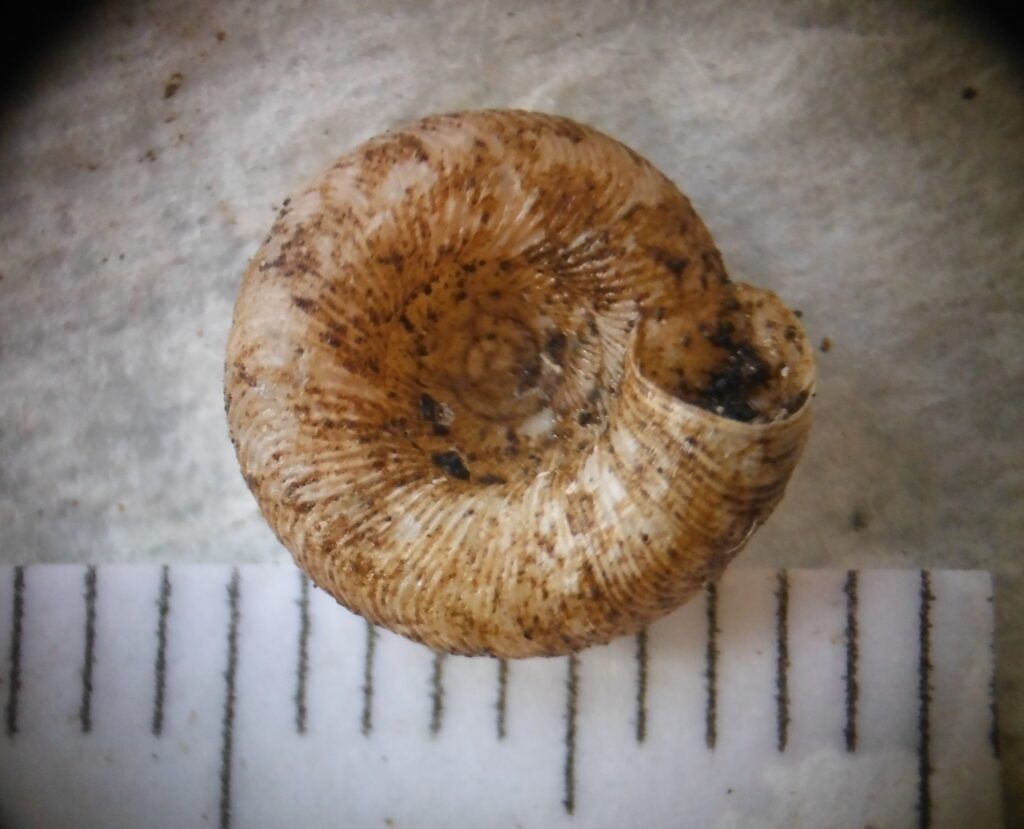
Discus patulus

Image Usage Information

  • Barb Graham
  • CC BY-NC 4.0 DEED
  • Additional information about this specimen

Family: Discidae

Common name: Domed Disc

Discovery: Deshayes, 1830

Identification

Width: 8.0-8.9 mm
Height: 3.3–4.0 mm
Whorls: 5

The shell of this disk is mostly flattened, with rounded, tight whorls, and a tiny basal lamella. It is notable for its very wide umbilicus and shallow-domed apex. It is usually light reddish-brown in color, with coarse but regular radial ribbing.

Ecology

This species is sometimes found in deep layers of moist leaves, but more commonly on stumps and old logs in mature or late-successional forests. It is often patchy in distribution, with colonies around rotting woody debris. In Tennessee, its occurrence was correlated with increasing slopes, damper soils, and higher soil pH (Coney et al, 1982).

Taxonomy

Synonyms for D. patulus are: Discus patulus angulatus, D. p. carinatus, Helix patula, H. perspectiva, Goniodiscus patula, Gonyodiscus perspectivus, Patula perspectiva, and Pyramidula (Gonyodiscus) perspectiva.

Distribution

This snail is found very widely across most of the eastern US and southern Ontario, though it does not enter Maine or Florida. Its range in Virginia covers the western, central, and south-western parts of the state.

Conservation

NatureServe Global Rank: G5

sidebar

About

  • Mission & Commitments
  • Directors Team
  • Museum History

Get Involved

  • Volunteer
  • Membership
  • Carnegie Discoverers
  • Donate
  • Employment
  • Events

Bring a Group

  • Groups of 10 or More
  • Birthday Parties at the Museum
  • Field Trips

Powdermill

  • Powdermill Nature Reserve
  • Powdermill Field Trips
  • Powdermill Staff
  • Research at Powdermill

More Information

  • Image Permission Requests
  • Science Stories
  • Accessibility
  • Shopping Cart
  • Contact
  • Visitor Policies
One of the Four Carnegie Museums | © Carnegie Institute | Privacy Policy | Terms of Use | Accessibility
Rad works here logo