• Skip to primary navigation
  • Skip to main content
  • Skip to primary sidebar

Carnegie Museum of Natural History

One of the Four Carnegie Museums of Pittsburgh

  • Visit
    • Buy Tickets
    • Visitor Information
    • Exhibitions
    • Events
    • Dining at the Museum
    • Celebrate at the Museum
    • Powdermill Nature Reserve
    • Event Venue Rental
  • Learn
    • Field Trips
    • Educator Information
    • Programs at the Museum
    • Bring the Museum to You
    • Guided Programs FAQ
    • Programs Online
    • Climate and Rural Systems Partnership
  • Research
    • Scientific Sections
    • Science Stories
    • Science Videos
    • Senior Science & Research Staff
    • Museum Library
    • Science Seminars
    • Scientific Publications
    • Specimen and Artifact Identification
  • About
    • Mission & Commitments
    • Directors Team
    • Museum History
  • Tickets
  • Give
  • Shop

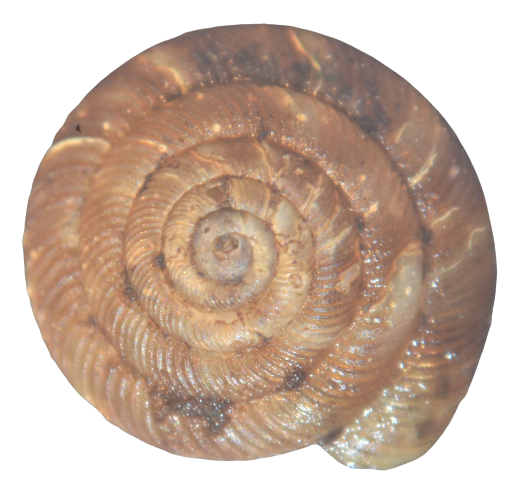
Discus rotundatus

Image Usage Information

  • Nataël Adam
  • CC BY-NC 4.0 DEED
  • Additional information about this specimen

Family: Discidae

Common name: Rotund Disk

Discovery: Müller, 1774

Non-native

Identification

Width: 5.5-7.0 mm
Height: 2.5-3.0 mm
Whorls: 5.5-6.0

The shell of this species is brown with reddish radial stripes or spots. The aperture is simple, the umbilicus open, and the transverse ribs somewhat coarse as is typical of many disk snails. The shell periphery is mildly keeled. The animal is blue-gray, darker above.

Ecology

Discus rotundatus lives in damp habitats – in woods, among herbaceous vegetation, under leaf litter and rocks, and in trash piles (Kerney and Cameron, 1979). In Poland, D. rotundatus reaches maturity in its second or third year and lives 2.5-3.5 years (Kuźnik-Kowalska, 1999). Up to 11 eggs are laid in a clutch, with peak egg-laying season in July and August (Kuźnik-Kowalska, 1999).

Taxonomy

Synonyms are Helix rotundata, Pyramidula rotundata (Pilsbry, 1948).

Distribution

Discus rotundatus is a central and western European native that has been spread to coastal and urban habitats in North America.

Conservation

NatureServe Global Rank: G5, Secure.

sidebar

About

  • Mission & Commitments
  • Directors Team
  • Museum History

Get Involved

  • Volunteer
  • Membership
  • Carnegie Discoverers
  • Donate
  • Employment
  • Events

Bring a Group

  • Groups of 10 or More
  • Birthday Parties at the Museum
  • Field Trips

Powdermill

  • Powdermill Nature Reserve
  • Powdermill Field Trips
  • Powdermill Staff
  • Research at Powdermill

More Information

  • Image Permission Requests
  • Science Stories
  • Accessibility
  • Shopping Cart
  • Contact
  • Visitor Policies
One of the Four Carnegie Museums | © Carnegie Institute | Privacy Policy | Terms of Use | Accessibility
Rad works here logo