• Skip to primary navigation
  • Skip to main content
  • Skip to primary sidebar

Carnegie Museum of Natural History

One of the Four Carnegie Museums of Pittsburgh

  • Visit
    • Buy Tickets
    • Visitor Information
    • Exhibitions
    • Events
    • Dining at the Museum
    • Celebrate at the Museum
    • Powdermill Nature Reserve
    • Event Venue Rental
  • Learn
    • Field Trips
    • Educator Information
    • Programs at the Museum
    • Bring the Museum to You
    • Guided Programs FAQ
    • Programs Online
    • Climate and Rural Systems Partnership
  • Research
    • Scientific Sections
    • Science Stories
    • Science Videos
    • Senior Science & Research Staff
    • Museum Library
    • Science Seminars
    • Scientific Publications
    • Specimen and Artifact Identification
  • About
    • Mission & Commitments
    • Directors Team
    • Museum History
  • Tickets
  • Give
  • Shop

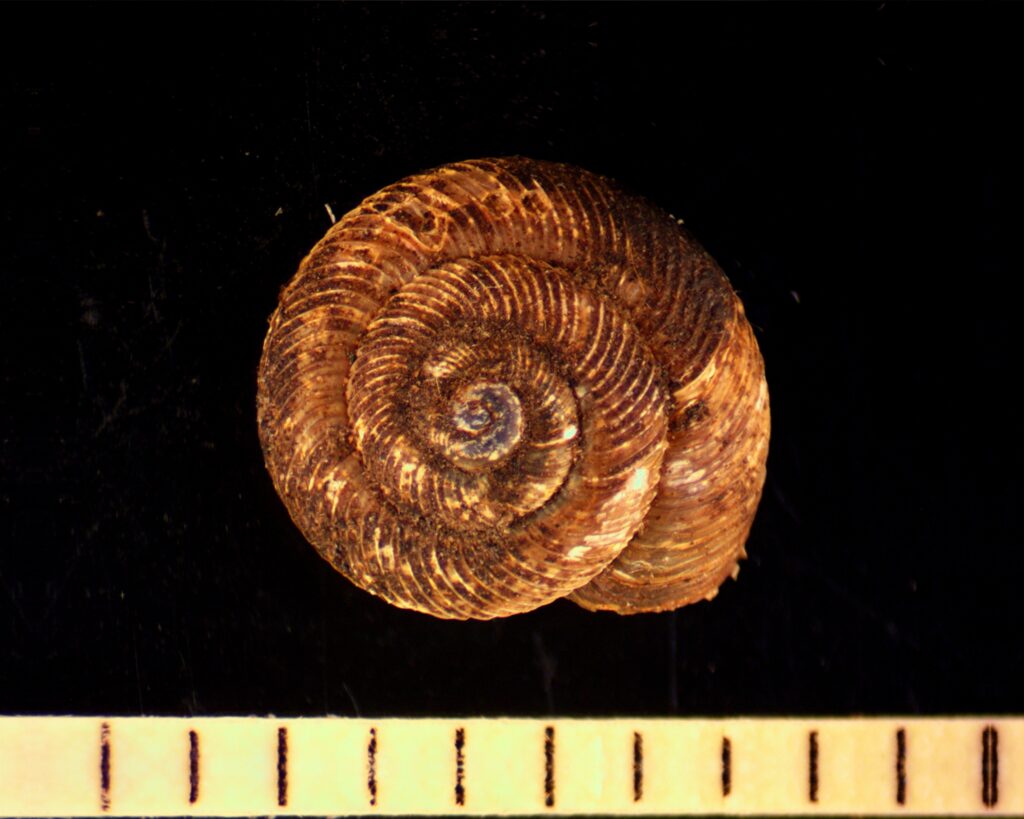
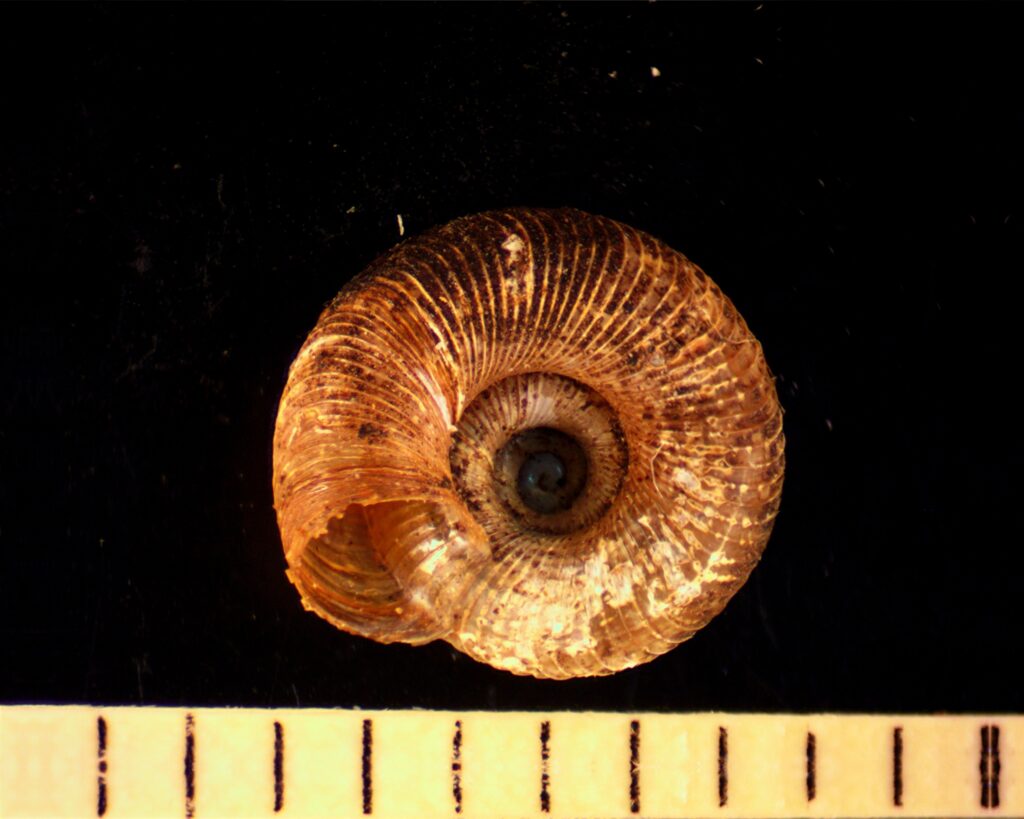
Discus whitneyi

Image Usage Information

  • Ben Hutchins
  • CC BY-NC 4.0 DEED
  • Additional information about this specimen

Family: Discidae

Common name: Forest Disc

Discovery: Newcomb, 1864

Identification

Width: 5.0-6.7 mm
Height: 2.7-3.6 mm
Whorls: 4

The body whorl and aperture of this disk’s shell are quite round, and the apex is mildly convex. The umbilicus is open and, though not particularly wide, does show all the whorls. Radial ribs adorn this shell’s surface. Discus whitneyi and D. catskillensis are similar and are considered by some authors to be “transitional” to each other (e.g. Pilsbry, 1948).

Ecology

Discus whitneyi likes moisture and is often found in springs, seeps, or large wetlands. It can also be found in low-lying meadows, roadsides, and near marshes, or even in urban areas. Its distribution at the local scale can be quite disjunct or patchy.

Taxonomy

Synonyms for D. whitneyi are D. cronkhitei, D. cronkhitei anthonyi, D. cronkhitei cronkhitei, Helix cronkhitei, H. striatella, Gonyodiscus cronkhitei, G. cronkhitei, Patula striatella, P. striatella form albina, Pyramidula cronkhitei, P. cronkhitei anthonyi, P. striatella var. alba, and P. striatella var. albino. Nekola (2008) suggests that the appropriate specific epithet should be “cronkhitei.”

Distribution

Discus whitneyi occurs all through the north-central and north-eastern parts of the United States and into Canada. It shows up in western Virginia and in the south-western corner of the state.

Conservation

NatureServe Global Rank: G5

sidebar

About

  • Mission & Commitments
  • Directors Team
  • Museum History

Get Involved

  • Volunteer
  • Membership
  • Carnegie Discoverers
  • Donate
  • Employment
  • Events

Bring a Group

  • Groups of 10 or More
  • Birthday Parties at the Museum
  • Field Trips

Powdermill

  • Powdermill Nature Reserve
  • Powdermill Field Trips
  • Powdermill Staff
  • Research at Powdermill

More Information

  • Image Permission Requests
  • Science Stories
  • Accessibility
  • Shopping Cart
  • Contact
  • Visitor Policies
One of the Four Carnegie Museums | © Carnegie Institute | Privacy Policy | Terms of Use | Accessibility
Rad works here logo