• Skip to primary navigation
  • Skip to main content
  • Skip to primary sidebar

Carnegie Museum of Natural History

One of the Four Carnegie Museums of Pittsburgh

  • Visit
    • Buy Tickets
    • Visitor Information
    • Exhibitions
    • Events
    • Dining at the Museum
    • Celebrate at the Museum
    • Powdermill Nature Reserve
    • Event Venue Rental
  • Learn
    • Field Trips
    • Educator Information
    • Programs at the Museum
    • Bring the Museum to You
    • Guided Programs FAQ
    • Programs Online
    • Climate and Rural Systems Partnership
  • Research
    • Scientific Sections
    • Science Stories
    • Science Videos
    • Senior Science & Research Staff
    • Museum Library
    • Science Seminars
    • Scientific Publications
    • Specimen and Artifact Identification
  • About
    • Mission & Commitments
    • Directors Team
    • Museum History
  • Tickets
  • Give
  • Shop

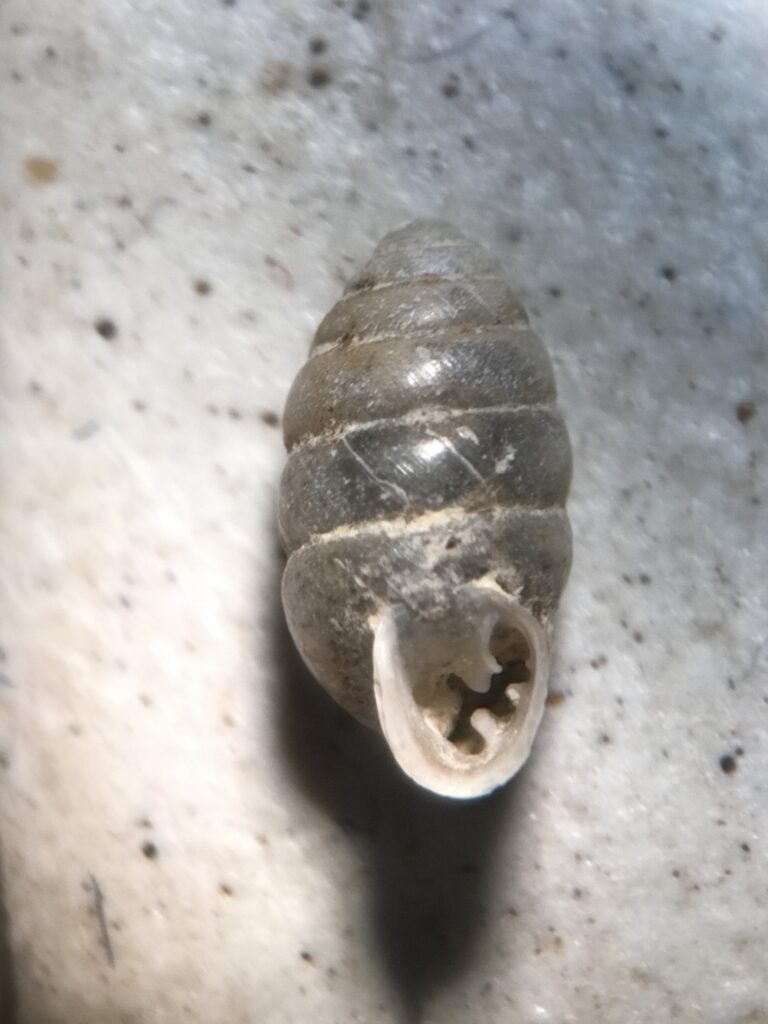
Gastrocopta armifera

Image Usage Information

  • David Lang
  • CC BY-NC 4.0 DEED
  • Additional information about this specimen

Family: Gastrocoptidae

Common name: Armed Snaggletooth

Discovery: Say, 1821

Identification

Height: ~4.7 mm
Width: ~2.5 mm
Whorls: 7

Gastrocopta armifera is the largest member of its genus.  Along with Gastrocopta clappi and Gastrocopta similis, these three species are distinguished from all other pupa-shaped land snails in Virginia by possessing a clear to white shell more than 3.5mm tall. Gastrocopta armifera is most easily separated from G. clappi and G. similis by the shape of the columellar lamella (on the left side of the aperture), which in G. armifera is roughly pyramidal in shape (Hubricht, 1972).

Ecology

This calcium-loving species is found in leaf litter accumulations on bedrock glades, rich rocky woodlands, and floodplain forests. Shells may be encountered on small limestone ledges or at the foot of limestone outcrops.

Taxonomy

Synonyms for this animal’s name include Pupa armifera and Bifidaria armifera.

Distribution

Gastrocopta armifera ranges from the Ozarks and southeastern Minnesota, east to the Piedmont of Georgia, the coastal plain of Virginia, and the Lake Champlain valley of northern Vermont (Nekola & Coles, 2010). In Virginia this species has been reported across the entire state.

Conservation

NatureServe Global Rank: G5, Secure.

sidebar

About

  • Mission & Commitments
  • Directors Team
  • Museum History

Get Involved

  • Volunteer
  • Membership
  • Carnegie Discoverers
  • Donate
  • Employment
  • Events

Bring a Group

  • Groups of 10 or More
  • Birthday Parties at the Museum
  • Field Trips

Powdermill

  • Powdermill Nature Reserve
  • Powdermill Field Trips
  • Powdermill Staff
  • Research at Powdermill

More Information

  • Image Permission Requests
  • Science Stories
  • Accessibility
  • Shopping Cart
  • Contact
  • Visitor Policies
One of the Four Carnegie Museums | © Carnegie Institute | Privacy Policy | Terms of Use | Accessibility
Rad works here logo