• Skip to primary navigation
  • Skip to main content
  • Skip to primary sidebar

Carnegie Museum of Natural History

One of the Four Carnegie Museums of Pittsburgh

  • Visit
    • Buy Tickets
    • Visitor Information
    • Exhibitions
    • Events
    • Dining at the Museum
    • Celebrate at the Museum
    • Powdermill Nature Reserve
    • Event Venue Rental
  • Learn
    • Field Trips
    • Educator Information
    • Programs at the Museum
    • Bring the Museum to You
    • Guided Programs FAQ
    • Programs Online
    • Climate and Rural Systems Partnership
  • Research
    • Scientific Sections
    • Science Stories
    • Science Videos
    • Senior Science & Research Staff
    • Museum Library
    • Science Seminars
    • Scientific Publications
    • Specimen and Artifact Identification
  • About
    • Mission & Commitments
    • Directors Team
    • Museum History
  • Tickets
  • Give
  • Shop

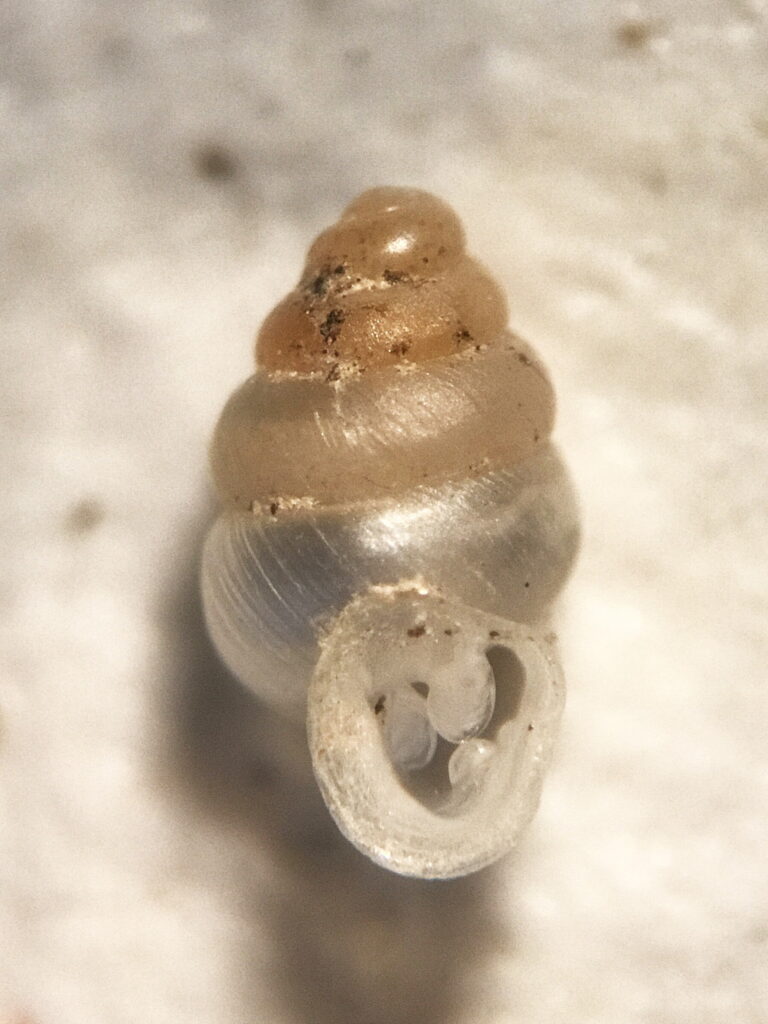
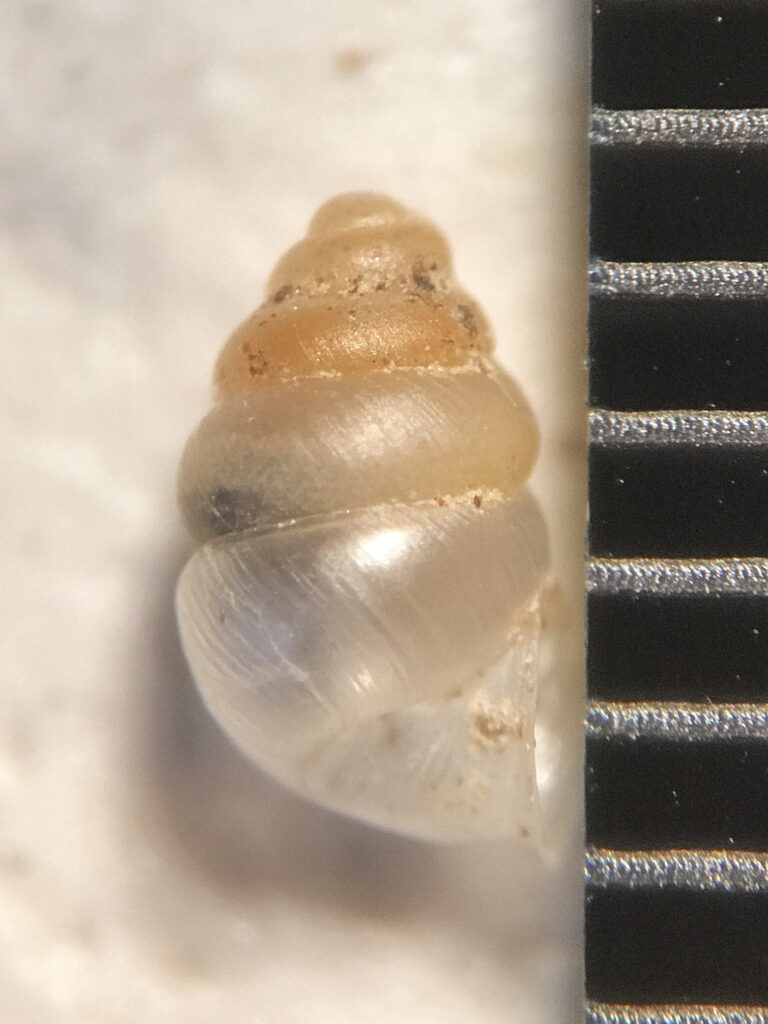
Gastrocopta contracta

Image Usage Information

  • David Lang
  • CC BY-NC 4.0 DEED
  • Additional information about this specimen

Family: Gastrocoptidae

Common name: Bottleneck Snaggletooth

Discovery: Say, 1822

Identification

Height: ~2.3 mm
Width: ~1.2 mm
Whorls: 5

This animal has a whitish, cone-shaped shell with a fine radial microsculpture. The final whorl narrows before it expands widely at the aperture, which is crowded with five irregular lamellae. This species is easily distinguished from all other eastern Gastrocopta species by its strongly conical shell and folded, sheet-like parietal lamella in the center of the aperture (Nekola & Coles, 2010).

Ecology

Gastrocopta contracta occurs in leaf litter and under logs in a wide range of habitats, ranging from mesic to wet, and forested to open. Although occurring in higher numbers in base-rich sites, it is also frequently present in base-poor locations (Nekola & Coles, 2010). In Tennessee this species was found in a wide variety of habitats but had an affinity for neutral soils and late stages of forest succession (Coney et al., 1982).

Taxonomy

Synonyms for this animal’s name include Pupa contracta, P. deltostoma, P. nebraskana (Pilsbry, 1948), Gastrocopta contracta climeana.

Distribution

Gastrocopta contracta is one of the most wide-spread eastern North American pupillids (pupa-shaped shells), ranging from southeastern New Mexico and southern Manitoba east to northern Maine and the Florida Keys. It also extends south to Cuba, Jamaica and Veracruz in Mexico (Pilsbry, 1948).

In Virginia this species has been reported from many parts of the state. Its apparent absence from the Piedmont is almost certainly due to under-reporting.

Conservation

NatureServe Global Rank: G5, Secure.

sidebar

About

  • Mission & Commitments
  • Directors Team
  • Museum History

Get Involved

  • Volunteer
  • Membership
  • Carnegie Discoverers
  • Donate
  • Employment
  • Events

Bring a Group

  • Groups of 10 or More
  • Birthday Parties at the Museum
  • Field Trips

Powdermill

  • Powdermill Nature Reserve
  • Powdermill Field Trips
  • Powdermill Staff
  • Research at Powdermill

More Information

  • Image Permission Requests
  • Science Stories
  • Accessibility
  • Shopping Cart
  • Contact
  • Visitor Policies
One of the Four Carnegie Museums | © Carnegie Institute | Privacy Policy | Terms of Use | Accessibility
Rad works here logo