Image Usage Information
Family: Gastrodontidae
Common name: Carved Glyph
Discovery: Say, 1823
Identification
Width: 4.7-5.7 mm
Height: 2.4-3.0 mm
Whorls: 4.3-4.7
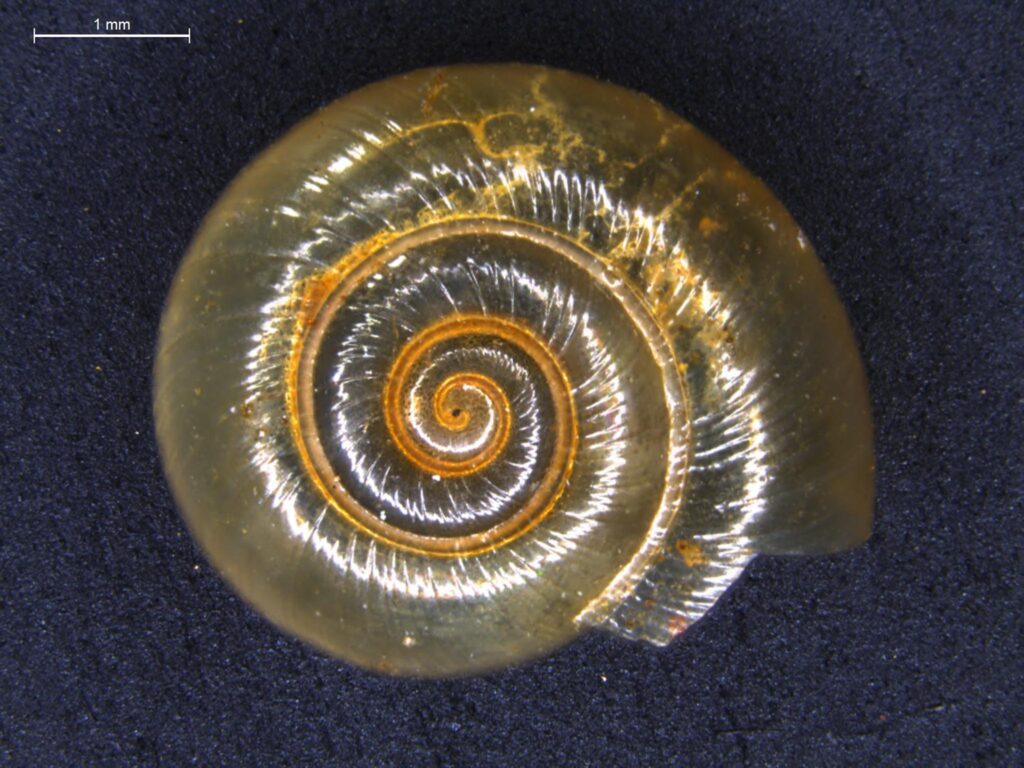
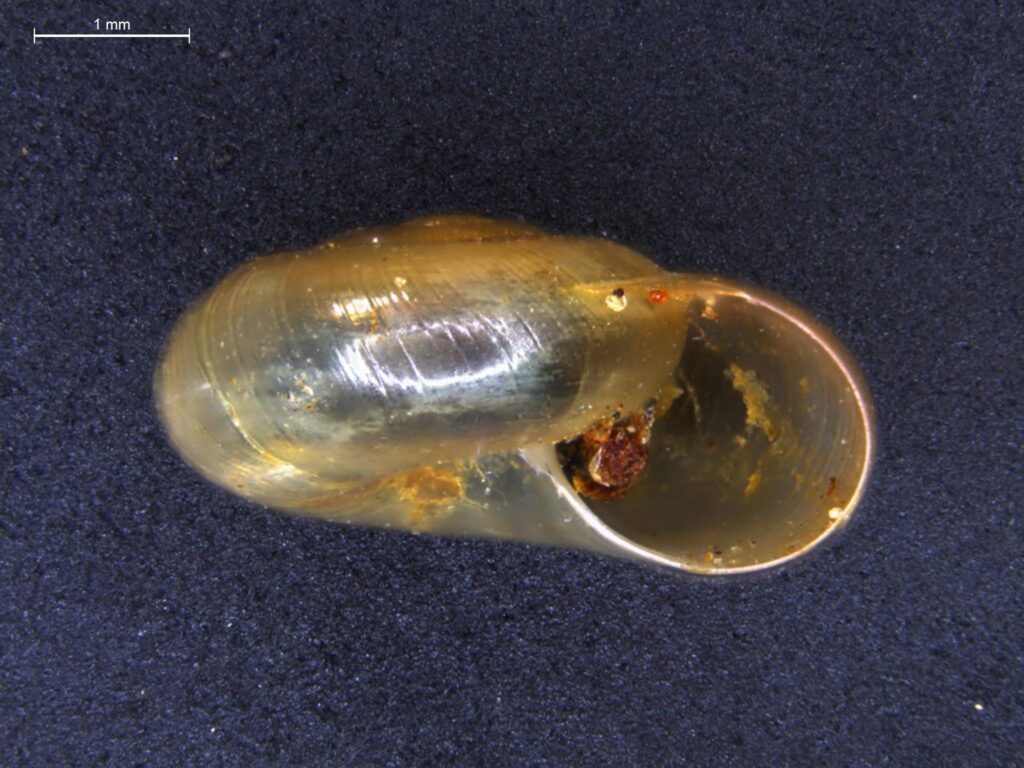
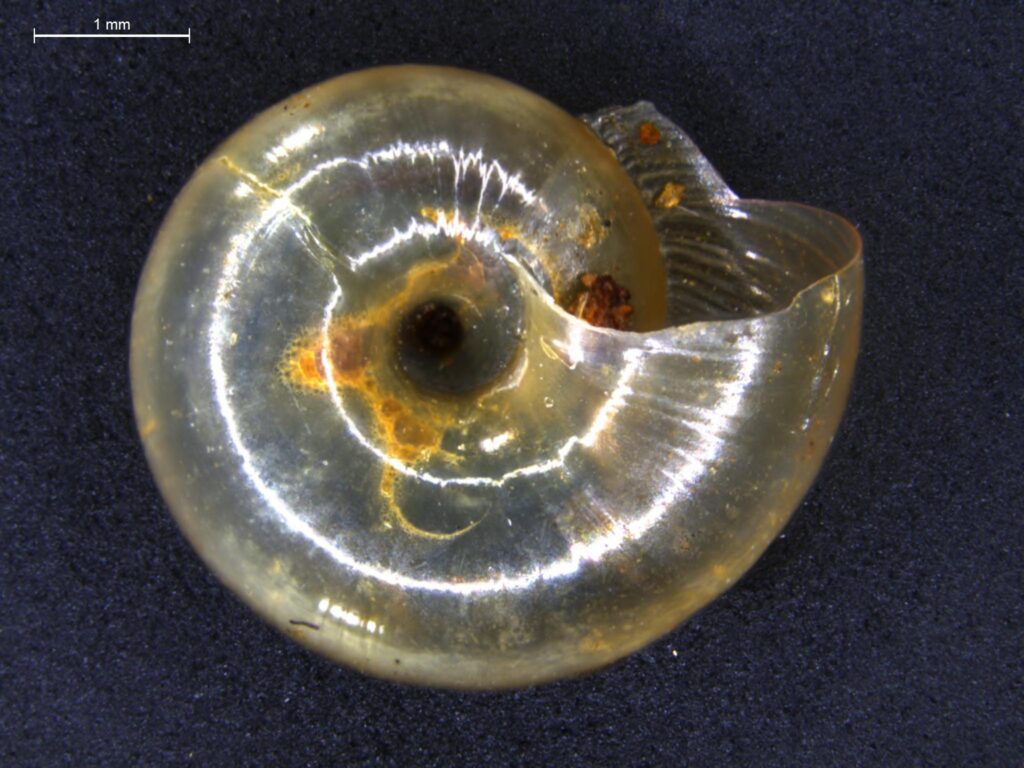
Glyphyalinia indentata is a small to average sized glyph with a depressed shell that has rapidly expanding whorls. The slightly expanding lip at the inner edge of the aperture nearly fills the umbilicus leaving a small perforation that is less than one twenty-fifth of the shell diameter. The shell is translucent pale-brown and sculptured with widely and uniformly spaced impressed lines that parallel the nearly imperceptible growth lines. This sculpture is strong apically and continues to the umbilicus. Spiral engraved lines can often be seen under high magnification.
The dorsal surface of this animal is pearl –grey to blue-grey, fading to white on the sole of the foot. Internally, the epiphallus joins the penis sub-apically and the apical chamber of the penis contains dense papillae that are not thorn-shaped.
Ecology
Glyphyalinia indentata is one of the most common species of leaf litter-inhabiting snails in Virginia. This species is usually found in leaf litter in forests but it is also found in open meadows and anthropogenic habitats including, abandoned lots, roadsides and railways. This species is tolerant of acidic, neutral and basic soils (Nekola, 2010).
Taxonomy
Hubricht (1985) reported variation in genital anatomy within Glyphyalinia indentata and he suggested the species is a complex of several species with similar shells. Therefore, our current understanding of this species’ range and habitat requirements are probably far too general. Accurate conservation rank assessments must await taxonomic study and clarification of the complex.
This animal has also been called Helix indentata, Zonites indentatus, Vitreaindentata, and Retinella indentata.
Distribution
The Glyphyalinia indentata complex is very widely distributed from Quebec to the Gulf Coast and west to Kansas. In Virginia the species is reported from many counties throughout the state.
Conservation
NatureServe Global Rank: G5, Secure.
