• Skip to primary navigation
  • Skip to main content
  • Skip to primary sidebar

Carnegie Museum of Natural History

One of the Four Carnegie Museums of Pittsburgh

  • Visit
    • Buy Tickets
    • Visitor Information
    • Exhibitions
    • Events
    • Dining at the Museum
    • Celebrate at the Museum
    • Powdermill Nature Reserve
    • Event Venue Rental
  • Learn
    • Field Trips
    • Educator Information
    • Programs at the Museum
    • Bring the Museum to You
    • Guided Programs FAQ
    • Programs Online
    • Climate and Rural Systems Partnership
  • Research
    • Scientific Sections
    • Science Stories
    • Science Videos
    • Senior Science & Research Staff
    • Museum Library
    • Science Seminars
    • Scientific Publications
    • Specimen and Artifact Identification
  • About
    • Mission & Commitments
    • Directors Team
    • Museum History
  • Tickets
  • Give
  • Shop

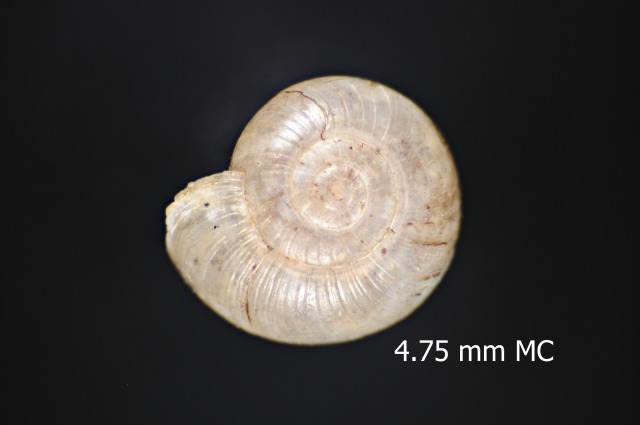
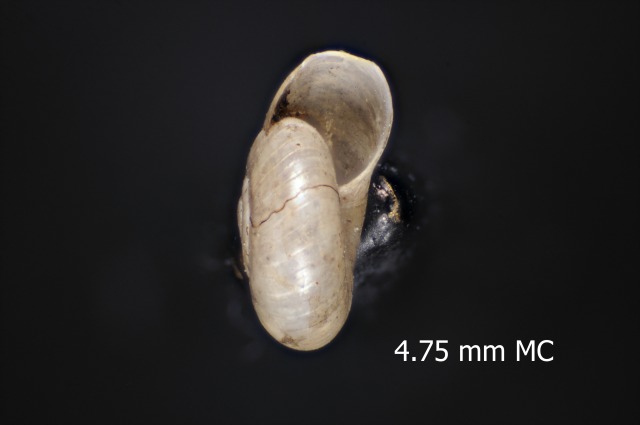
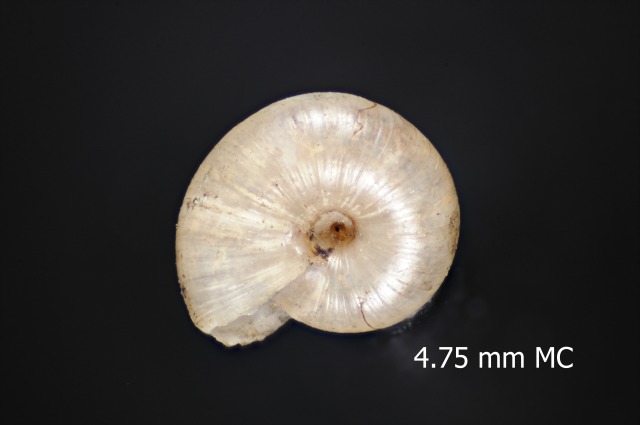
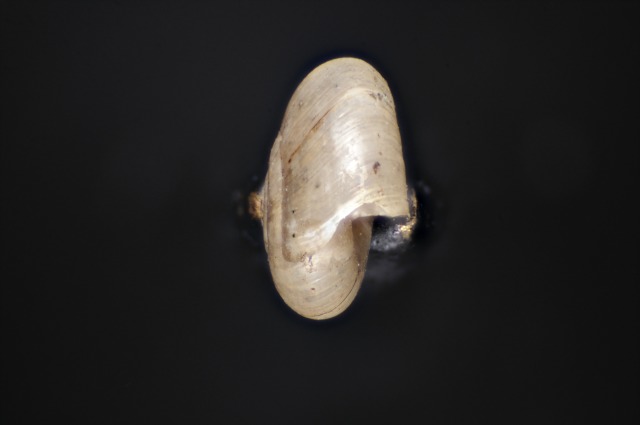
Glyphyalinia rhoadsi

Image Usage Information

  • The Academy of Natural Sciences of Philadelphia
  • CC BY-NC 4.0 DEED
  • For additional information about this specimen: Gary Rosenberg (rosenberg.ansp@drexel.edu)

Family: Gastrodontidae

Common name: Sculpted Glyph

Discovery: Pilsbry, 1899

Identification

Width: ~4.7 mm
Height: ~2.5 mm
Whorls: ~4

Glyphyalinia rhoadsi is average-sized for its genus. Its shell is depressed with a nearly flat apex and whorls that increase relatively rapidly in size. The final whorl does not increase more rapidly than previous whorls. The umbilicus is about one sixth to one seventh the shell width. The shiny and translucent shell is sculptured with closely spaced narrow indentations that run parallel to the indistinct growth lines. These grooves extend from the apical surface to the umbilicus and are regularly spaced except on the last quarter whorl where they are crowded and less regularly spaced. In addition there is sometimes microscopic sculpture of very weak incised spiral lines. The shell is uniformly translucent light-brown.

The body of this glyph is pale. In its reproductive anatomy, the apex of the penis has circular pilasters as in species of Nesovitrea.

Ecology

This animal is found in leaf litter in upland forests and is tolerant of acidic as well as neutral to basic soils (Nekola, 2010).

Taxonomy

Synonyms for this species are Retinella rhoadsi and Vitrea rhoadsi.

Distribution

Glyphyalinia rhoadsi ranges from Quebec to northern Georgia and west to Wisconsin. In Virginia the species is widespread in the Ridge and Valley with scattered populations on the Piedmont.

Conservation

NatureServe Global Rank: G5, Secure.

sidebar

About

  • Mission & Commitments
  • Directors Team
  • Museum History

Get Involved

  • Volunteer
  • Membership
  • Carnegie Discoverers
  • Donate
  • Employment
  • Events

Bring a Group

  • Groups of 10 or More
  • Birthday Parties at the Museum
  • Field Trips

Powdermill

  • Powdermill Nature Reserve
  • Powdermill Field Trips
  • Powdermill Staff
  • Research at Powdermill

More Information

  • Image Permission Requests
  • Science Stories
  • Accessibility
  • Shopping Cart
  • Contact
  • Visitor Policies
One of the Four Carnegie Museums | © Carnegie Institute | Privacy Policy | Terms of Use | Accessibility
Rad works here logo