• Skip to primary navigation
  • Skip to main content
  • Skip to primary sidebar

Carnegie Museum of Natural History

One of the Four Carnegie Museums of Pittsburgh

  • Visit
    • Buy Tickets
    • Visitor Information
    • Exhibitions
    • Events
    • Dining at the Museum
    • Celebrate at the Museum
    • Powdermill Nature Reserve
    • Event Venue Rental
    • Gift Cards
  • Learn
    • Field Trips
    • Educator Information
    • Programs at the Museum
    • Bring the Museum to You
    • Guided Programs FAQ
    • Programs Online
    • Climate and Rural Systems Partnership
  • Research
    • Scientific Sections
    • Science Stories
    • Science Videos
    • Senior Science & Research Staff
    • Museum Library
    • Science Seminars
    • Scientific Publications
    • Specimen and Artifact Identification
  • About
    • Mission & Commitments
    • Directors Team
    • Museum History
  • Tickets
  • Give
  • Shop

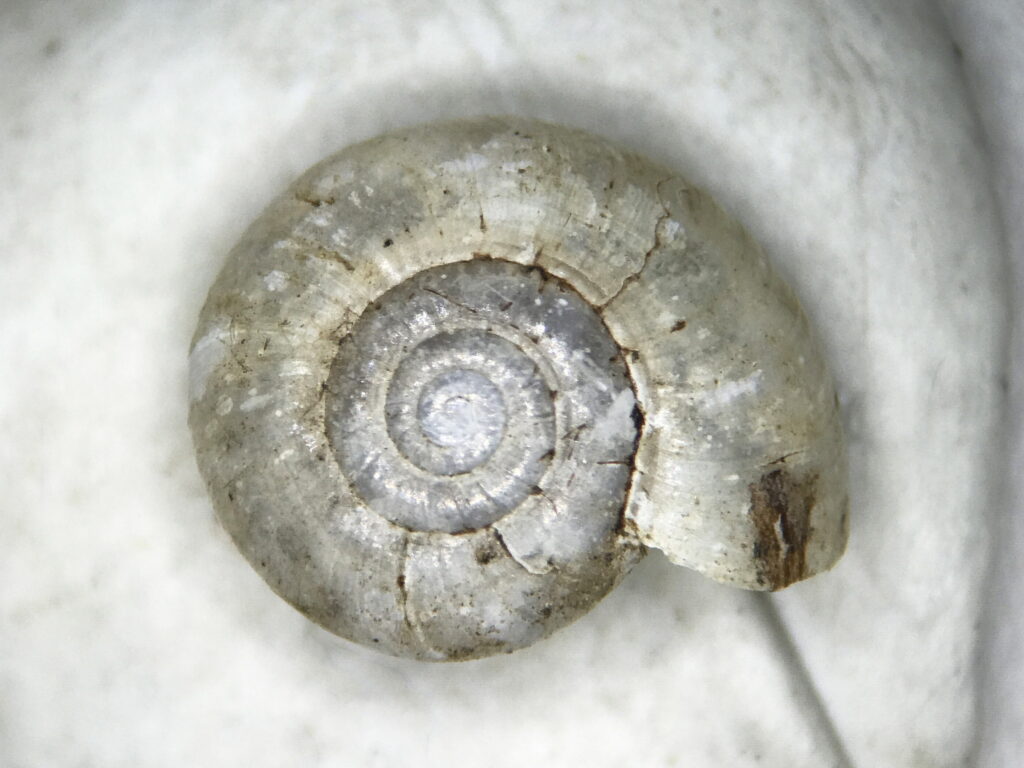
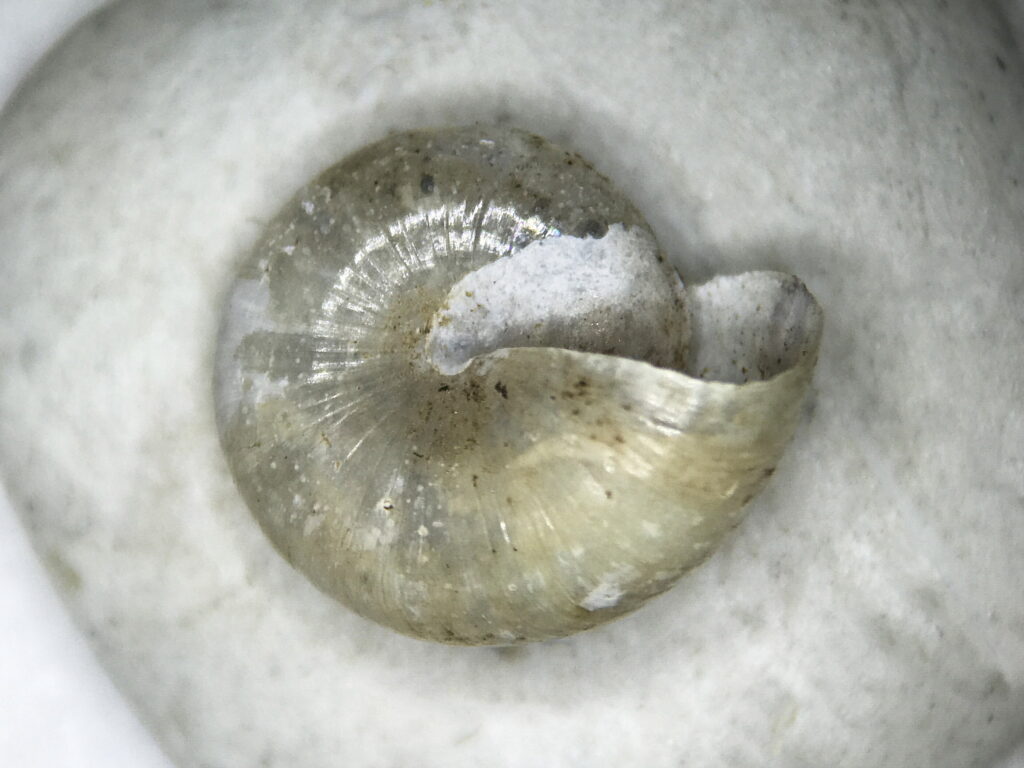
Glyphyalinia solida

Image Usage Information

  • David Lang
  • CC BY-NC 4.0 DEED
  • Additional information about this specimen

Family: Gastrodontidae

Common name: Solid Glyph

Discovery: H.B. Baker, 1930

Identification

Width: 7.5 mm
Height: 4.0 mm
Whorls: 5.3

Glyphyalinia solida is a moderate to large glyph, with a depressed shell that has rapidly expanding whorls. The expanding edge of the inner lip forms a tongue-shaped projection that fills the umbilicus. The shell is translucent pale-brown to almost chestnut and sculptured with widely and uniformly spaced impressed lines that parallel the nearly imperceptible growth lines. This sculpture is strong apically and continues to the umbilicus. Spiral engraved lines can often be seen under high magnification.

This animal’s dorsal surface is blue-grey, fading towards the sole of the foot. Both the epiphallus and penial retractor muscle join the penis sub-apically, and the apical chamber of the penis contains papillae.

Ecology

Glyphyalinia solida is found in moist leaf litter in forested ravines and hillsides as well as in swamps. Although often found upon limestone geology, this species is tolerant of a wide range of soil pH and can occur on acidic, neutral, and basic soils (Nekola, 2010).

Taxonomy

A synonym for this species is Retinella cryptomphala solida.

Distribution

This species is widely distributed from Maryland to Florida and west to Oklahoma, with a single unverified record in Michigan. In Virginia the species is reported from scattered locations across the state.

Conservation

NatureServe Global Rank: G5, Secure.

sidebar

About

  • Mission & Commitments
  • Directors Team
  • Museum History

Get Involved

  • Volunteer
  • Membership
  • Carnegie Discoverers
  • Donate
  • Employment
  • Events

Bring a Group

  • Groups of 10 or More
  • Birthday Parties at the Museum
  • Field Trips

Powdermill

  • Powdermill Nature Reserve
  • Powdermill Field Trips
  • Powdermill Staff
  • Research at Powdermill

More Information

  • Image Permission Requests
  • Science Stories
  • Accessibility
  • Shopping Cart
  • Contact
  • Visitor Policies
Stay in the loop! Sign up for our newsletter(s).
One of the Four Carnegie Museums | © Carnegie Institute | Privacy Policy | Terms of Use | Accessibility
Rad works here logo