• Skip to primary navigation
  • Skip to main content
  • Skip to primary sidebar

Carnegie Museum of Natural History

One of the Four Carnegie Museums of Pittsburgh

  • Visit
    • Buy Tickets
    • Visitor Information
    • Exhibitions
    • Events
    • Dining at the Museum
    • Celebrate at the Museum
    • Powdermill Nature Reserve
    • Event Venue Rental
  • Learn
    • Field Trips
    • Educator Information
    • Programs at the Museum
    • Bring the Museum to You
    • Guided Programs FAQ
    • Programs Online
    • Climate and Rural Systems Partnership
  • Research
    • Scientific Sections
    • Science Stories
    • Science Videos
    • Senior Science & Research Staff
    • Museum Library
    • Science Seminars
    • Scientific Publications
    • Specimen and Artifact Identification
  • About
    • Mission & Commitments
    • Directors Team
    • Museum History
  • Tickets
  • Give
  • Shop

Helicodiscus parallelus

Image Usage Information

  • Ben Hutchins
  • CC BY-NC 4.0 DEED
  • Additional information about this specimen

Family: Helicodiscidae

Common name: Compound Coil

Discovery: Say, 1817

Identification

Width: 3-4 mm
Height: 1.25-1.75 mm
Whorls: 4+

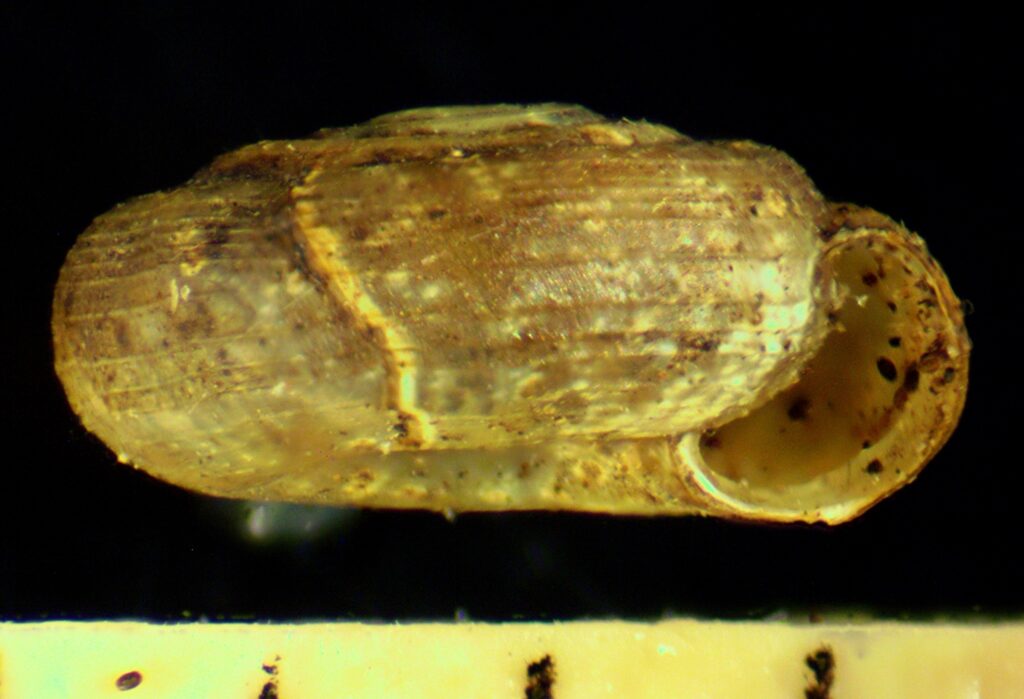
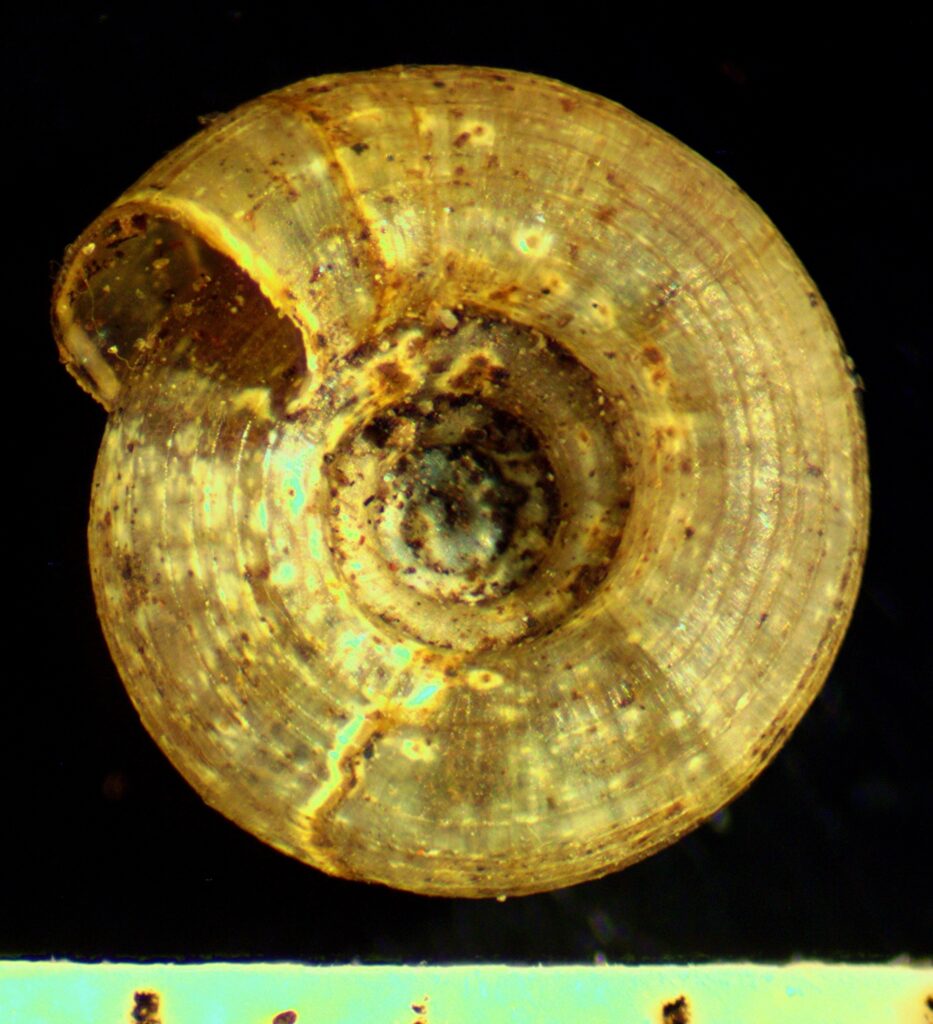
The flattened shell of Helicodiscus parallelus bears parallel spiral lirae that increase in strength on the later whorls. These lines cause the shell to look like a small tire. The narrow, steep-sided aperture is partly obstructed by pairs of cone-shaped teeth, arranged radially. One to three pairs of these teeth may be present, one in the mouth of the aperture itself, and the other pair(s) located further inside the final whorl. The umbilicus is relatively deep for its genus; the spire is low, slightly raised above the body whorl, but not quite as low as that of H. shimeki which is not at all raised.

Ecology

This animal is a blind snail, like others in its family, and lives in damp, decaying wood and leaf matter. It may be found in forested floodplains or uplands, rocky woods, but also open habitats such as grasslands and roadsides. In Maine it was found in habitats from dry forest to wet sedge meadows (Nekola, 2008).

Taxonomy

Synonyms for H. parallelus include Helicodiscus lineatus, H. theresa, Helix lineate, and Planorbis parallellus.

Distribution

Helicodiscus parallelus is found throughout the eastern and Midwestern United States and Canadian provinces, from Maine to Florida and Minnesota to Texas.

Conservation

NatureServe Global Rank: G5

sidebar

About

  • Mission & Commitments
  • Directors Team
  • Museum History

Get Involved

  • Volunteer
  • Membership
  • Carnegie Discoverers
  • Donate
  • Employment
  • Events

Bring a Group

  • Groups of 10 or More
  • Birthday Parties at the Museum
  • Field Trips

Powdermill

  • Powdermill Nature Reserve
  • Powdermill Field Trips
  • Powdermill Staff
  • Research at Powdermill

More Information

  • Image Permission Requests
  • Science Stories
  • Accessibility
  • Shopping Cart
  • Contact
  • Visitor Policies
One of the Four Carnegie Museums | © Carnegie Institute | Privacy Policy | Terms of Use | Accessibility
Rad works here logo