• Skip to primary navigation
  • Skip to main content
  • Skip to primary sidebar

Carnegie Museum of Natural History

One of the Four Carnegie Museums of Pittsburgh

  • Visit
    • Buy Tickets
    • Visitor Information
    • Exhibitions
    • Events
    • Dining at the Museum
    • Celebrate at the Museum
    • Powdermill Nature Reserve
    • Event Venue Rental
    • Gift Cards
  • Learn
    • Field Trips
    • Educator Information
    • Programs at the Museum
    • Bring the Museum to You
    • Guided Programs FAQ
    • Programs Online
    • Climate and Rural Systems Partnership
  • Research
    • Scientific Sections
    • Science Stories
    • Science Videos
    • Senior Science & Research Staff
    • Museum Library
    • Science Seminars
    • Scientific Publications
    • Specimen and Artifact Identification
  • About
    • Mission & Commitments
    • Directors Team
    • Museum History
  • Tickets
  • Give
  • Shop

Helix pomatia

Image Usage Information

  • Alexey Zyryanov
  • CC BY-NC 4.0 DEED
  • Additional information about this specimen

Family: Helicidae

Common name: Roman Snail, Burgundy Snail

Discovery: Linnaeus, 1758

Non-native

Identification

Width: 30-50 mm
Height: 30-50 mm
Whorls: 5-6

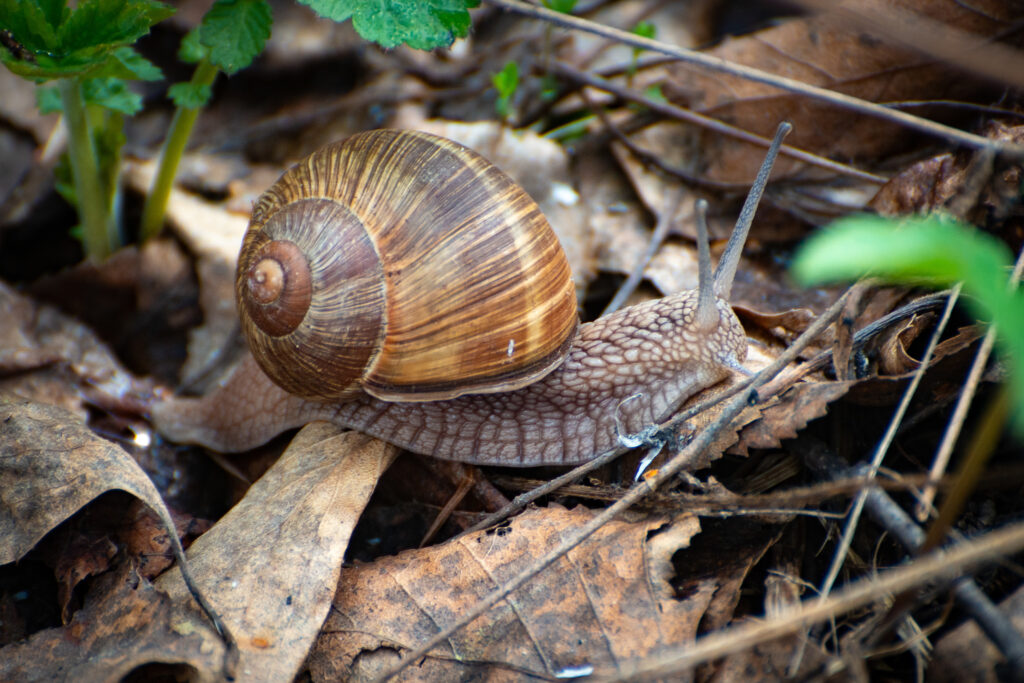
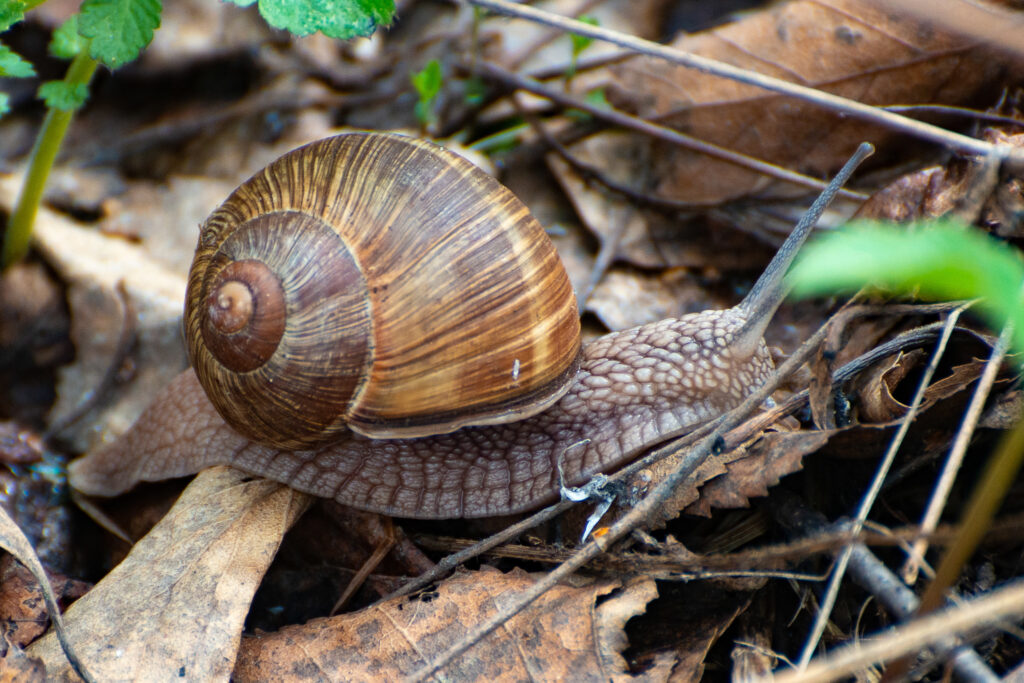
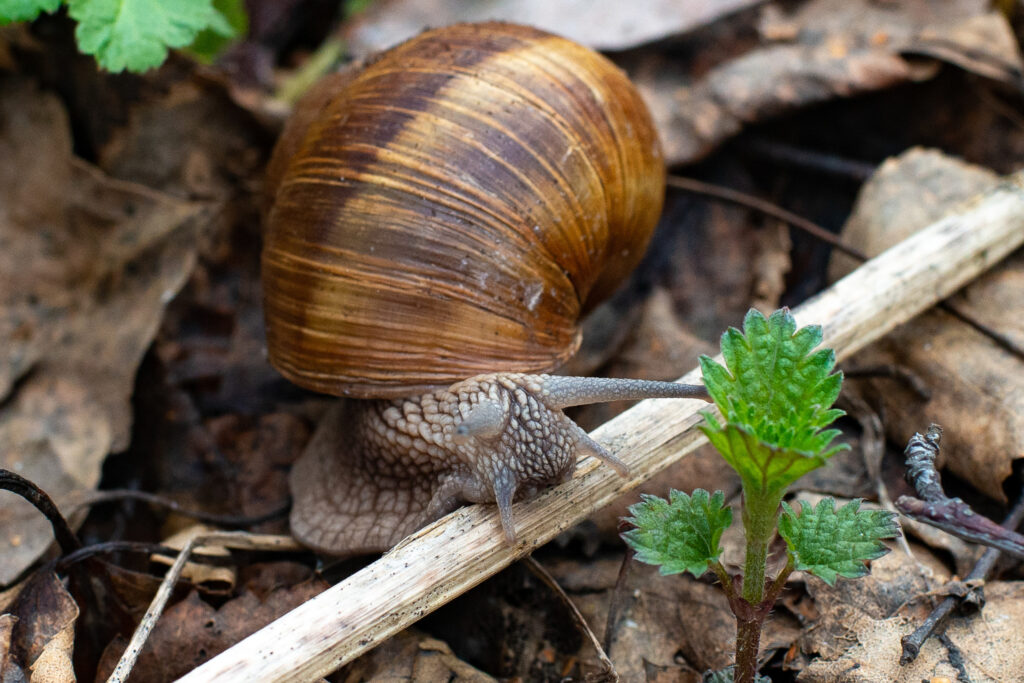
This species’ large rounded shell is cream-colored with faint brown bands. The lip is simple and the umbilicus closed. The shell surface is sculptured with growth wrinkles and light spiral striae. The animal is light-colored, with gray tentacles.

Ecology

Helix pomatia lives in woods, hedgerows, and among tall herbaceous vegetation (Kerney and Cameron, 1979). It favors calcium-rich soils on limestone or chalk (Kerney and Cameron, 1979). It can be a pest in vineyards, but is also favored for escargot.

In an intensive study of an introduced population in a Great Britain chalk quarry, H. pomatia was active April to October, most often during periods of high humidity associated with rainfall (Pollard, 1975). Mating was primarily during May and June, and eggs were laid underground May through August. The number of eggs in a clutch varied from 10 to more than 80 (Pollard, 1975).

Taxonomy

A synonym is Pomatia antiquorum (Pilsbry, 1939).

Distribution

Helix pomatia is the largest snail in northwest Europe (Kerney and Cameron, 1979), where it is introduced, though it is more widespread in its native regions of central and southeast Europe. It has been introduced in various places in the US. A Boston museum record is from a restaurant.

Conservation

NatureServe Global Rank: G5, Secure.
Its popularity for consumption has led to declines and protective measures in France and other European countries.

sidebar

About

  • Mission & Commitments
  • Directors Team
  • Museum History

Get Involved

  • Volunteer
  • Membership
  • Carnegie Discoverers
  • Donate
  • Employment
  • Events

Bring a Group

  • Groups of 10 or More
  • Birthday Parties at the Museum
  • Field Trips

Powdermill

  • Powdermill Nature Reserve
  • Powdermill Field Trips
  • Powdermill Staff
  • Research at Powdermill

More Information

  • Image Permission Requests
  • Science Stories
  • Accessibility
  • Shopping Cart
  • Contact
  • Visitor Policies
One of the Four Carnegie Museums | © Carnegie Institute | Privacy Policy | Terms of Use | Accessibility
Rad works here logo