• Skip to primary navigation
  • Skip to main content
  • Skip to primary sidebar

Carnegie Museum of Natural History

One of the Four Carnegie Museums of Pittsburgh

  • Visit
    • Buy Tickets
    • Visitor Information
    • Exhibitions
    • Events
    • Dining at the Museum
    • Celebrate at the Museum
    • Powdermill Nature Reserve
    • Event Venue Rental
    • Gift Cards
  • Learn
    • Field Trips
    • Educator Information
    • Programs at the Museum
    • Bring the Museum to You
    • Guided Programs FAQ
    • Programs Online
    • Climate and Rural Systems Partnership
  • Research
    • Scientific Sections
    • Science Stories
    • Science Videos
    • Senior Science & Research Staff
    • Museum Library
    • Science Seminars
    • Scientific Publications
    • Specimen and Artifact Identification
  • About
    • Mission & Commitments
    • Directors Team
    • Museum History
  • Tickets
  • Give
  • Shop

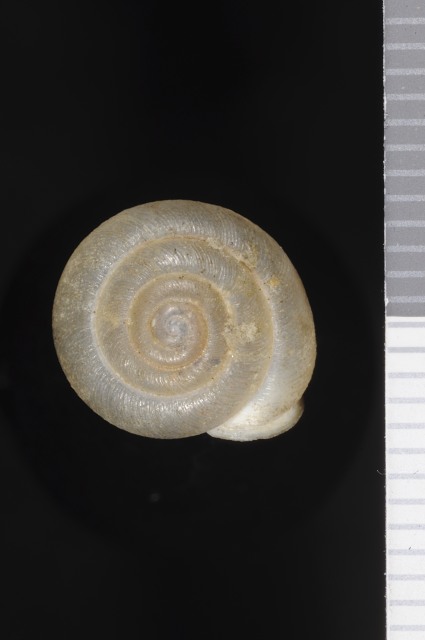
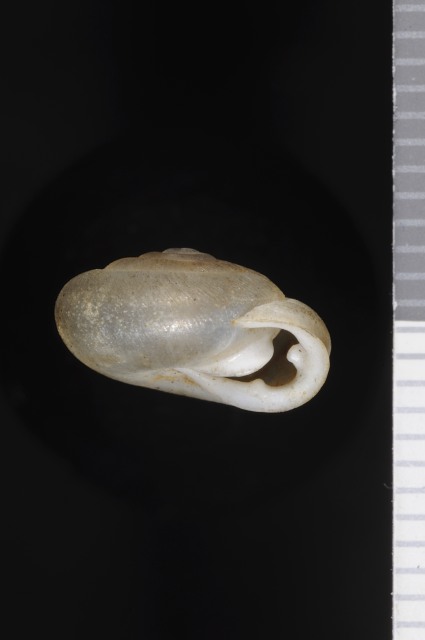
Inflectarius inflectus

Image Usage Information

  • The Academy of Natural Sciences of Philadelphia
  • CC BY-NC 4.0 DEED
  • For additional information about this specimen: Gary Rosenberg (rosenberg.ansp@drexel.edu)

Family: Polygyridae

Common name: Shagreen

Discovery: Say, 1821

Identification

Width: 9.5- 12.0 mm
Height: 5.0- 7.5 mm
Whorls: 4+

The shell of Inflectarius inflectus is depressed and imperforate. Its outer lip is reflected, creating a gutter behind it on the final whorl. It has three teeth in the aperture, a long parietal tooth, a short, blunt and slightly recessed palatal tooth, and narrow basal tooth. The shell is a bit larger and the basal tooth is more visible than in its congener I. rugeli.

Ecology

Inflectarius inflectus can be found in many habitats. Look for it under leaf litter, logs and rocks in wooded areas, under railroad ties, on roadsides, in gardens and even under trash in urban areas (Hubricht, 1985). In Tennessee, it has been associated particularly with wet soils of higher acidity (Coney et al, 1982) although a wider analysis found no preference in soil base status for this species (Nekola, 2010).

Taxonomy

Inflectarius inflectus has also been known as Helix clausa, H. inflecta, H. (Triodopsis) inflexa, Mesodon inflectus, Polygyra inflecta, P. i. var. media, P. herberti, Triodopsis inflecta, and Xolotrema clausa.

Distribution

This widespread central and southern US snail ranges from southern Michigan, as far west as Oklahoma and Texas, and as far south as Louisiana and Florida. In Virginia it is found only in the western counties. Some range-edge museum records, for upstate New York especially, need verification.

Conservation

NatureServe Global Rank: G5
NatureServe State Rank: Pennsylvania, S2, Imperiled; Maryland, unranked; New York, unranked; Virginia, S3, Vulnerable; West Virginia, SNR, unranked.

sidebar

About

  • Mission & Commitments
  • Directors Team
  • Museum History

Get Involved

  • Volunteer
  • Membership
  • Carnegie Discoverers
  • Donate
  • Employment
  • Events

Bring a Group

  • Groups of 10 or More
  • Birthday Parties at the Museum
  • Field Trips

Powdermill

  • Powdermill Nature Reserve
  • Powdermill Field Trips
  • Powdermill Staff
  • Research at Powdermill

More Information

  • Image Permission Requests
  • Science Stories
  • Accessibility
  • Shopping Cart
  • Contact
  • Visitor Policies
One of the Four Carnegie Museums | © Carnegie Institute | Privacy Policy | Terms of Use | Accessibility
Rad works here logo