• Skip to primary navigation
  • Skip to main content
  • Skip to primary sidebar

Carnegie Museum of Natural History

One of the Four Carnegie Museums of Pittsburgh

  • Visit
    • Buy Tickets
    • Visitor Information
    • Exhibitions
    • Events
    • Dining at the Museum
    • Celebrate at the Museum
    • Powdermill Nature Reserve
    • Event Venue Rental
  • Learn
    • Field Trips
    • Educator Information
    • Programs at the Museum
    • Bring the Museum to You
    • Guided Programs FAQ
    • Programs Online
    • Climate and Rural Systems Partnership
  • Research
    • Scientific Sections
    • Science Stories
    • Science Videos
    • Senior Science & Research Staff
    • Museum Library
    • Science Seminars
    • Scientific Publications
    • Specimen and Artifact Identification
  • About
    • Mission & Commitments
    • Directors Team
    • Museum History
  • Tickets
  • Give
  • Shop

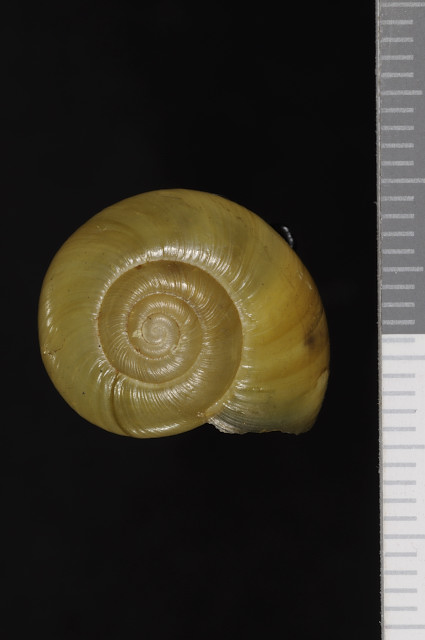
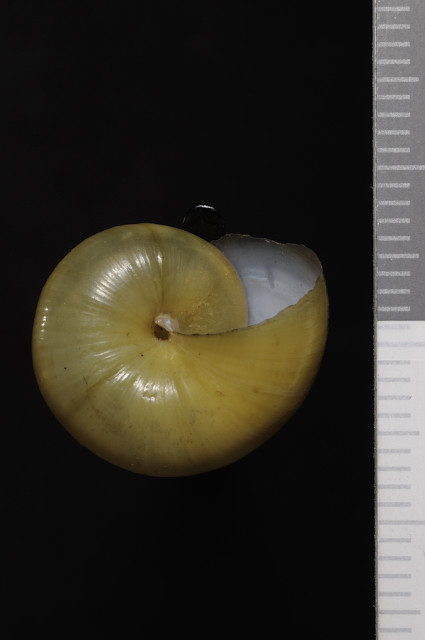
Mesomphix perlaevis

Image Usage Information

  • The Academy of Natural Sciences of Philadelphia
  • CC BY-NC 4.0 DEED
  • For additional information about this specimen: Gary Rosenberg (rosenberg.ansp@drexel.edu)

Family: Gastrodontidae

Common name: Smooth Button

Discovery: Pilsbry, 1900

Identification

Width: 17.6–20.7 mm
Height: 9.7–12.2 mm
Whorls: 4.5

Mesomphix perlaevis has a shell with a low apex, a large outer whorl, and a small umbilicus. The aperture is thin with a white callus lining inside. The somewhat glossy shell has a brown to olive color that fades toward the base. Some specimens may look almost green. The shell has irregular radial ridges, which are “cut” across the top by spiral striae, a useful characteristic for distinguishing it from similar-sized relatives. It may have tiny papillae upon its final whorl, but not extensively as on M. inornatus.

Ecology

This species can usually be found under leaf litter on wooded hillsides.  In Tennessee it is found in limestone areas and oak-pine forests at high elevation (Coney et al, 1982).

Taxonomy

Synonyms for M. perlaevis are Mesomphix laevigata perlaevis and Omphalina laevigata perlaevis.

Distribution

Mesomphix perlaevis occurs from northern Alabama, north to Ohio and southwestern Pennsylvania.

Conservation

NatureServe Global Rank: G5, Secure

sidebar

About

  • Mission & Commitments
  • Directors Team
  • Museum History

Get Involved

  • Volunteer
  • Membership
  • Carnegie Discoverers
  • Donate
  • Employment
  • Events

Bring a Group

  • Groups of 10 or More
  • Birthday Parties at the Museum
  • Field Trips

Powdermill

  • Powdermill Nature Reserve
  • Powdermill Field Trips
  • Powdermill Staff
  • Research at Powdermill

More Information

  • Image Permission Requests
  • Science Stories
  • Accessibility
  • Shopping Cart
  • Contact
  • Visitor Policies
One of the Four Carnegie Museums | © Carnegie Institute | Privacy Policy | Terms of Use | Accessibility
Rad works here logo