• Skip to primary navigation
  • Skip to main content
  • Skip to primary sidebar

Carnegie Museum of Natural History

One of the Four Carnegie Museums of Pittsburgh

  • Visit
    • Buy Tickets
    • Visitor Information
    • Exhibitions
    • Events
    • Dining at the Museum
    • Celebrate at the Museum
    • Powdermill Nature Reserve
    • Event Venue Rental
    • Gift Cards
  • Learn
    • Field Trips
    • Educator Information
    • Programs at the Museum
    • Bring the Museum to You
    • Guided Programs FAQ
    • Programs Online
    • Climate and Rural Systems Partnership
  • Research
    • Scientific Sections
    • Science Stories
    • Science Videos
    • Senior Science & Research Staff
    • Museum Library
    • Science Seminars
    • Scientific Publications
    • Specimen and Artifact Identification
  • About
    • Mission & Commitments
    • Directors Team
    • Museum History
  • Tickets
  • Give
  • Shop

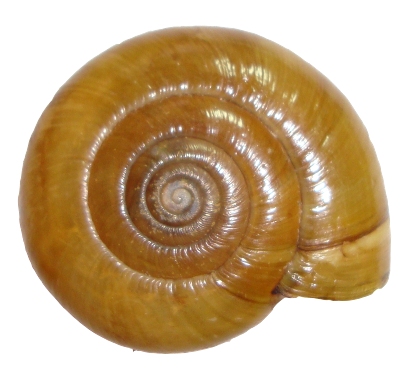
Mesomphix subplanus

Image Usage Information

  • Dan Dourson
  • CC BY-NC 4.0 DEED

Family: Gastrodontidae

Common name: Flat Button

Discovery: A. Binney, 1842

Identification

Width: 16.0–22.3 mm
Height: 6.0–10.6 mm
Whorls: 5.5+

The shell of Mesomphix subplanus is similar in overall plan to many other Mesomphix, but looks as if it has been squeezed in a press. The umbilicus is tiny and is only somewhat indented from the base, which is quite flat, and the apex is also flattened. The shell is thin, and the lip of the aperture is simple and thin. The glossy shell may vary in color, being olive or brown, and it is has radial striations.

Ecology

This species is found at higher altitudes, 2,000 feet or above, in moist leaf litter and around logs (Hubricht, 1985).

Taxonomy

Synonyms for M. subplanus are: Helix sub-plana, Mesomphix subplana, M. subplanus planus, Omphalina subplana, and Zonites subplanus.

Distribution

Mesomphix subplanus has a range similar to that of M. rugeli, though even more limited. It is found mostly along the North Carolina/Tennessee line. It appears in scattered western Virginia counties.

Conservation

NatureServe Global Rank: G3/G4, Vulnerable to Apparently Secure
NatureServe State Rank: Virginia, S2, Imperiled
Virginia’s wildlife action plan: Tier III

sidebar

About

  • Mission & Commitments
  • Directors Team
  • Museum History

Get Involved

  • Volunteer
  • Membership
  • Carnegie Discoverers
  • Donate
  • Employment
  • Events

Bring a Group

  • Groups of 10 or More
  • Birthday Parties at the Museum
  • Field Trips

Powdermill

  • Powdermill Nature Reserve
  • Powdermill Field Trips
  • Powdermill Staff
  • Research at Powdermill

More Information

  • Image Permission Requests
  • Science Stories
  • Accessibility
  • Shopping Cart
  • Contact
  • Visitor Policies
One of the Four Carnegie Museums | © Carnegie Institute | Privacy Policy | Terms of Use | Accessibility
Rad works here logo