• Skip to primary navigation
  • Skip to main content
  • Skip to primary sidebar

Carnegie Museum of Natural History

One of the Four Carnegie Museums of Pittsburgh

  • Visit
    • Buy Tickets
    • Visitor Information
    • Exhibitions
    • Events
    • Dining at the Museum
    • Celebrate at the Museum
    • Powdermill Nature Reserve
    • Event Venue Rental
  • Learn
    • Field Trips
    • Educator Information
    • Programs at the Museum
    • Bring the Museum to You
    • Guided Programs FAQ
    • Programs Online
    • Climate and Rural Systems Partnership
  • Research
    • Scientific Sections
    • Science Stories
    • Science Videos
    • Senior Science & Research Staff
    • Museum Library
    • Science Seminars
    • Scientific Publications
    • Specimen and Artifact Identification
  • About
    • Mission & Commitments
    • Directors Team
    • Museum History
  • Tickets
  • Give
  • Shop

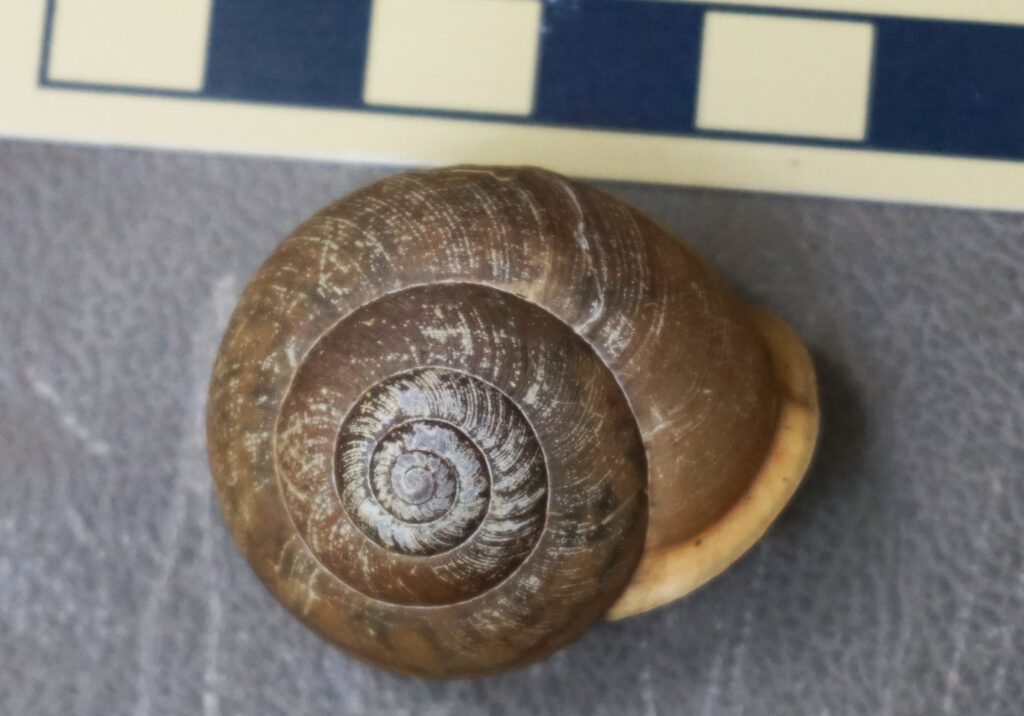
Neohelix major

Image Usage Information

  • Benjamin Schwartz
  • CC BY-NC 4.0 DEED
  • Additional information about this specimen

Family: Polygyridae

Common name: Southeastern Whitelip

Discovery: A. Binney, 1837

Identification

Width: 28-42 mm
Height: 30-32 mm
Whorls: 5.5+

The big, sturdy, globe-like shell of Neohelix major has a closed umbilicus and a simple reflected lip. Its shell sculpture has stronger radial ridges that give it a coarser texture and less glossy appearance than N. albolabris. It tends to be a bit larger as well, although there is an overlap in sizes (Emberton, 1988). Though no parietal tooth is present, some may have a low, bump-like denticle on the columellar margin of the aperture.

Ecology

Neohelix major hides in leaf litter or among rocks or logs in forested areas. It is usually found in damp, rich habitats, often on lower forest slopes with coarse woody debris. In some cases it may be found in grassy areas such as roadsides. Although it frequents the same habitats as N. albolabris, the two species are not found together (Hubricht, 1985).

Taxonomy

Synonyms for N. major include: Helix major, Mesodon major, Polygyra albolabris major, Triodopsis major, and T. albolabris major.

Distribution

Neohelix major’s range extends from the New York and the Middle Atlantic states south to Alabama and Georgia, though there are few museum records of this difficult-to-distinguish snail. Historic records may be confused with N. albolabris and the more coastal species N. solemi.

Conservation

NatureServe Global Rank: G5, Secure

sidebar

About

  • Mission & Commitments
  • Directors Team
  • Museum History

Get Involved

  • Volunteer
  • Membership
  • Carnegie Discoverers
  • Donate
  • Employment
  • Events

Bring a Group

  • Groups of 10 or More
  • Birthday Parties at the Museum
  • Field Trips

Powdermill

  • Powdermill Nature Reserve
  • Powdermill Field Trips
  • Powdermill Staff
  • Research at Powdermill

More Information

  • Image Permission Requests
  • Science Stories
  • Accessibility
  • Shopping Cart
  • Contact
  • Visitor Policies
One of the Four Carnegie Museums | © Carnegie Institute | Privacy Policy | Terms of Use | Accessibility
Rad works here logo