• Skip to primary navigation
  • Skip to main content
  • Skip to primary sidebar

Carnegie Museum of Natural History

One of the Four Carnegie Museums of Pittsburgh

  • Visit
    • Buy Tickets
    • Visitor Information
    • Exhibitions
    • Events
    • Dining at the Museum
    • Celebrate at the Museum
    • Powdermill Nature Reserve
    • Event Venue Rental
  • Learn
    • Field Trips
    • Educator Information
    • Programs at the Museum
    • Bring the Museum to You
    • Guided Programs FAQ
    • Programs Online
    • Climate and Rural Systems Partnership
  • Research
    • Scientific Sections
    • Science Stories
    • Science Videos
    • Senior Science & Research Staff
    • Museum Library
    • Science Seminars
    • Scientific Publications
    • Specimen and Artifact Identification
  • About
    • Mission & Commitments
    • Directors Team
    • Museum History
  • Tickets
  • Give
  • Shop

Opeas hannense

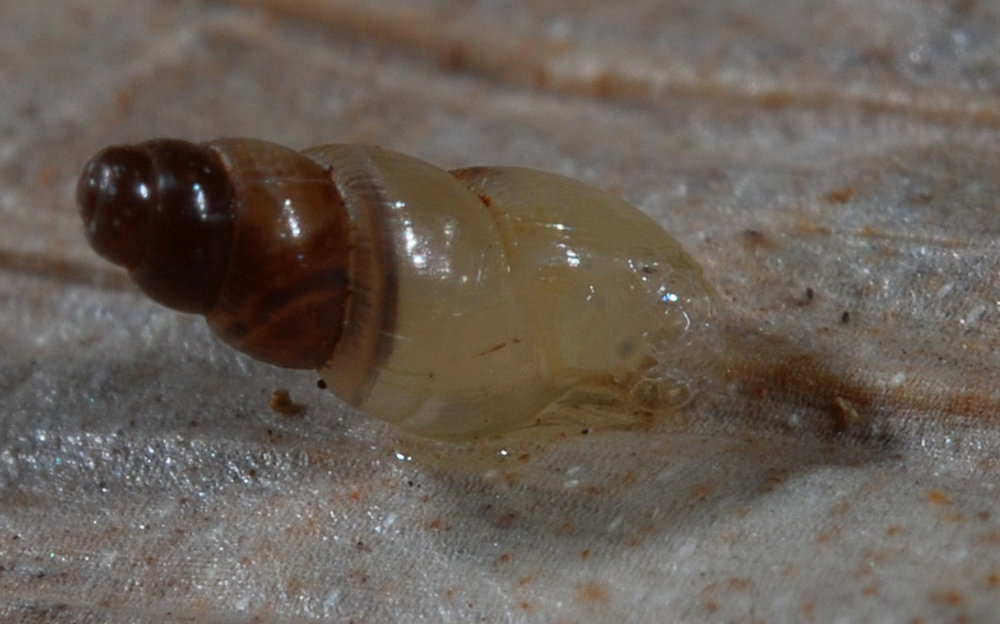
Profile of dwarf awlsnail. Body is same color as bottom whirl, blending shapes together. Darker whirls toward top.

Image Usage Information
  •  Moorea Biocode
  • CC BY-NC 4.0 DEED
  • For additional information about this specimen: Gustav Paulay (paulay@flmnh.ufl.edu)
dorsal view of shell only, oblong shell widest at bottom with tighter whirls at top
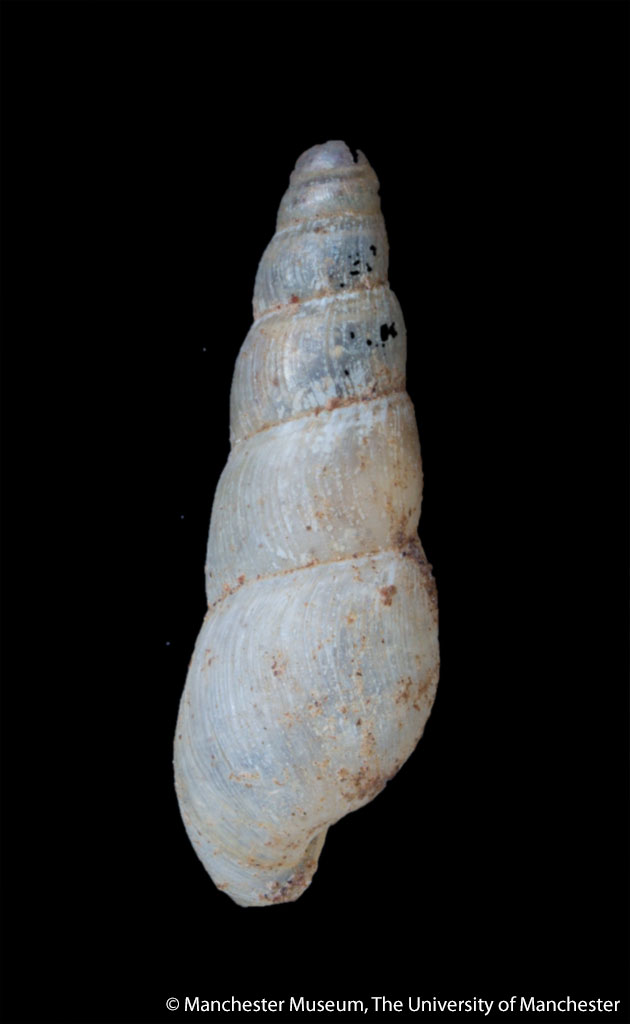
profile view of shell only, with lip at bottom of photo and tighter whirls at top

Image Usage Information

  • Manchester Museum, The University of Manchester
  • CC BY-NC 4.0 DEED
  • For additional information about this specimen: Rachel Petts

Family: Subulinidae

Common name: Dwarf Awlsnail

Discovery: Pfeiffer, 1840

Non-native

Identification

Width: 1.9-2.0 mm
Height: 5.3-7.0 mm
Whorls: 6.5

A conical shell with a rounded aperture having a partially reflected lip (Pilsbry, 1946; Kerney and Cameron, 1979). The final whorl is approximately half the shell length. The shell sculpture is densely striate in an arcuate pattern, diagnostic of the species.

Ecology

Opeas pumilum lives in leaf litter, grazing algae, fungi, or detritus (Willig et al., 2013). In greenhouses in New York State, densities of live animals and shells in mulch reached nearly 1,000/m2, though the snails did not damage the roses propagated in the greenhouses (Karlin, 1956).

Taxonomy

Helix goodalli, Opeas goodalli, and Bulimus pumilus are synonyms (Pilsbry, 1946).

Distribution

Tropical Central America. Introduced into Europe and the U.S. South, Midwest, and East in greenhouses and gardens.

Conservation

NatureServe Explorer rank: G5, Secure.

Author: Tim Pearce
Publication date: 11/2023

sidebar

About

  • Mission & Commitments
  • Directors Team
  • Museum History

Get Involved

  • Volunteer
  • Membership
  • Carnegie Discoverers
  • Donate
  • Employment
  • Events

Bring a Group

  • Groups of 10 or More
  • Birthday Parties at the Museum
  • Field Trips

Powdermill

  • Powdermill Nature Reserve
  • Powdermill Field Trips
  • Powdermill Staff
  • Research at Powdermill

More Information

  • Image Permission Requests
  • Science Stories
  • Accessibility
  • Shopping Cart
  • Contact
  • Visitor Policies
One of the Four Carnegie Museums | © Carnegie Institute | Privacy Policy | Terms of Use | Accessibility
Rad works here logo
