• Skip to primary navigation
  • Skip to main content
  • Skip to primary sidebar

Carnegie Museum of Natural History

One of the Four Carnegie Museums of Pittsburgh

  • Visit
    • Buy Tickets
    • Visitor Information
    • Exhibitions
    • Events
    • Dining at the Museum
    • Celebrate at the Museum
    • Powdermill Nature Reserve
    • Event Venue Rental
  • Learn
    • Field Trips
    • Educator Information
    • Programs at the Museum
    • Bring the Museum to You
    • Guided Programs FAQ
    • Programs Online
    • Climate and Rural Systems Partnership
  • Research
    • Scientific Sections
    • Science Stories
    • Science Videos
    • Senior Science & Research Staff
    • Museum Library
    • Science Seminars
    • Scientific Publications
    • Specimen and Artifact Identification
  • About
    • Mission & Commitments
    • Directors Team
    • Museum History
  • Tickets
  • Give
  • Shop

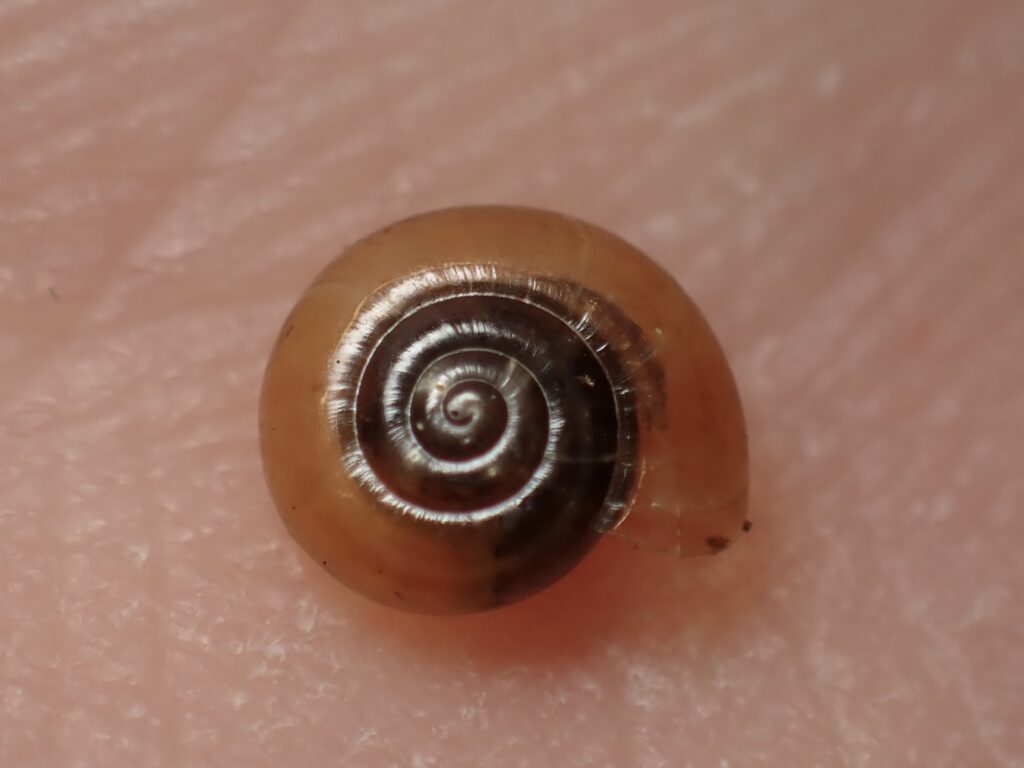
Oxychilus alliarius

Image Usage Information

  •  Michael A. Voeltz
  • CC BY-NC 4.0 DEED
  • Additional information about this specimen

Family: Oxychilidae

Common name: Garlic Glass-snail

Discovery: Dourson, 2015

Identification

Width: 5-7 mm
Height: 3.5-4 mm
Whorls: 4-4.5

This non-native snail’s shell is a depressed heliciform shape, with a glossy, pale yellowish-brown or greenish color. Oxychilus alliarius is umbilicate with no teeth at any stage of growth. A unique identifying characteristic is the garlic-like odor emitted when the snail is threatened. The animal is blackish blue.

Ecology

Oxychilus alliarius is found in disturbed areas – yards, gardens, and roadsides, degraded habitats and abandoned lots. It is tolerant of poor acidic soils (Kearney and Cameron, 1979). In the Hawaiian Islands it is found on leaf litter, on mossy rocks, on the bark of logs, and under rocks (Howarth, 2003).

Taxonomy

Originally named Helix alliaria by J. S. Miller in 1822. No other synonyms are reported.

Distribution

Native to central and western Europe, Iceland, and Greenland; introduced to northeastern North America, Colorado, Pacific Coast states, and Hawaiian Islands, as well as various other temperate regions of the world.

Conservation

NatureServe Global Rank: G5, Apparently secure.
NatureServe State Ranks: Pennsylvania, E; New York, E; New Jersey, E.

sidebar

About

  • Mission & Commitments
  • Directors Team
  • Museum History

Get Involved

  • Volunteer
  • Membership
  • Carnegie Discoverers
  • Donate
  • Employment
  • Events

Bring a Group

  • Groups of 10 or More
  • Birthday Parties at the Museum
  • Field Trips

Powdermill

  • Powdermill Nature Reserve
  • Powdermill Field Trips
  • Powdermill Staff
  • Research at Powdermill

More Information

  • Image Permission Requests
  • Science Stories
  • Accessibility
  • Shopping Cart
  • Contact
  • Visitor Policies
One of the Four Carnegie Museums | © Carnegie Institute | Privacy Policy | Terms of Use | Accessibility
Rad works here logo