• Skip to primary navigation
  • Skip to main content
  • Skip to primary sidebar

Carnegie Museum of Natural History

One of the Four Carnegie Museums of Pittsburgh

  • Visit
    • Buy Tickets
    • Visitor Information
    • Exhibitions
    • Events
    • Dining at the Museum
    • Celebrate at the Museum
    • Powdermill Nature Reserve
    • Event Venue Rental
  • Learn
    • Field Trips
    • Educator Information
    • Programs at the Museum
    • Bring the Museum to You
    • Guided Programs FAQ
    • Programs Online
    • Climate and Rural Systems Partnership
  • Research
    • Scientific Sections
    • Science Stories
    • Science Videos
    • Senior Science & Research Staff
    • Museum Library
    • Science Seminars
    • Scientific Publications
    • Specimen and Artifact Identification
  • About
    • Mission & Commitments
    • Directors Team
    • Museum History
  • Tickets
  • Give
  • Shop

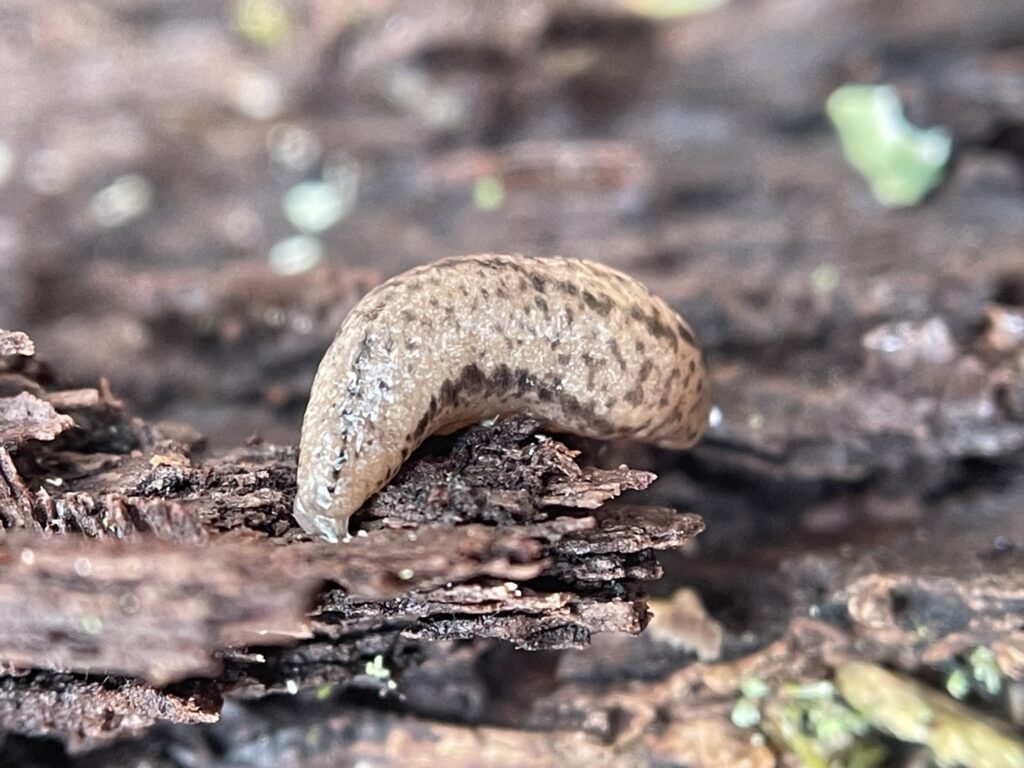
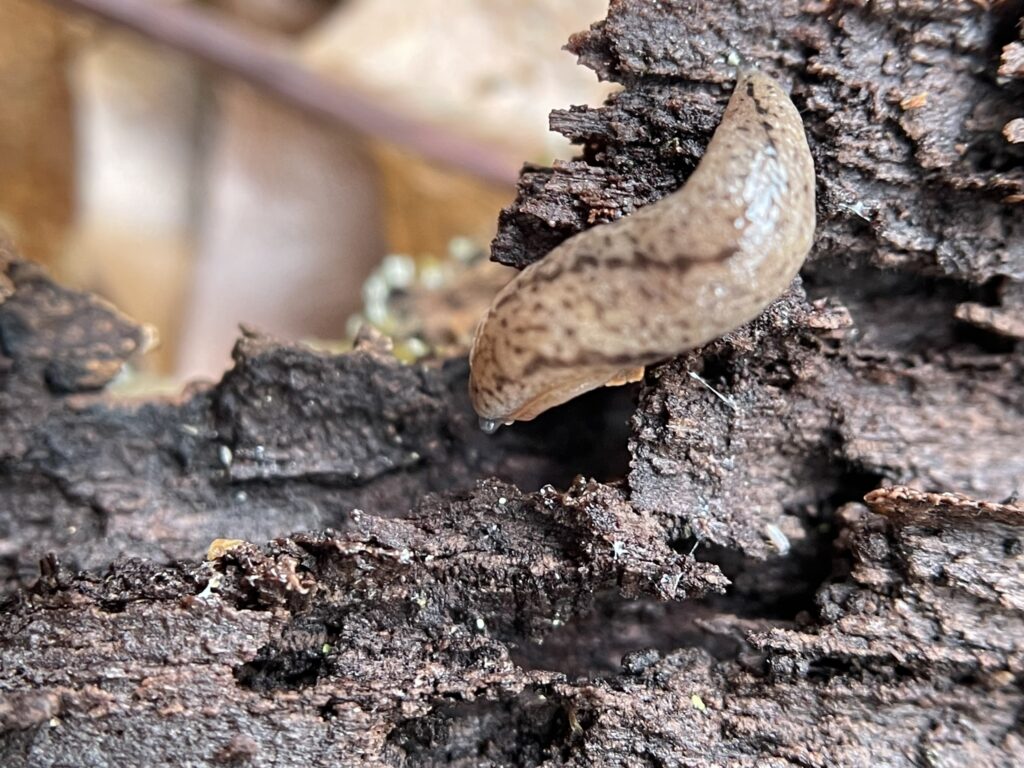
Pallifera fosteri

Image Usage Information

  •  Joe MacIndewar
  • CC BY-NC 4.0 DEED
  • Additional information about this specimen

Family: Philomycidae

Common name: Foster Mantleslug

Discovery: F.C. Baker, 1939

Identification

Length: 15-25 mm

Pallifera fosteri is an average sized Pallifera, which like other philomycids has a mantle that covers the entire dorsal surface of the animal. The mantle background color is creamy-tan, often slightly darker brownish on the dorsal surface. This pattern is overlain with larger black spots. The black spots sometimes coalesce forming a central and/or two lateral bands that run the length of the mantle. The reproductive system is not equipped with a dart sac. The center of the jaw usually has four or five large ribs, although this number can vary from 3 to 6 ribs, and the margins are smooth.

Ecology

This species occurs in a wide variety of habitats from floodplain forests to upland hardwood forests where it is found in leaf litter and under logs, from the coastal plain up to about 1500 meters elevation in both old growth and secondary forests. This species wide habitat use and extreme morphological variation suggest it may be a species complex. In fact, the entire genus is in need of taxonomic revision. Therefore, our current understanding of species ranges and habitat requirements may be too general for accurate conservation rank assessments.

Taxonomy

This species has no known synonyms.

Distribution

Pallifera fosteri is widely distributed from Michigan to Florida and west to Missouri. In Virginia, the species is widespread, occurring from the Coastal Plain the Ridge and Valley.

Conservation

NatureServe Global Rank: G5
NatureServe State Rank: S4

sidebar

About

  • Mission & Commitments
  • Directors Team
  • Museum History

Get Involved

  • Volunteer
  • Membership
  • Carnegie Discoverers
  • Donate
  • Employment
  • Events

Bring a Group

  • Groups of 10 or More
  • Birthday Parties at the Museum
  • Field Trips

Powdermill

  • Powdermill Nature Reserve
  • Powdermill Field Trips
  • Powdermill Staff
  • Research at Powdermill

More Information

  • Image Permission Requests
  • Science Stories
  • Accessibility
  • Shopping Cart
  • Contact
  • Visitor Policies
One of the Four Carnegie Museums | © Carnegie Institute | Privacy Policy | Terms of Use | Accessibility
Rad works here logo