• Skip to primary navigation
  • Skip to main content
  • Skip to primary sidebar

Carnegie Museum of Natural History

One of the Four Carnegie Museums of Pittsburgh

  • Visit
    • Buy Tickets
    • Visitor Information
    • Exhibitions
    • Events
    • Dining at the Museum
    • Celebrate at the Museum
    • Powdermill Nature Reserve
    • Event Venue Rental
    • Gift Cards
  • Learn
    • Field Trips
    • Educator Information
    • Programs at the Museum
    • Bring the Museum to You
    • Guided Programs FAQ
    • Programs Online
    • Climate and Rural Systems Partnership
  • Research
    • Scientific Sections
    • Science Stories
    • Science Videos
    • Senior Science & Research Staff
    • Museum Library
    • Science Seminars
    • Scientific Publications
    • Specimen and Artifact Identification
  • About
    • Mission & Commitments
    • Directors Team
    • Museum History
  • Tickets
  • Give
  • Shop

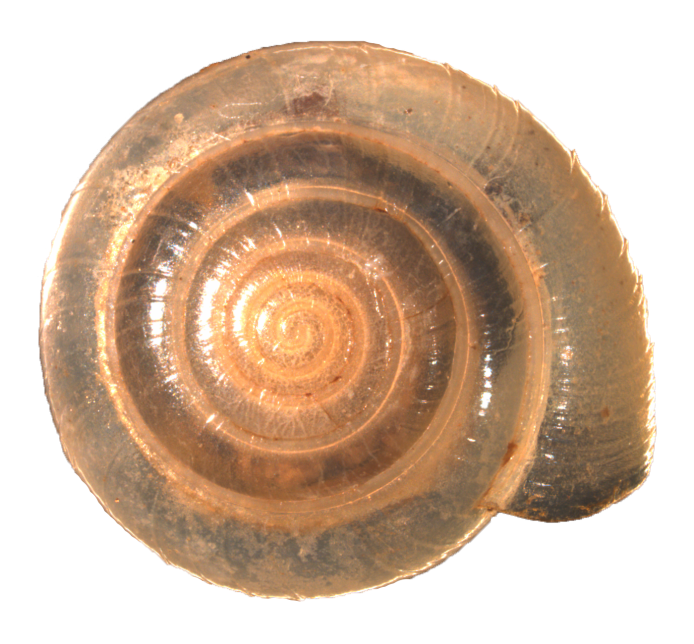
Paravitrea blarina

Image Usage Information

  • Dan Dourson
  • All rights reserved

Family: Pristilomatidae

Common name: Shrew Supercoil

Discovery: Hubricht, 1963

Identification

Width: 3.5-4.5 mm
Height: 2-2.5 mm
Whorls: 5+

Paravitrea blarina is a white-colored animal with a shiny, dome-shaped, yellowish shell. The thin-lipped aperture is equally as high as it is wide. Irregularly spaced radial striae and growth wrinkles are seen on the top of the shell but grow much fainter on the base. The open umbilicus is deep and well-like, with a diameter that is relatively large in comparison with most other species in the genus; it is about one-fifth the diameter of the shell. The shell of P. blarina lacks teeth at any stage of growth.

Ecology

This animal likes to burrow in the lower layers of decaying leaf litter on hillsides (Hubricht, 1963; 1985). It has been found under leaf litter inside burrows created by shrews, the source of its common name.

Taxonomy

There are no synonyms.

Distribution

Paravitrea blarina is known only from a handful of counties in Virginia, Tennessee, and Kentucky. In Virginia it is reported only from Lee County.

Conservation

NatureServe Global Rank: G3
NatureServe State Rank: S1
Virginia’s wildlife action plan: Tier II

sidebar

About

  • Mission & Commitments
  • Directors Team
  • Museum History

Get Involved

  • Volunteer
  • Membership
  • Carnegie Discoverers
  • Donate
  • Employment
  • Events

Bring a Group

  • Groups of 10 or More
  • Birthday Parties at the Museum
  • Field Trips

Powdermill

  • Powdermill Nature Reserve
  • Powdermill Field Trips
  • Powdermill Staff
  • Research at Powdermill

More Information

  • Image Permission Requests
  • Science Stories
  • Accessibility
  • Shopping Cart
  • Contact
  • Visitor Policies
One of the Four Carnegie Museums | © Carnegie Institute | Privacy Policy | Terms of Use | Accessibility
Rad works here logo