• Skip to primary navigation
  • Skip to main content
  • Skip to primary sidebar

Carnegie Museum of Natural History

One of the Four Carnegie Museums of Pittsburgh

  • Visit
    • Buy Tickets
    • Visitor Information
    • Exhibitions
    • Events
    • Dining at the Museum
    • Celebrate at the Museum
    • Powdermill Nature Reserve
    • Event Venue Rental
  • Learn
    • Field Trips
    • Educator Information
    • Programs at the Museum
    • Bring the Museum to You
    • Guided Programs FAQ
    • Programs Online
    • Climate and Rural Systems Partnership
  • Research
    • Scientific Sections
    • Science Stories
    • Science Videos
    • Senior Science & Research Staff
    • Museum Library
    • Science Seminars
    • Scientific Publications
    • Specimen and Artifact Identification
  • About
    • Mission & Commitments
    • Directors Team
    • Museum History
  • Tickets
  • Give
  • Shop

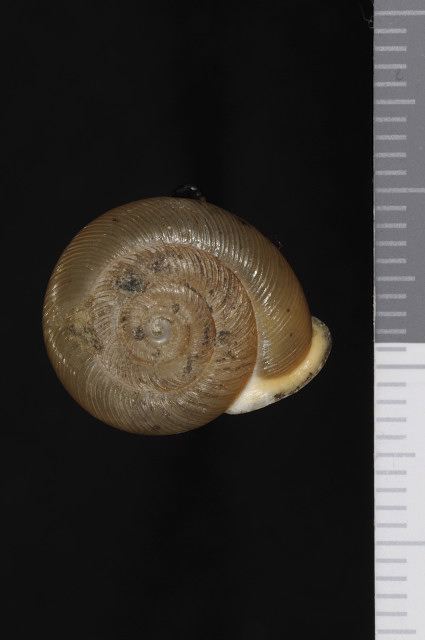
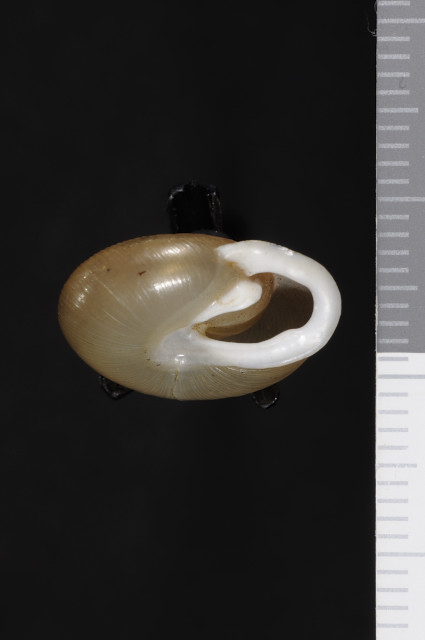
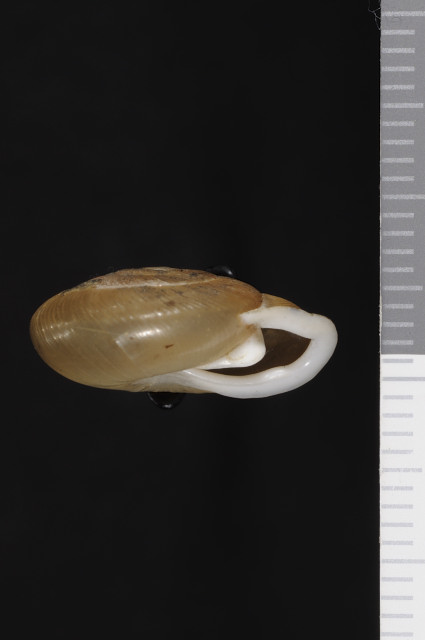
Patera laevior

Image Usage Information

  • The Academy of Natural Sciences of Philadelphia
  • CC BY-NC 4.0 DEED
  • For additional information about this specimen: Gary Rosenberg (rosenberg.ansp@drexel.edu)

Family: Polygyridae

Common name: Smooth Bladetooth

Discovery: Pilsbry, 1940

Identification

Width: 15-18 mm
Height: 7-8 mm
Whorls: ~5

The glossy shell of Patera laevior is less angular at the periphery than P. appressa, and bears weaker microsculpture. As in P. appressa, the aperture is wide and rounded, with a broad lip and a sharp rim inside the basal part of the opening.

Ecology

Patera laevior inhabits primarily rocky places in both rural and urban areas. It may occasionally be found near logs, river bluffs, and on the slopes of ravines (Hubricht, 1985).

Taxonomy

Patera laevior has also been known as Mesodon appressus laevior and M. laevior.

Distribution

This snail has a confusing distribution – concentrated on the western side of the Appalachian Mountains in Kentucky, Tennessee, and Alabama but also reported at scattered locations to the East as far as the Chesapeake Bay and North Carolina coast, where it is apparently introduced (Hubricht, 1985). In Virginia it is reported only from Pittsylvania and Dinwiddie Counties, though we did not find museum records for the latter.

Conservation

NatureServe Global Rank: G4
NatureServe State Rank: S2S4
Virginia’s wildlife action plan: Tier IV

sidebar

About

  • Mission & Commitments
  • Directors Team
  • Museum History

Get Involved

  • Volunteer
  • Membership
  • Carnegie Discoverers
  • Donate
  • Employment
  • Events

Bring a Group

  • Groups of 10 or More
  • Birthday Parties at the Museum
  • Field Trips

Powdermill

  • Powdermill Nature Reserve
  • Powdermill Field Trips
  • Powdermill Staff
  • Research at Powdermill

More Information

  • Image Permission Requests
  • Science Stories
  • Accessibility
  • Shopping Cart
  • Contact
  • Visitor Policies
One of the Four Carnegie Museums | © Carnegie Institute | Privacy Policy | Terms of Use | Accessibility
Rad works here logo