• Skip to primary navigation
  • Skip to main content
  • Skip to primary sidebar

Carnegie Museum of Natural History

One of the Four Carnegie Museums of Pittsburgh

  • Visit
    • Buy Tickets
    • Visitor Information
    • Exhibitions
    • Events
    • Dining at the Museum
    • Celebrate at the Museum
    • Powdermill Nature Reserve
    • Event Venue Rental
  • Learn
    • Field Trips
    • Educator Information
    • Programs at the Museum
    • Bring the Museum to You
    • Guided Programs FAQ
    • Programs Online
    • Climate and Rural Systems Partnership
  • Research
    • Scientific Sections
    • Science Stories
    • Science Videos
    • Senior Science & Research Staff
    • Museum Library
    • Science Seminars
    • Scientific Publications
    • Specimen and Artifact Identification
  • About
    • Mission & Commitments
    • Directors Team
    • Museum History
  • Tickets
  • Give
  • Shop

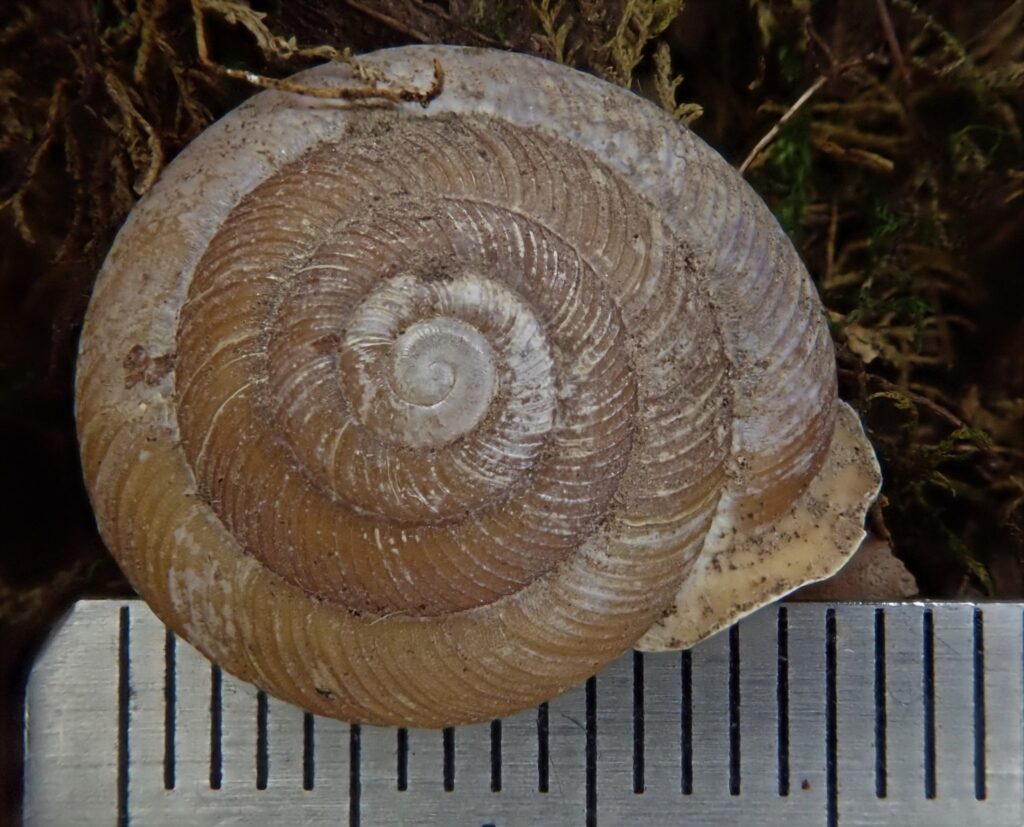
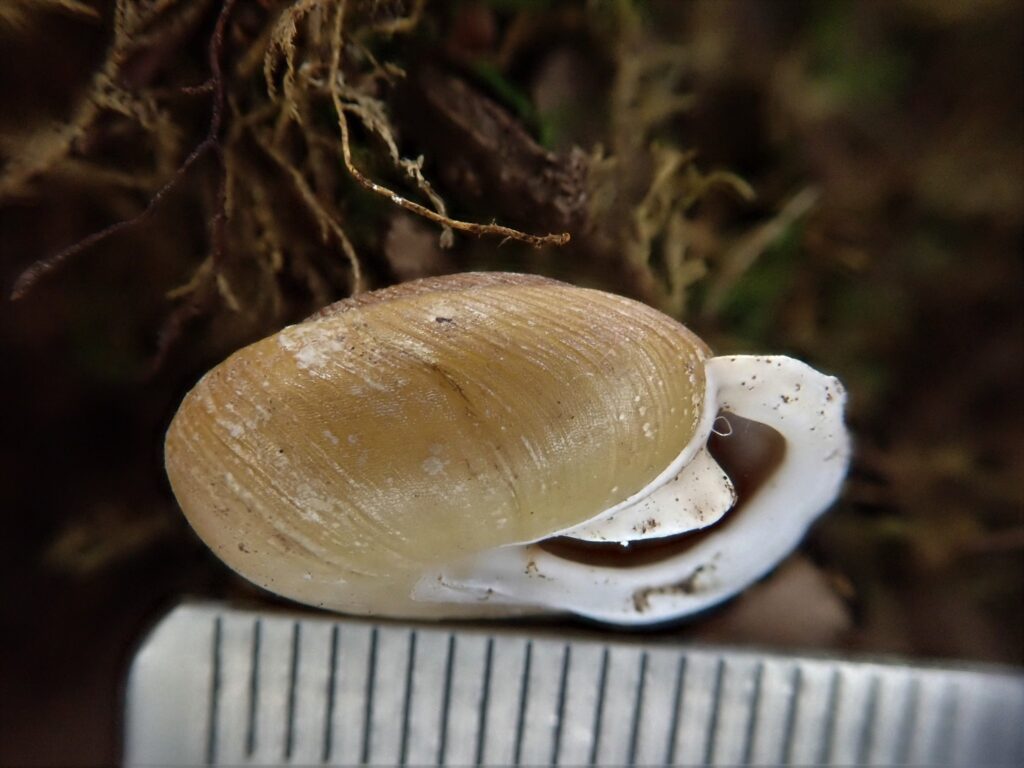
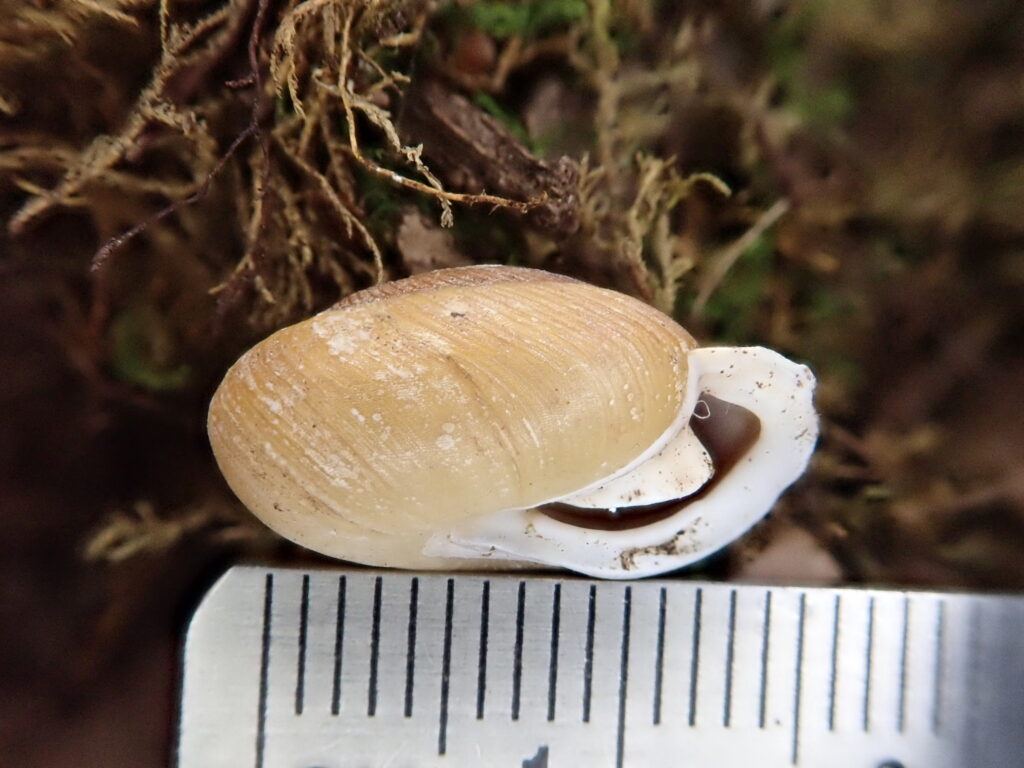
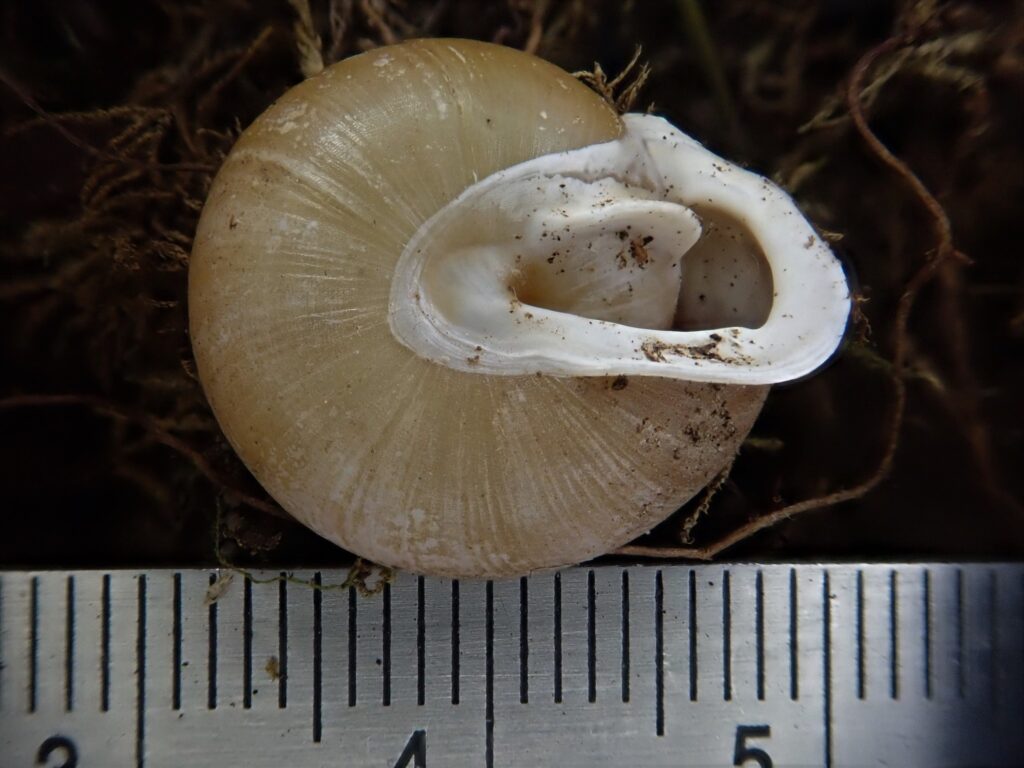
Patera appressa

Image Usage Information

  • Barb Graham
  • CC BY-NC 4.0 DEED
  • Additional information about this specimen

Family: Polygyridae

Common name:  Flat Bladetooth

Discovery: Say, 1821

Identification

Width: 15-20 mm
Height: 7-9 mm
Whorls: 4+

The flattened shell of Patera appressa is decorated with coarse, radial striae beginning at the second whorl, and some scattered, microscopic papillae. Fine striae on the inner whorls are spaced at wide intervals. The shell comes to a sharp angle at the front periphery, but is less acute at the back. The aperture is wide and rounded, with a broad lip and a sharp rim inside the basal part of the opening. The umbilicus is covered.

Ecology

Patera appressa inhabits rocky areas of hardwood forests and river bluffs. It may also be found along roads and on urban terrain (Hubricht 1985). Its flattened shell is believed to be an adaptation for crawling among rocks.

Taxonomy

Synonyms for P. appressa include Helix appressa, H. linguifera, H. sancta georgiensis, Mesodon appressus, Polygyra appressa, P. a. extrema, P. a. linguifera, P. a. sculptior, and Triodopsis appressa.

Distribution

This is primarily a southern Appalachian species, reaching Ohio in the north and northern Alabama in the south (Hubricht, 1985). This snail is reported from central and southern Virginia.

Conservation

NatureServe Global Rank: G5
NatureServe State Rank: S4

sidebar

About

  • Mission & Commitments
  • Directors Team
  • Museum History

Get Involved

  • Volunteer
  • Membership
  • Carnegie Discoverers
  • Donate
  • Employment
  • Events

Bring a Group

  • Groups of 10 or More
  • Birthday Parties at the Museum
  • Field Trips

Powdermill

  • Powdermill Nature Reserve
  • Powdermill Field Trips
  • Powdermill Staff
  • Research at Powdermill

More Information

  • Image Permission Requests
  • Science Stories
  • Accessibility
  • Shopping Cart
  • Contact
  • Visitor Policies
One of the Four Carnegie Museums | © Carnegie Institute | Privacy Policy | Terms of Use | Accessibility
Rad works here logo