• Skip to primary navigation
  • Skip to main content
  • Skip to primary sidebar

Carnegie Museum of Natural History

One of the Four Carnegie Museums of Pittsburgh

  • Visit
    • Buy Tickets
    • Visitor Information
    • Exhibitions
    • Events
    • Dining at the Museum
    • Celebrate at the Museum
    • Powdermill Nature Reserve
    • Event Venue Rental
  • Learn
    • Field Trips
    • Educator Information
    • Programs at the Museum
    • Bring the Museum to You
    • Guided Programs FAQ
    • Programs Online
    • Climate and Rural Systems Partnership
  • Research
    • Scientific Sections
    • Science Stories
    • Science Videos
    • Senior Science & Research Staff
    • Museum Library
    • Science Seminars
    • Scientific Publications
    • Specimen and Artifact Identification
  • About
    • Mission & Commitments
    • Directors Team
    • Museum History
  • Tickets
  • Give
  • Shop

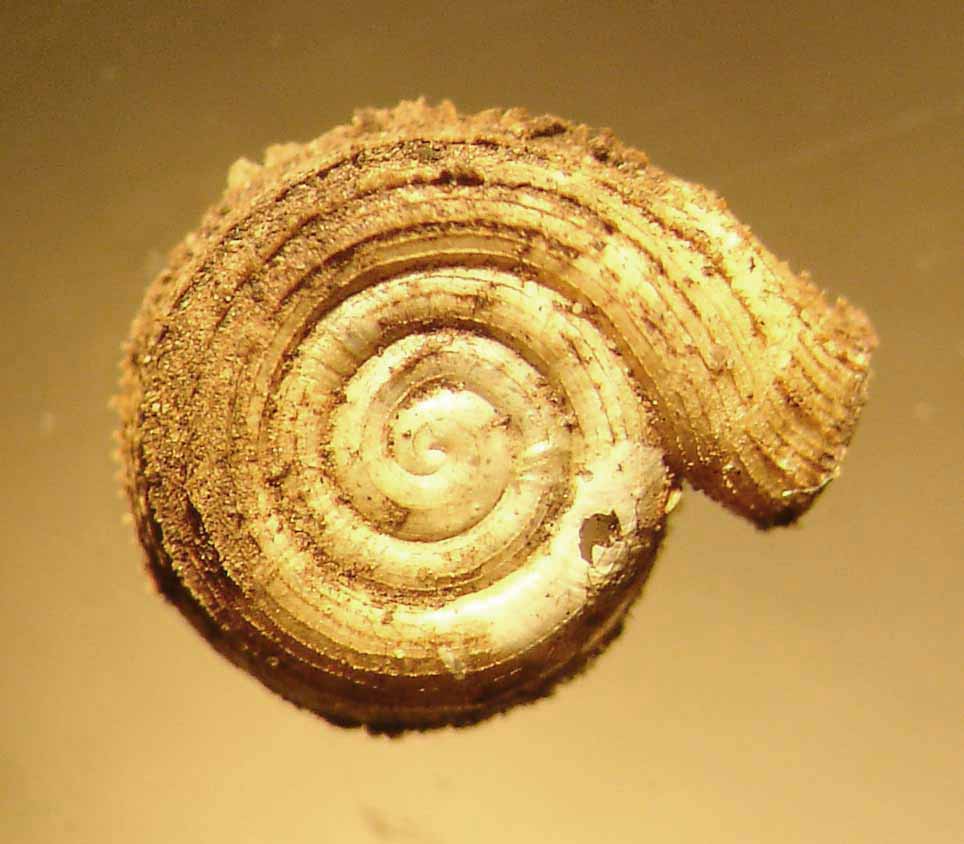
Polygyriscus virginianus

Image Usage Information

  • Ken Hotopp
  • CC BY-NC 4.0 DEED

Family: Helicodiscidae

Common name: Virginia Fringed Mountain Snail

Discovery: Burch, 1947

Identification

Width:  1.9 – 4.2 mm
Height: ≈1.3 mm
Whorls: 4+

The small shell of Polygyriscus virginianus is flattened top and bottom, with rather deep whorls. The apex does not rise above the body whorl, and the umbilicus is only slightly impressed. The final part of the body whorl narrows and is deflected downward, becoming detached from the previous whorl. The aperture is slightly thickened, and contains a recessed transverse lamella. A second lamella is present on the upper palatal surface, receding into the opening.

The shell is sculptured with a series of spiral “comb-like” deciduous fringes, typically lost from the lower surfaces but retaining 8-10 series above (Solem, 1975). The animal is pale, and presumably blind like others in its family.

Ecology

Shells of P. virginianus are found mainly on and near forested dolomitic bluffs along the New River in the vicinity of Radford, Virginia. They are typically excavated from 10-30 cm of stony scree mixed with leaves and wood at the foot of slopes, below outcrops, or at the bases of trees; or beneath larger stones and talus. However, the handful of live animals that have been recovered have ranged from within 1 cm of the surface to 45 cm (Batie, 1987; Pearce & Hotopp, 2011).

Taxonomy

A synonym for P. virginianus is Polygyra virginiana.

Distribution

This animal is reported only from Pulaski County, Virginia.

Conservation

NatureServe Global Rank: G1
NatureServe State Rank: S1
State Status: Endangered
Virginia wildlife action plan: Tier I
Federal Status: Endangered

sidebar

About

  • Mission & Commitments
  • Directors Team
  • Museum History

Get Involved

  • Volunteer
  • Membership
  • Carnegie Discoverers
  • Donate
  • Employment
  • Events

Bring a Group

  • Groups of 10 or More
  • Birthday Parties at the Museum
  • Field Trips

Powdermill

  • Powdermill Nature Reserve
  • Powdermill Field Trips
  • Powdermill Staff
  • Research at Powdermill

More Information

  • Image Permission Requests
  • Science Stories
  • Accessibility
  • Shopping Cart
  • Contact
  • Visitor Policies
One of the Four Carnegie Museums | © Carnegie Institute | Privacy Policy | Terms of Use | Accessibility
Rad works here logo