• Skip to primary navigation
  • Skip to main content
  • Skip to primary sidebar

Carnegie Museum of Natural History

One of the Four Carnegie Museums of Pittsburgh

  • Visit
    • Buy Tickets
    • Visitor Information
    • Exhibitions
    • Events
    • Dining at the Museum
    • Celebrate at the Museum
    • Powdermill Nature Reserve
    • Event Venue Rental
  • Learn
    • Field Trips
    • Educator Information
    • Programs at the Museum
    • Bring the Museum to You
    • Guided Programs FAQ
    • Programs Online
    • Climate and Rural Systems Partnership
  • Research
    • Scientific Sections
    • Science Stories
    • Science Videos
    • Senior Science & Research Staff
    • Museum Library
    • Science Seminars
    • Scientific Publications
    • Specimen and Artifact Identification
  • About
    • Mission & Commitments
    • Directors Team
    • Museum History
  • Tickets
  • Give
  • Shop

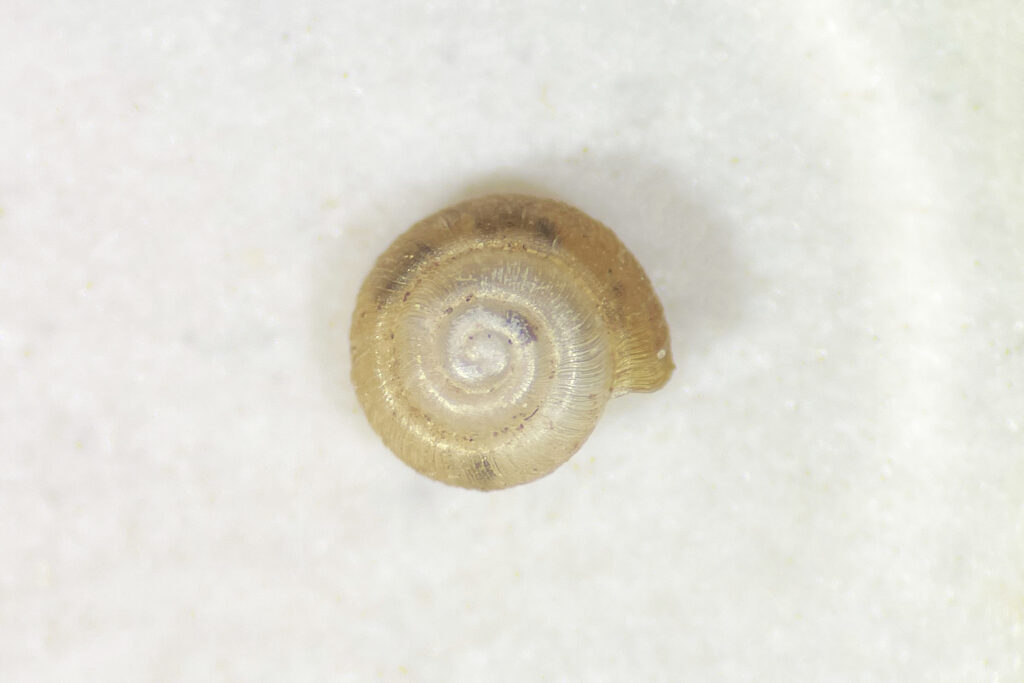
Punctum minutissimum

Image Usage Information

  • David Lang
  • CC BY-NC 4.0 DEED
  • Additional information about this specimen

Family: Punctidae

Common name: Small Spot

Discovery: I. Lea, 1841

Identification

Width: ~1.0-1.5 mm
Height: ~0.75 mm
Whorls: 4+

The fragile shell of Punctum minutissimum is a depressed heliciform shape. Its rounded whorls are covered with a pattern of fine, regular ribs. The shell is a golden-to-reddish-brown color, thin lipped, with a deep umbilicus. Its close relative P. blandianum has a lower spire and wider umbilicus.

Ecology

Punctum minutissimum is one of the most common and widespread snails living in forest leaf litter. Its numbers are often closely correlated with the richness of its habitat. In central Tennessee it was abundant and significantly associated with soils having a high moisture content, neutral pH, and leaf litter (Coney et al., 1982). It was also abundant and favored rich habitats in northern Maine (Nekola, 2008), New York (Beier et al., 2012), and Maryland (Hotopp, 2002).

Taxonomy

Synonyms for P. minutissimum are P. pygmaeum, and Helix minutissima.

Distribution

This animal can be found throughout the East (except for southern Florida), and west into the Great Plains. In Virginia reports are scattered across the state.

Conservation

NatureServe Global Rank: G5
NatureServe State Rank: S4

sidebar

About

  • Mission & Commitments
  • Directors Team
  • Museum History

Get Involved

  • Volunteer
  • Membership
  • Carnegie Discoverers
  • Donate
  • Employment
  • Events

Bring a Group

  • Groups of 10 or More
  • Birthday Parties at the Museum
  • Field Trips

Powdermill

  • Powdermill Nature Reserve
  • Powdermill Field Trips
  • Powdermill Staff
  • Research at Powdermill

More Information

  • Image Permission Requests
  • Science Stories
  • Accessibility
  • Shopping Cart
  • Contact
  • Visitor Policies
One of the Four Carnegie Museums | © Carnegie Institute | Privacy Policy | Terms of Use | Accessibility
Rad works here logo