• Skip to primary navigation
  • Skip to main content
  • Skip to primary sidebar

Carnegie Museum of Natural History

One of the Four Carnegie Museums of Pittsburgh

  • Visit
    • Buy Tickets
    • Visitor Information
    • Exhibitions
    • Events
    • Dining at the Museum
    • Celebrate at the Museum
    • Powdermill Nature Reserve
    • Event Venue Rental
  • Learn
    • Field Trips
    • Educator Information
    • Programs at the Museum
    • Bring the Museum to You
    • Guided Programs FAQ
    • Programs Online
    • Climate and Rural Systems Partnership
  • Research
    • Scientific Sections
    • Science Stories
    • Science Videos
    • Senior Science & Research Staff
    • Museum Library
    • Science Seminars
    • Scientific Publications
    • Specimen and Artifact Identification
  • About
    • Mission & Commitments
    • Directors Team
    • Museum History
  • Tickets
  • Give
  • Shop

Rumina decollata

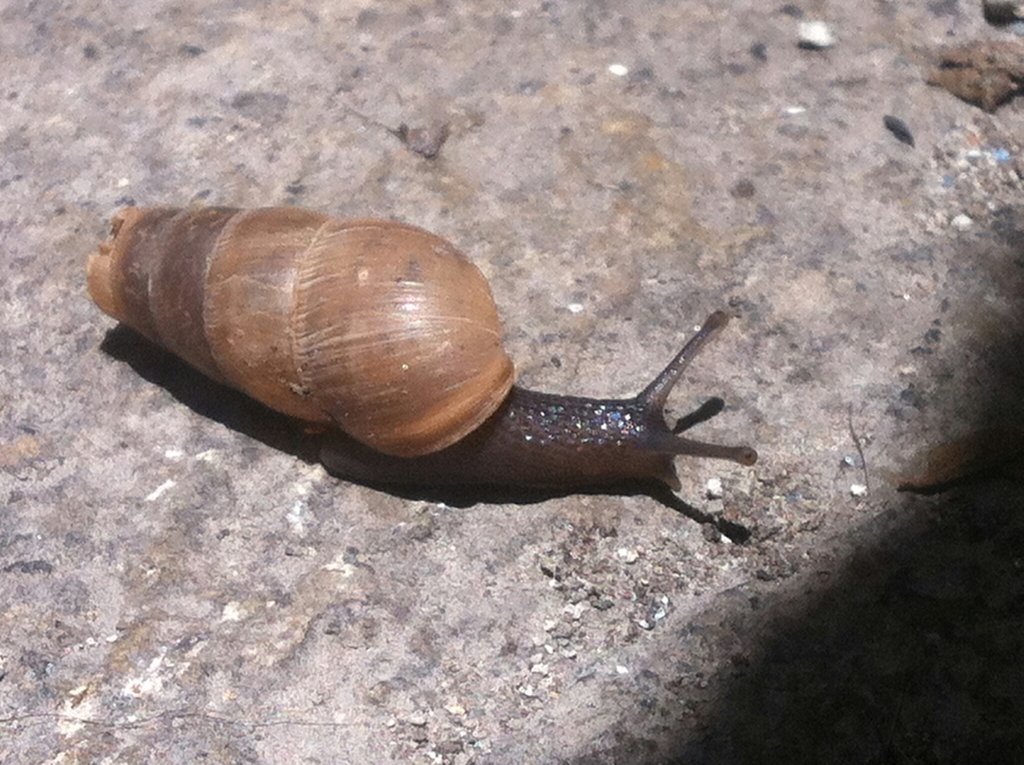
superior view of decollate snail, with dark body and head and light but not translucent oblong shell

Image Usage Information

  • Alberto López Osorio, iNaturalist
  • CC BY-NC 4.0 DEED
  • Additional information about this specimen

Family: Achatinidae

Common name: Decollate Snail

Discovery: Linnaeus, 1758

Introduced Species

Identification

Height: 22.5-30.0 mm
Width: 10-11 mm
Whorls: 4.0-5.5

The shell of Rumina decollata is a tall, tapering cylinder with a truncated apex (Pilsbry, 1946; Kerney & Cameron, 1979). The lip is simple and thin. The whorls are sculptured with irregular growth wrinkles and occasional fine spiral striae. Shells are light-colored – tan, white, or light brown, and a bit glossy. The animal is a pale yellow.

The shell’s apex does break off in stages, but the animal inside remains protected by a shell-like plate at the break. Juvenile shells are narrow, taller and tapering, with a blunt apex.

Ecology

In Mediterranean areas, it is found in dry, open habitats upon calcium-rich soils (Kerney & Cameron, 1979). Its eggs are 2.5 mm in diameter, relatively large. This snail is ominivorous, and is sometimes sold as a control agent for garden pest slugs and snails. Some states have banned this trade.

Taxonomy

Synonyms for R. decollata include Helix decollata, Stenogyra decollata, Bulimus decollata, and B. multilatus.

Distribution

Rumina decollata is introduced in North America from the Mediterranean. It has been introduced to the Atlantic, Gulf, and Pacific Coasts. In Virginia, specimens are reported only from Norfolk.

Conservation

NatureServe Global Rank: G5
NatureServe State Rank: Not listed

Author: Ken Hotopp
Publication date:2/2013

sidebar

About

  • Mission & Commitments
  • Directors Team
  • Museum History

Get Involved

  • Volunteer
  • Membership
  • Carnegie Discoverers
  • Donate
  • Employment
  • Events

Bring a Group

  • Groups of 10 or More
  • Birthday Parties at the Museum
  • Field Trips

Powdermill

  • Powdermill Nature Reserve
  • Powdermill Field Trips
  • Powdermill Staff
  • Research at Powdermill

More Information

  • Image Permission Requests
  • Science Stories
  • Accessibility
  • Shopping Cart
  • Contact
  • Visitor Policies
One of the Four Carnegie Museums | © Carnegie Institute | Privacy Policy | Terms of Use | Accessibility
Rad works here logo
