• Skip to primary navigation
  • Skip to main content
  • Skip to primary sidebar

Carnegie Museum of Natural History

One of the Four Carnegie Museums of Pittsburgh

  • Visit
    • Buy Tickets
    • Visitor Information
    • Exhibitions
    • Events
    • Dining at the Museum
    • Celebrate at the Museum
    • Powdermill Nature Reserve
    • Event Venue Rental
  • Learn
    • Field Trips
    • Educator Information
    • Programs at the Museum
    • Bring the Museum to You
    • Guided Programs FAQ
    • Programs Online
    • Climate and Rural Systems Partnership
  • Research
    • Scientific Sections
    • Science Stories
    • Science Videos
    • Senior Science & Research Staff
    • Museum Library
    • Science Seminars
    • Scientific Publications
    • Specimen and Artifact Identification
  • About
    • Mission & Commitments
    • Directors Team
    • Museum History
  • Tickets
  • Give
  • Shop

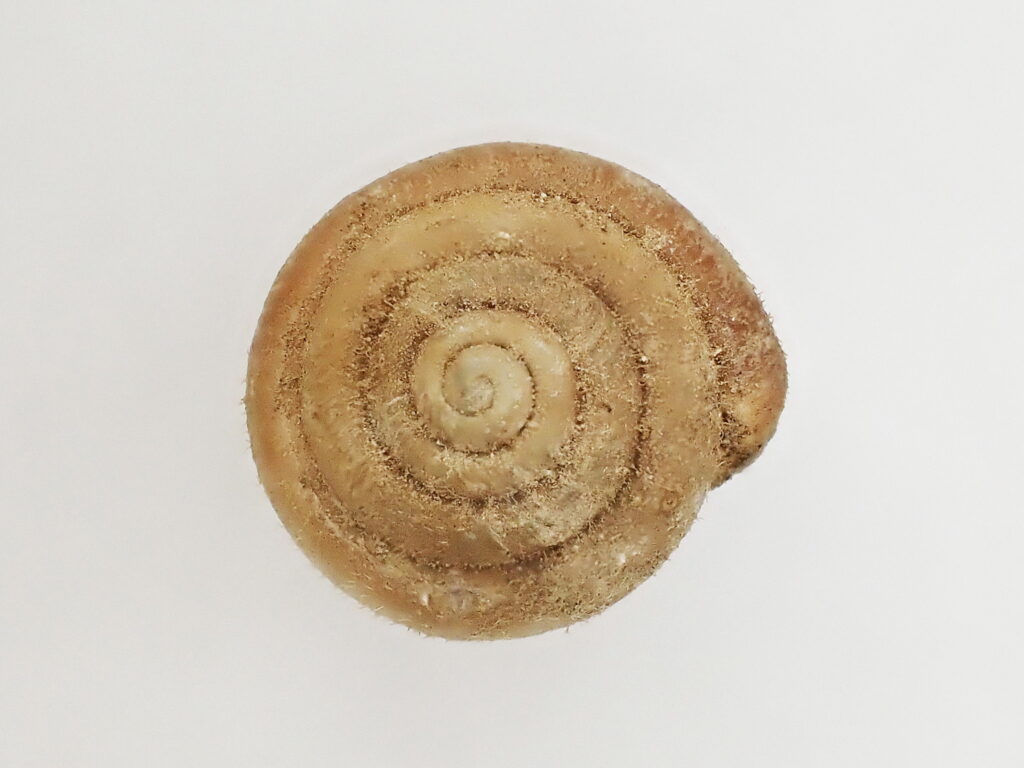
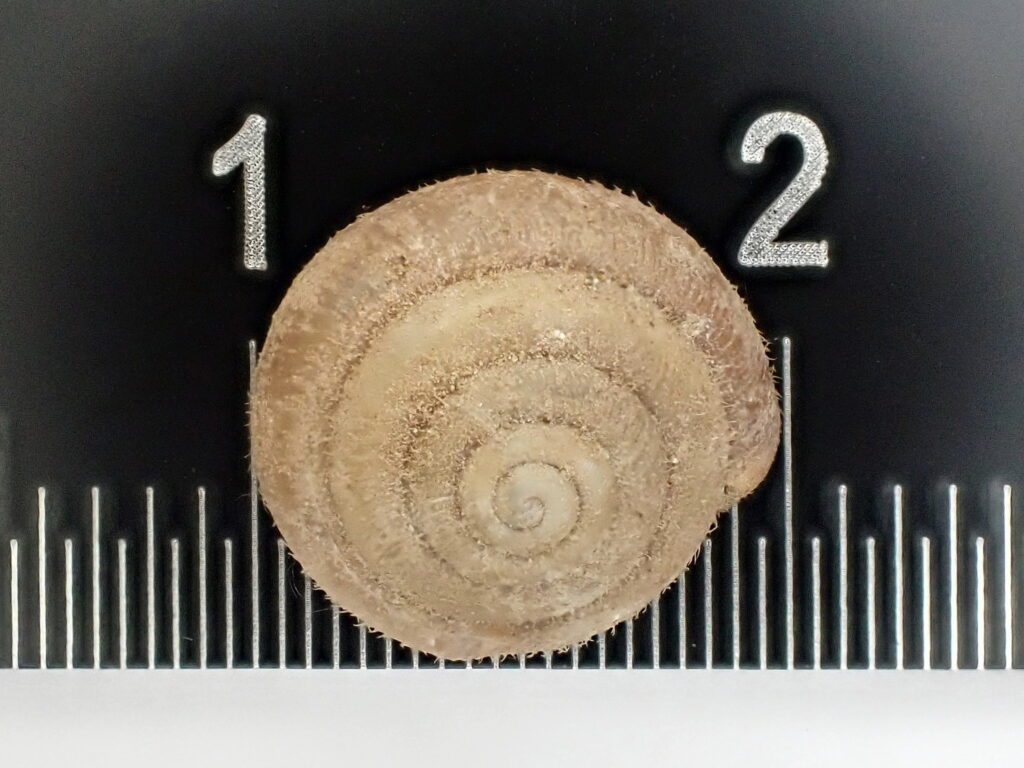
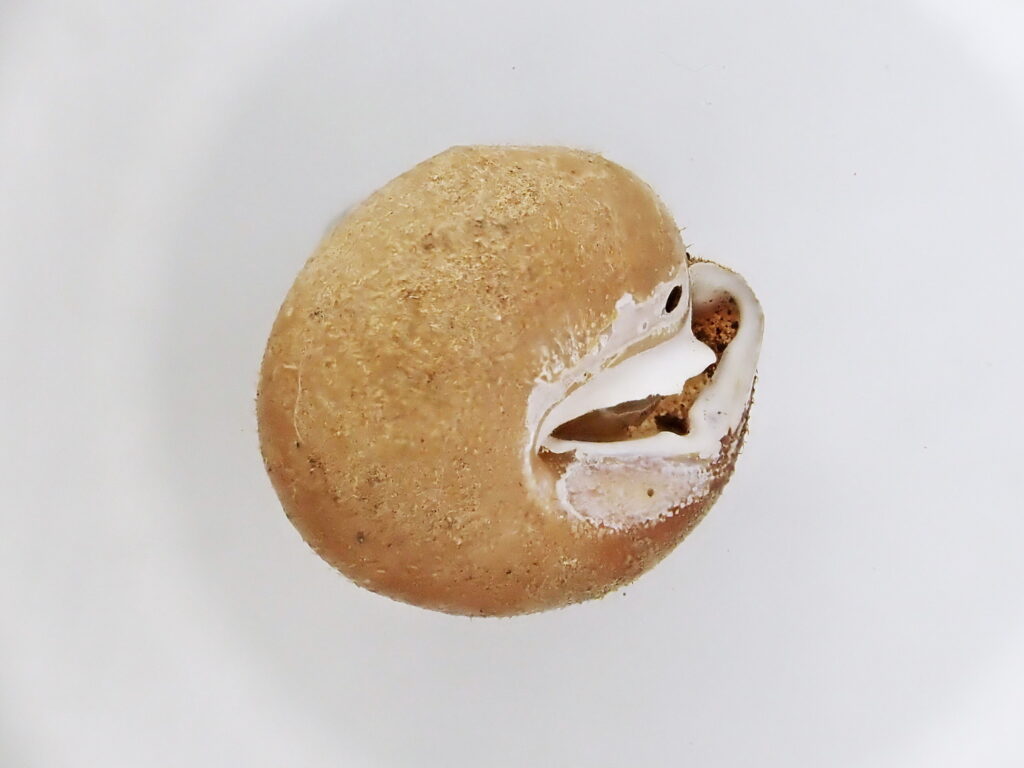
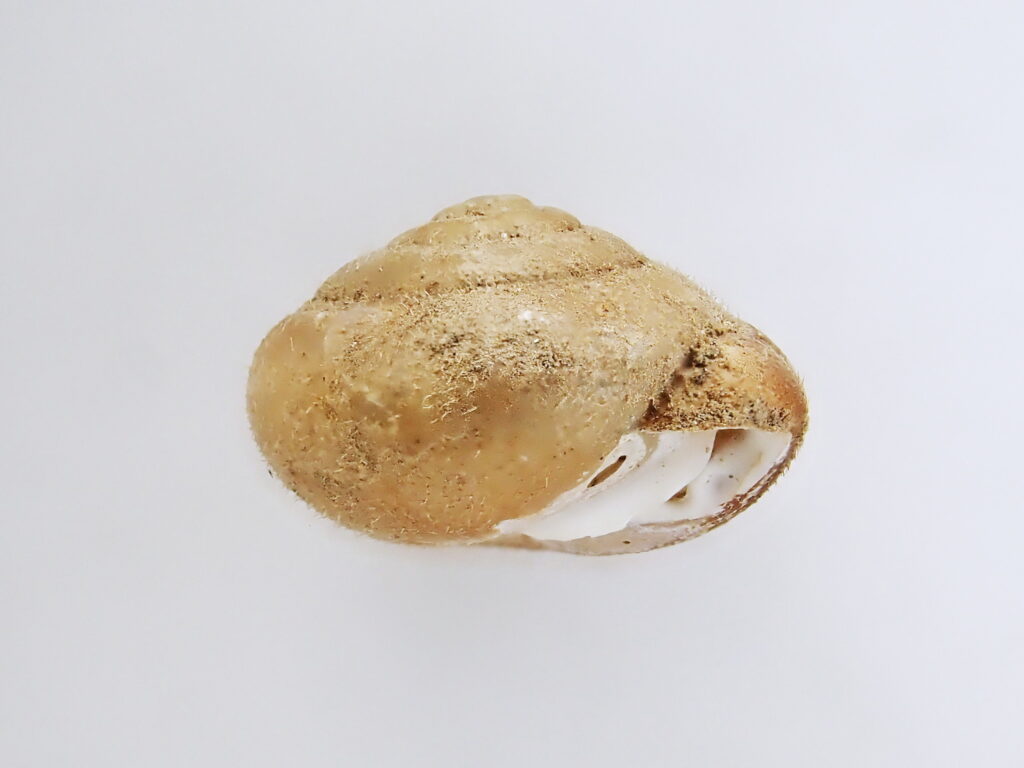
Stenotrema barbatum

Image Usage Information

  • David Lang
  • CC BY-NC 4.0 DEED
  • Additional information about this specimen

Family: Polygyridae

Common name: Bristled Slitmouth

Discovery: G.H. Clapp, 1904

Identification

Width: 8-11 mm
Height: 5.5-7.0 mm tall
Whorls: 5+

Tiny processes or “hairs” cover the shell of Stenotrema barbatum, which has a very narrow aperture. In side view its parietal lamella or “tooth” is quite evident, and the final whorl of its shell is angled high on the side, giving it the ap­pearance of having “shoulders.” Its hairs are relatively coarse and its shell a bit larger than some of its close relatives. Like other slitmouths it has a covered umbilicus.

Ecology

Stenotrema barbatum can be found under logs and leaf litter. In most areas it frequents wooded areas near or on floodplains; in West Virginia and Pennsylvania it prefers more upland sites (Hubricht, 1985).

Taxonomy

Stenotrema barbatum has also been known as Stenotrema barbata, S. hirsutum barbatum, and Polygyra (Stenotrema) barbata.

Distribution

This is typically a Midwestern and mid-Atlantic forest species, ranging from Minnesota and Kansas to the north and west, to Alabama, the Carolinas, and Massachusetts in the east. In Virginia it is found in scattered locations on the coast and south-central counties.

Conservation

NatureServe Global Rank: G5
NatureServe State Rank: S3S4

sidebar

About

  • Mission & Commitments
  • Directors Team
  • Museum History

Get Involved

  • Volunteer
  • Membership
  • Carnegie Discoverers
  • Donate
  • Employment
  • Events

Bring a Group

  • Groups of 10 or More
  • Birthday Parties at the Museum
  • Field Trips

Powdermill

  • Powdermill Nature Reserve
  • Powdermill Field Trips
  • Powdermill Staff
  • Research at Powdermill

More Information

  • Image Permission Requests
  • Science Stories
  • Accessibility
  • Shopping Cart
  • Contact
  • Visitor Policies
One of the Four Carnegie Museums | © Carnegie Institute | Privacy Policy | Terms of Use | Accessibility
Rad works here logo