• Skip to primary navigation
  • Skip to main content
  • Skip to primary sidebar

Carnegie Museum of Natural History

One of the Four Carnegie Museums of Pittsburgh

  • Visit
    • Buy Tickets
    • Visitor Information
    • Exhibitions
    • Events
    • Dining at the Museum
    • Celebrate at the Museum
    • Powdermill Nature Reserve
    • Event Venue Rental
  • Learn
    • Field Trips
    • Educator Information
    • Programs at the Museum
    • Bring the Museum to You
    • Guided Programs FAQ
    • Programs Online
    • Climate and Rural Systems Partnership
  • Research
    • Scientific Sections
    • Science Stories
    • Science Videos
    • Senior Science & Research Staff
    • Museum Library
    • Science Seminars
    • Scientific Publications
    • Specimen and Artifact Identification
  • About
    • Mission & Commitments
    • Directors Team
    • Museum History
  • Tickets
  • Give
  • Shop

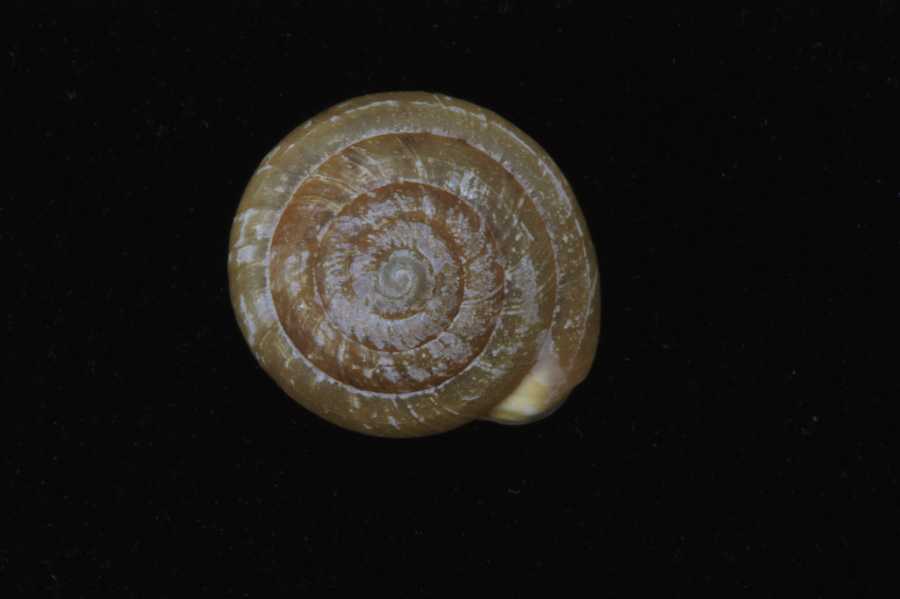
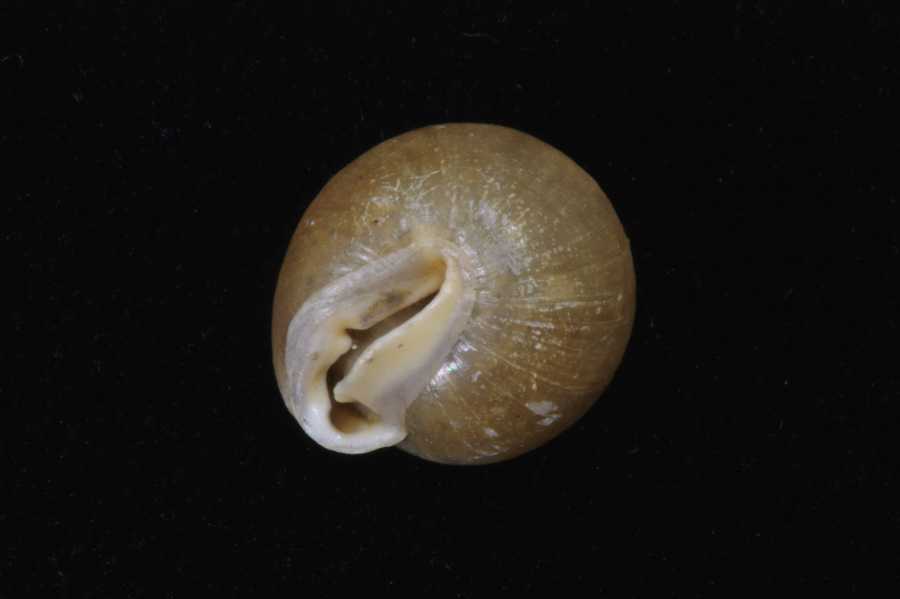
Stenotrema stenotrema

Image Usage Information

  • Chicago Academy of Sciences, Malacology Collection
  • CC BY-NC-SA 3.0 DEED
  • Additional information about this specimen

Family: Polygyridae

Common name: Inland Slitmouth

Discovery: Pfeiffer, 1842

Identification

Width: 7.5-11.0 mm
Height: 5.5-8.0 mm
Whorls: 5+

The shell of Stenotrema stenotrema has a depressed globe shape and is covered in short hairs. The slit-like aperture has a high, curved parietal tooth and the straight basal lip is notched near the middle. It is usually a bit larger than its close relative S. hirsutum.

Ecology

This species can be found in a variety of habitats, especially in hilly, wooded areas and in ravines (Hubricht, 1985). In Tennessee it has a mild affinity for woody debris, steep slopes, and oak-hickory-sugar maple forests (Coney et al, 1982).

Taxonomy

Synonyms for S. stenotrema include Helix hirsuta, H. stenotrema, Polygyra stenotrema, P. s. nuda, P. s. seminuda, P. (Stenotrema) voluminosa, Stenostoma convexa, Stenotrema convexa, and S. stenotremum.

Distribution

Stenotrema stenotrema has a wide range that extends throughout much of the Midwest and southeastern United States, as far north as Ohio and Illinois, west to eastern Oklahoma and Texas, and as far south as the Gulf Coast (Pilsbry, 1940; Hubricht, 1985). In Virginia it occurs in the western and northern parts of the state, but is absent from the coast and piedmont.

Conservation

NatureServe Global Rank: G5
NatureServe State Rank: S4

sidebar

About

  • Mission & Commitments
  • Directors Team
  • Museum History

Get Involved

  • Volunteer
  • Membership
  • Carnegie Discoverers
  • Donate
  • Employment
  • Events

Bring a Group

  • Groups of 10 or More
  • Birthday Parties at the Museum
  • Field Trips

Powdermill

  • Powdermill Nature Reserve
  • Powdermill Field Trips
  • Powdermill Staff
  • Research at Powdermill

More Information

  • Image Permission Requests
  • Science Stories
  • Accessibility
  • Shopping Cart
  • Contact
  • Visitor Policies
One of the Four Carnegie Museums | © Carnegie Institute | Privacy Policy | Terms of Use | Accessibility
Rad works here logo