• Skip to primary navigation
  • Skip to main content
  • Skip to primary sidebar

Carnegie Museum of Natural History

One of the Four Carnegie Museums of Pittsburgh

  • Visit
    • Buy Tickets
    • Visitor Information
    • Exhibitions
    • Events
    • Dining at the Museum
    • Celebrate at the Museum
    • Powdermill Nature Reserve
    • Event Venue Rental
    • Gift Cards
  • Learn
    • Field Trips
    • Educator Information
    • Programs at the Museum
    • Bring the Museum to You
    • Guided Programs FAQ
    • Programs Online
    • Climate and Rural Systems Partnership
  • Research
    • Scientific Sections
    • Science Stories
    • Science Videos
    • Senior Science & Research Staff
    • Museum Library
    • Science Seminars
    • Scientific Publications
    • Specimen and Artifact Identification
  • About
    • Mission & Commitments
    • Directors Team
    • Museum History
  • Tickets
  • Give
  • Shop

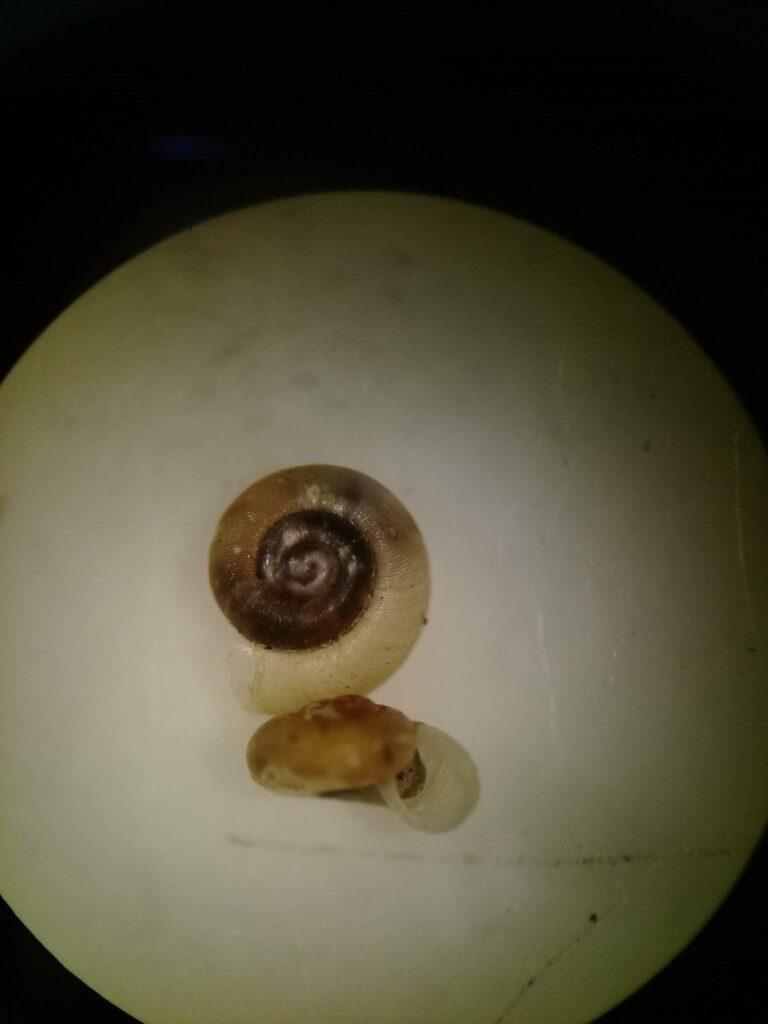
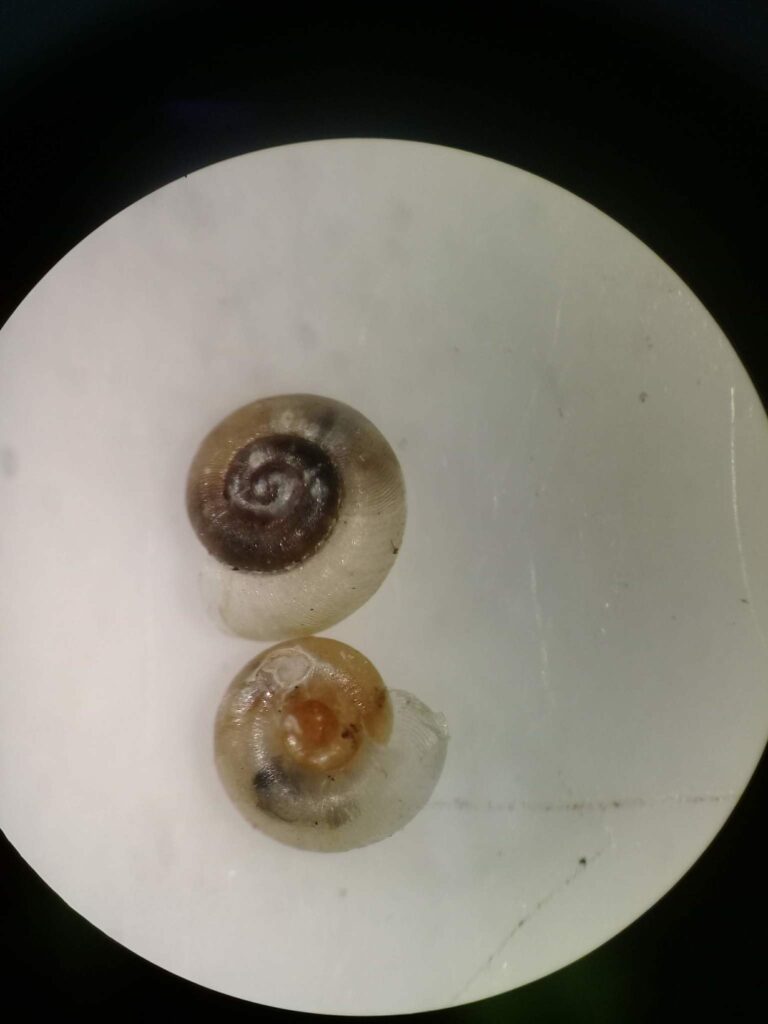
Striatura milium

Image Usage Information

  • Thomas Everest
  • CC BY-NC 4.0 DEED
  • Additional information about this specimen

Family: Gastrodontidae

Common name: Fine-ribbed Striate

Described by: E.S. Morse, 1859

Identification

Width: 1.5 mm
Height: 0.8 mm
Whorls: 3

The tiny shell of Striatura milium has a depressed heliciform shape, is more loosely coiled and has a little bit coarser microsculpture than other Striatura species. Compared with other striates, it lacks sculpture on its nuclear whorl. The tops of the remaining whorls are ribbed radially, with intersecting spiral lirae. The base is nearly smooth. The umbilicus is open and the rounded aperture is angled slightly downward.

Ecology

This animal is one of the most abundant leaf litter snails of the Northeast, inhabiting mesic upland woods. In northern Maine it is ubiquitous, except at the wettest sites, with populations highest in acid, wooded wetlands and fens (Nekola, 2008). It is common in New York’s Adirondack Mountains as well (Beier et al., 2012).

Taxonomy

Striatura milium has also been known as Helix milium, Striatura milium, and Zonites milium.

Distribution

This species is a high-latitude animal with a range extending south in the East.  Striatura milium has been found as far west as South Dakota, south to Louisiana, and north to the Canadian Maritime provinces. It Virginia it is reported from northeastern counties. Burch (1956) reports this species from the Richmond area counties, but may have confused this species with S. meridionalis.

Conservation

NatureServe Global Rank: G5
NatureServe State Rank: S1S3
Virginia’s wildlife action plan: Tier IV

sidebar

About

  • Mission & Commitments
  • Directors Team
  • Museum History

Get Involved

  • Volunteer
  • Membership
  • Carnegie Discoverers
  • Donate
  • Employment
  • Events

Bring a Group

  • Groups of 10 or More
  • Birthday Parties at the Museum
  • Field Trips

Powdermill

  • Powdermill Nature Reserve
  • Powdermill Field Trips
  • Powdermill Staff
  • Research at Powdermill

More Information

  • Image Permission Requests
  • Science Stories
  • Accessibility
  • Shopping Cart
  • Contact
  • Visitor Policies
One of the Four Carnegie Museums | © Carnegie Institute | Privacy Policy | Terms of Use | Accessibility
Rad works here logo