• Skip to primary navigation
  • Skip to main content
  • Skip to primary sidebar

Carnegie Museum of Natural History

One of the Four Carnegie Museums of Pittsburgh

  • Visit
    • Buy Tickets
    • Visitor Information
    • Exhibitions
    • Events
    • Dining at the Museum
    • Celebrate at the Museum
    • Powdermill Nature Reserve
    • Event Venue Rental
  • Learn
    • Field Trips
    • Educator Information
    • Programs at the Museum
    • Bring the Museum to You
    • Guided Programs FAQ
    • Programs Online
    • Climate and Rural Systems Partnership
  • Research
    • Scientific Sections
    • Science Stories
    • Science Videos
    • Senior Science & Research Staff
    • Museum Library
    • Science Seminars
    • Scientific Publications
    • Specimen and Artifact Identification
  • About
    • Mission & Commitments
    • Directors Team
    • Museum History
  • Tickets
  • Give
  • Shop

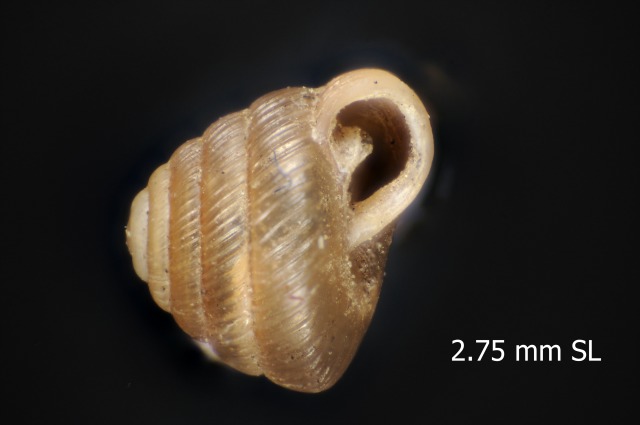
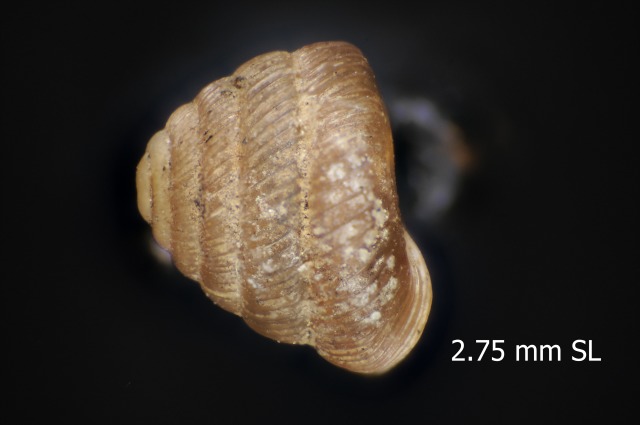
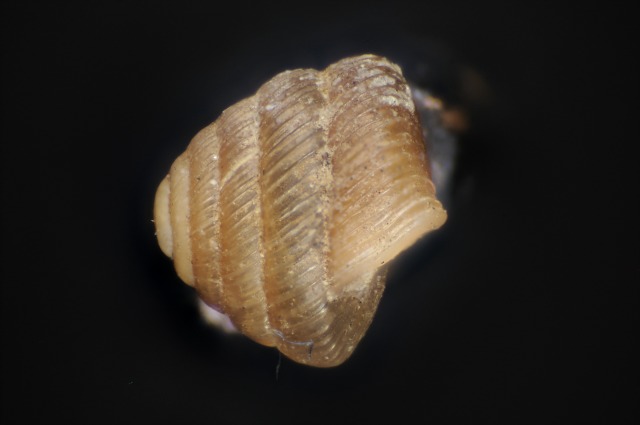
Strobilops affinis

Image Usage Information

  • The Academy of Natural Sciences of Philadelphia
  • CC BY-NC 4.0 DEED
  • For additional information about this specimen: Gary Rosenberg (rosenberg.ansp@drexel.edu)

Family: Strobilopsidae

Common name: Eightfold Pinecone

Discovery: Pilsbry, 1893

Identification

Width: 2.7 mm
Height: 2.5 mm tall
Whorls: 6

Strobilops affinis is a dome-shaped shell sculptured with minute transverse ribs. The aperture has a reflected edge and the umbilicus is perforate to umbilicate. Elongated lamellae are visible in the aperture.  Within the interior are a series of rather short, nearly equal-length lamellae that can often be seen through the bottom of live and fresh-dead shells.

Ecology

This species is found on logs during wet weather and on leaf litter during drier parts of the year, in mixed hardwood forests (Hubricht, 1985). It is also reported from grassland and fen habitats in association with marl beds (NatureServe, 2017).

Taxonomy

There are no synonyms.

Distribution

Strobilops affinis ranges from Missouri and Minnesota east to Pennsylvania, Massachusetts, Maine and New York, but more sparsely in the east. It is reported it from four counties in New York based on museum records (Hotopp and Pearce, 2007). It is listed as Critically Imperiled in Pennsylvania. 

This enigmatic species was previously reported in West Virginia by multiple investigators but never by Hubricht, who spent a fair amount of time in the state.  His closest records were from Meigs County, Ohio.  Specimens examined from the Carnegie Museum labeled as this species were either S. aeneus or S. labyrinthicus, therefore its occurrence in West Virginia remains doubtful (Dourson, 2015).

Conservation

NatureServe Global Rank: G4, apparently secure. NatureServe State Ranks: Pennsylvania, S1; not ranked in several other states.

sidebar

About

  • Mission & Commitments
  • Directors Team
  • Museum History

Get Involved

  • Volunteer
  • Membership
  • Carnegie Discoverers
  • Donate
  • Employment
  • Events

Bring a Group

  • Groups of 10 or More
  • Birthday Parties at the Museum
  • Field Trips

Powdermill

  • Powdermill Nature Reserve
  • Powdermill Field Trips
  • Powdermill Staff
  • Research at Powdermill

More Information

  • Image Permission Requests
  • Science Stories
  • Accessibility
  • Shopping Cart
  • Contact
  • Visitor Policies
One of the Four Carnegie Museums | © Carnegie Institute | Privacy Policy | Terms of Use | Accessibility
Rad works here logo