• Skip to primary navigation
  • Skip to main content
  • Skip to primary sidebar

Carnegie Museum of Natural History

One of the Four Carnegie Museums of Pittsburgh

  • Visit
    • Buy Tickets
    • Visitor Information
    • Exhibitions
    • Events
    • Dining at the Museum
    • Celebrate at the Museum
    • Powdermill Nature Reserve
    • Event Venue Rental
  • Learn
    • Field Trips
    • Educator Information
    • Programs at the Museum
    • Bring the Museum to You
    • Guided Programs FAQ
    • Programs Online
    • Climate and Rural Systems Partnership
  • Research
    • Scientific Sections
    • Science Stories
    • Science Videos
    • Senior Science & Research Staff
    • Museum Library
    • Science Seminars
    • Scientific Publications
    • Specimen and Artifact Identification
  • About
    • Mission & Commitments
    • Directors Team
    • Museum History
  • Tickets
  • Give
  • Shop

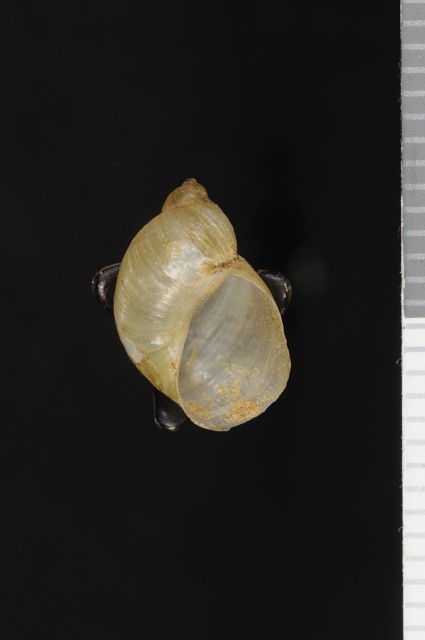
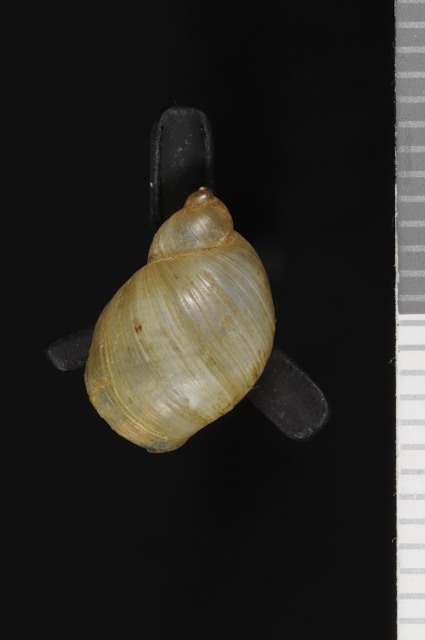
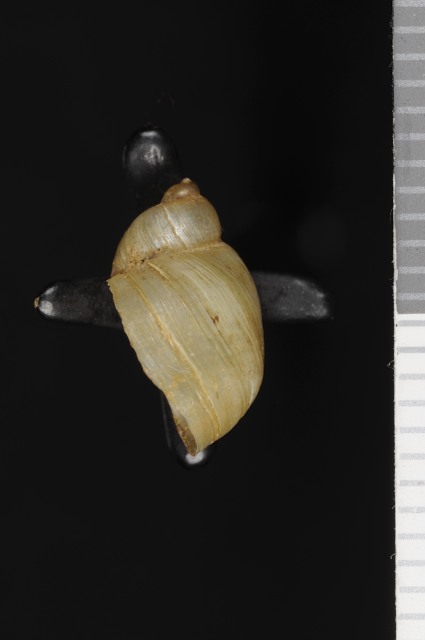
Succinea indiana

Image Usage Information

  • The Academy of Natural Sciences of Philadelphia
  • CC BY-NC 4.0 DEED
  • For additional information about this specimen: Gary Rosenberg (rosenberg.ansp@drexel.edu)

Family: Succineidae

Common name: Xeric Ambersnail

Discovery: Pilsbry, 1905

Identification

Width: 6-7 mm
Height: 10-11 mm
Whorls: 3.5

The shell is very thin, roundly ovate, and yellow-brown with a reddish apex. Minute growth lines and wrinkles are present. The whorls are very convex with the last one inflated. The aperture is 7-8 mm in length, and its lower lip is arced or slightly flat (Pilsbry, 1905, 1948). The animal’s mantle is plain dark gray (Hubricht, 1958). The genus Succinea has a swollen genital opening (Pilsbry, 1948).

Dissection may be necessary to identify succineid species. Hubricht (1958) notes that the penis of S. indiana is like that of S. campestris, which is to say, the penis appears to be wide but actually consists of a thick sheath around a thin penis (Pilsbry, 1948). No penial appendix is present.

Note that Succineidae show a great deal of intraspecific variation in size and proportions, both within and between sites (Pilsbry, 1948).

Ecology

The snail occupies dry, sunny ground (Hubricht, 1985). Its type locality is a grassy hillside (Hubricht, 1958). Little is known about its ecology.

Taxonomy

Succinea vaginacontorta is a synonym.

Distribution

The snail is widely distributed across the eastern half of the US, with populations scattered as far west as the Dakotas and Oklahoma, south to Florida, and north to Maine and Ontario, Canada. In the northeastern US, records include Delaware, Maine, Maryland (Queen Annes and Talbot Counties), New Jersey, and counties throughout New York and Pennsylvania. Hubricht (1985) considers S. indiana’s range incompletely known because it is only identifiable through dissection.

Conservation

NatureServe Global Rank: G5, Globally Secure.

sidebar

About

  • Mission & Commitments
  • Directors Team
  • Museum History

Get Involved

  • Volunteer
  • Membership
  • Carnegie Discoverers
  • Donate
  • Employment
  • Events

Bring a Group

  • Groups of 10 or More
  • Birthday Parties at the Museum
  • Field Trips

Powdermill

  • Powdermill Nature Reserve
  • Powdermill Field Trips
  • Powdermill Staff
  • Research at Powdermill

More Information

  • Image Permission Requests
  • Science Stories
  • Accessibility
  • Shopping Cart
  • Contact
  • Visitor Policies
One of the Four Carnegie Museums | © Carnegie Institute | Privacy Policy | Terms of Use | Accessibility
Rad works here logo