• Skip to primary navigation
  • Skip to main content
  • Skip to primary sidebar

Carnegie Museum of Natural History

One of the Four Carnegie Museums of Pittsburgh

  • Visit
    • Buy Tickets
    • Visitor Information
    • Exhibitions
    • Events
    • Dining at the Museum
    • Celebrate at the Museum
    • Powdermill Nature Reserve
    • Event Venue Rental
  • Learn
    • Field Trips
    • Educator Information
    • Programs at the Museum
    • Bring the Museum to You
    • Guided Programs FAQ
    • Programs Online
    • Climate and Rural Systems Partnership
  • Research
    • Scientific Sections
    • Science Stories
    • Science Videos
    • Senior Science & Research Staff
    • Museum Library
    • Science Seminars
    • Scientific Publications
    • Specimen and Artifact Identification
  • About
    • Mission & Commitments
    • Directors Team
    • Museum History
  • Tickets
  • Give
  • Shop

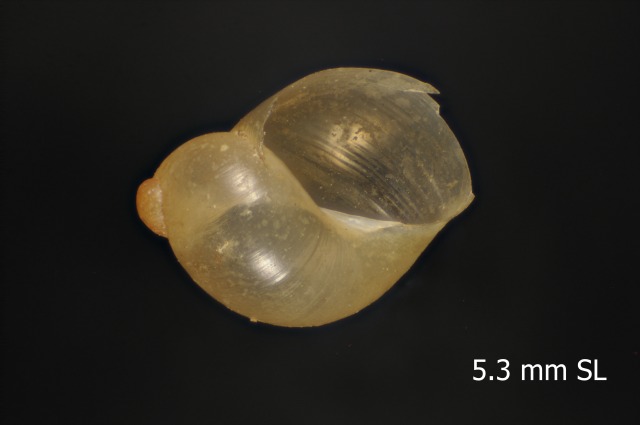
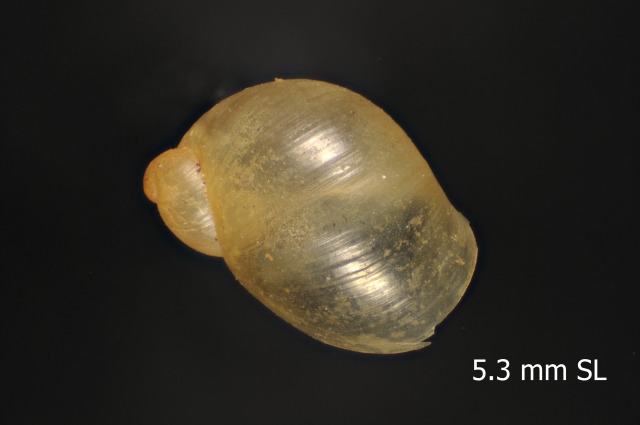
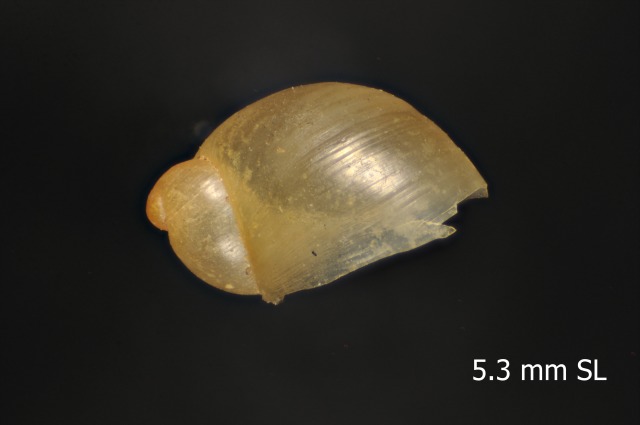
Succinea wilsonii

Image Usage Information

  • The Academy of Natural Sciences of Philadelphia
  • CC BY-NC 4.0 DEED
  • For additional information about this specimen: Gary Rosenberg (rosenberg.ansp@drexel.edu)

Family: Succineidae

Common name: Golden Ambersnail

Discovery: I. Lea, 1864

Identification

Height: 9.7-14.0 mm
Width: 5.9-8.0 mm
Whorls: 3-4

The shell of Succinea wilsonii is transparent and glossy, with fine growth lines and sometimes light spiral striations (Grimm, 1975). It has rapidly expanding whorls, a wide aperture, and moderately impressed sutures. The shape of the apex varies somewhat, from elongate to more attenuated. Shell color is greenish yellow, yellow, or orange-yellow. The body is gray speckled with black, and has dark tentacle and a lighter-colored foot.

Ecology

This snail is found in brackish marshes, rarely freshwater, at the foot of plants or on bare soil (Grimm, 1975). It occurs in colonies that vary by shell form, which may be due to founder effect or ecotypes (Grimm, 1975).  However, genitalia are diagnostic.

Taxonomy

Synonyms for S. wilsonii include Succinea bayardi, S. crisfeldi, S. pronophobus, S. pyrites, and S. wilsoni.

Distribution

Succinea wilsonii may be found in the Canadian Maritime provinces and the states of the Middle Atlantic, from New York to Georgia. In Virginia it is reported from tidewater counties.

Conservation

NatureServe Global Rank: G4
NatureServe State Rank: S4

sidebar

About

  • Mission & Commitments
  • Directors Team
  • Museum History

Get Involved

  • Volunteer
  • Membership
  • Carnegie Discoverers
  • Donate
  • Employment
  • Events

Bring a Group

  • Groups of 10 or More
  • Birthday Parties at the Museum
  • Field Trips

Powdermill

  • Powdermill Nature Reserve
  • Powdermill Field Trips
  • Powdermill Staff
  • Research at Powdermill

More Information

  • Image Permission Requests
  • Science Stories
  • Accessibility
  • Shopping Cart
  • Contact
  • Visitor Policies
One of the Four Carnegie Museums | © Carnegie Institute | Privacy Policy | Terms of Use | Accessibility
Rad works here logo