• Skip to primary navigation
  • Skip to main content
  • Skip to primary sidebar

Carnegie Museum of Natural History

One of the Four Carnegie Museums of Pittsburgh

  • Visit
    • Buy Tickets
    • Visitor Information
    • Exhibitions
    • Events
    • Dining at the Museum
    • Celebrate at the Museum
    • Powdermill Nature Reserve
    • Event Venue Rental
  • Learn
    • Field Trips
    • Educator Information
    • Programs at the Museum
    • Bring the Museum to You
    • Guided Programs FAQ
    • Programs Online
    • Climate and Rural Systems Partnership
  • Research
    • Scientific Sections
    • Science Stories
    • Science Videos
    • Senior Science & Research Staff
    • Museum Library
    • Science Seminars
    • Scientific Publications
    • Specimen and Artifact Identification
  • About
    • Mission & Commitments
    • Directors Team
    • Museum History
  • Tickets
  • Give
  • Shop

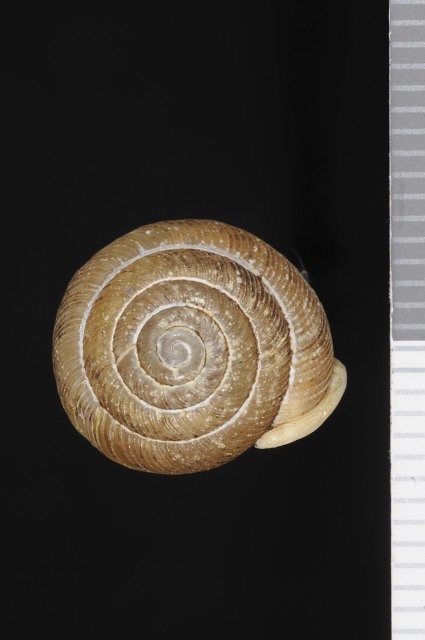
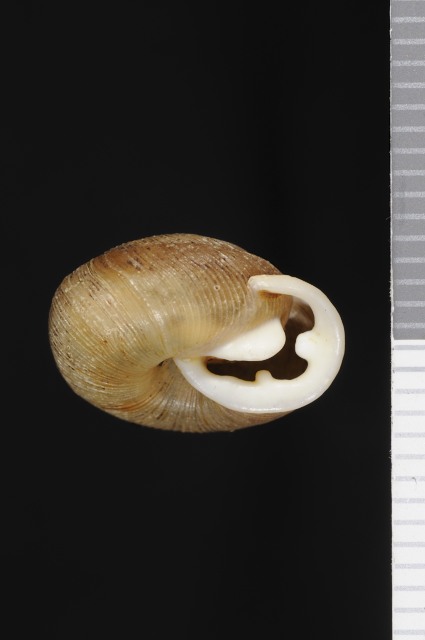
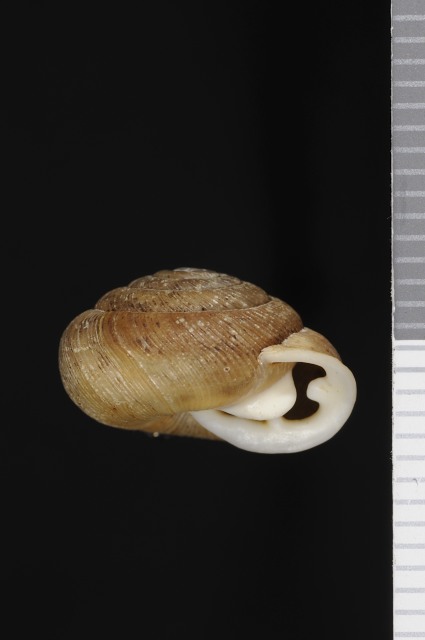
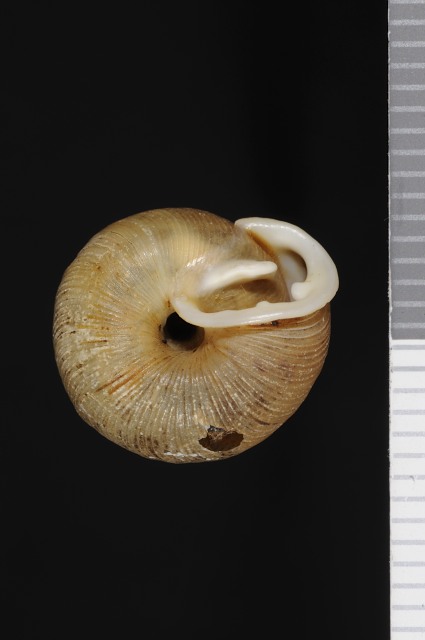
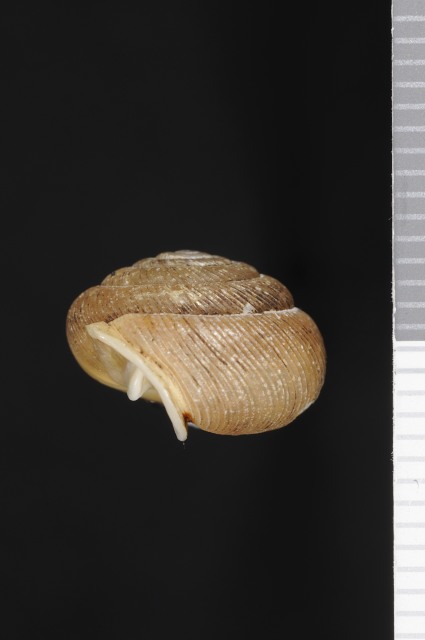
Triodopsis picea

Image Usage Information

  • The Academy of Natural Sciences of Philadelphia
  • CC BY-NC 4.0 DEED
  • For additional information about this specimen: Gary Rosenberg (rosenberg.ansp@drexel.edu)

Family: Polygyridae

Common name: Spruce Knob Threetooth

Discovery: Hubricht, 1958

Identification

Width: 12-15 mm
Height: 7.5-9.5 mm
Whorls: 5

The shell of Triodopsis picea is a depressed-globose shape, with coarse radial striae. The whorls gradually increase in size, and all but the nuclear whorl are covered with papillae. The reflected lip is guttered behind. The umbilicus, as in T. juxtidens, is small and open, and the denticles are smaller than those in T. fraudulenta. The parietal tooth is high, straight, and long; the basal tooth is narrow; and the tooth on the outer lip is broad and blunt.

Ecology

This snail is found in leaf litter and near rocks and logs, at higher elevations in rocky woods, often in mixed conifer and hardwood stands. Its common name is for its type locality on West Virginia’s highest mountain. In western Maryland it lives at low densities on cool hemlock and yellow birch slopes or stream valleys (Hotopp, pers obs).

Taxonomy

There are no known synonyms.

Distribution

The uncommon T. picea is a central Appalachian Mountain endemic, living in southwest Pennsylvania, western Maryland, West Virginia, and Virginia. In Virginia, it is known only from Highland County.

Conservation

NatureServe Global Rank: G3
NatureServe State Rank: S1
Virginia’s wildlife action plan: Tier II

sidebar

About

  • Mission & Commitments
  • Directors Team
  • Museum History

Get Involved

  • Volunteer
  • Membership
  • Carnegie Discoverers
  • Donate
  • Employment
  • Events

Bring a Group

  • Groups of 10 or More
  • Birthday Parties at the Museum
  • Field Trips

Powdermill

  • Powdermill Nature Reserve
  • Powdermill Field Trips
  • Powdermill Staff
  • Research at Powdermill

More Information

  • Image Permission Requests
  • Science Stories
  • Accessibility
  • Shopping Cart
  • Contact
  • Visitor Policies
One of the Four Carnegie Museums | © Carnegie Institute | Privacy Policy | Terms of Use | Accessibility
Rad works here logo