• Skip to primary navigation
  • Skip to main content
  • Skip to primary sidebar

Carnegie Museum of Natural History

One of the Four Carnegie Museums of Pittsburgh

  • Visit
    • Buy Tickets
    • Visitor Information
    • Exhibitions
    • Events
    • Dining at the Museum
    • Celebrate at the Museum
    • Powdermill Nature Reserve
    • Event Venue Rental
  • Learn
    • Field Trips
    • Educator Information
    • Programs at the Museum
    • Bring the Museum to You
    • Guided Programs FAQ
    • Programs Online
    • Climate and Rural Systems Partnership
  • Research
    • Scientific Sections
    • Science Stories
    • Science Videos
    • Senior Science & Research Staff
    • Museum Library
    • Science Seminars
    • Scientific Publications
    • Specimen and Artifact Identification
  • About
    • Mission & Commitments
    • Directors Team
    • Museum History
  • Tickets
  • Give
  • Shop

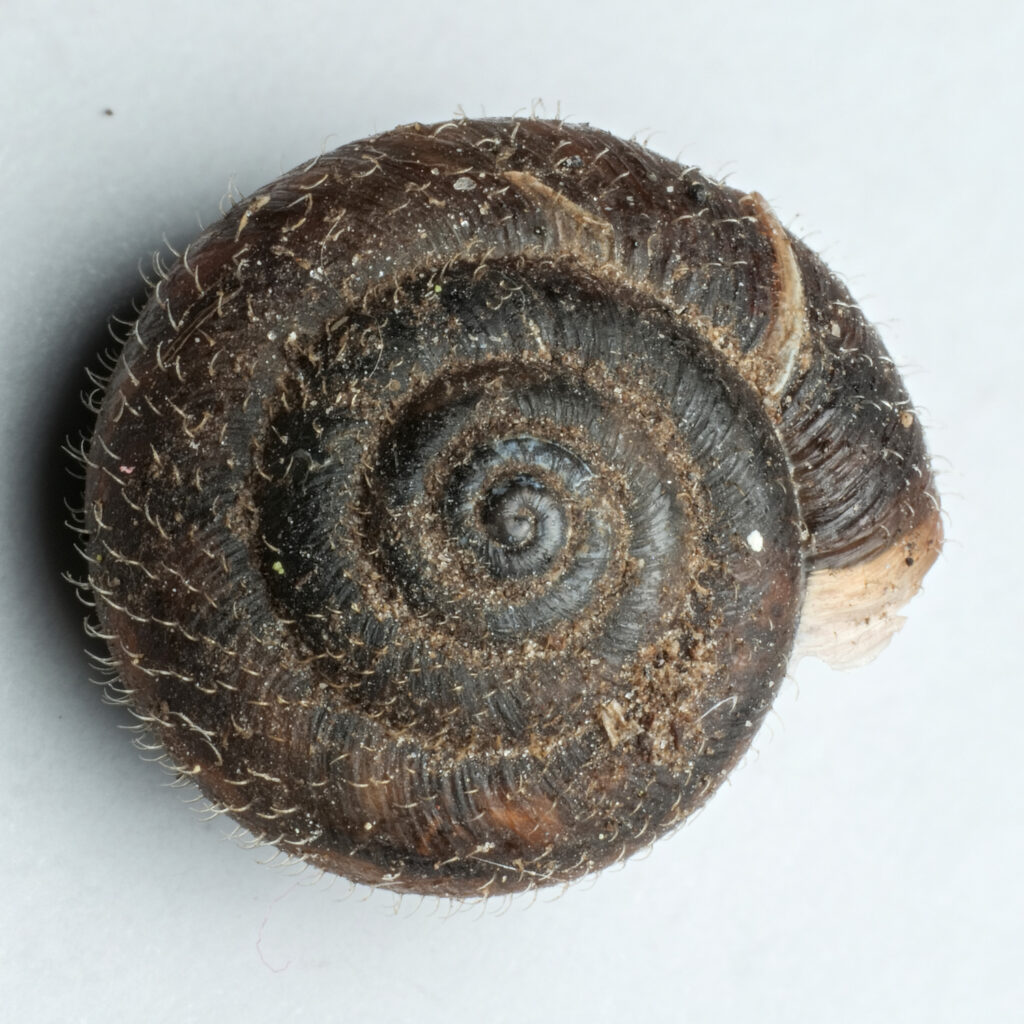
Trochulus hispidus

Image Usage Information

  • Cédric Mondy
  • CC BY-NC 4.0 DEED
  • Additional information about this specimen

Family: Hygromiidae

Common name: Hairy Helicellid Snail

Discovery: Linnaeus, 1758

Non-native

Identification

Width: 5-12 mm
Height: 5-6 mm
Whorls: 6-7

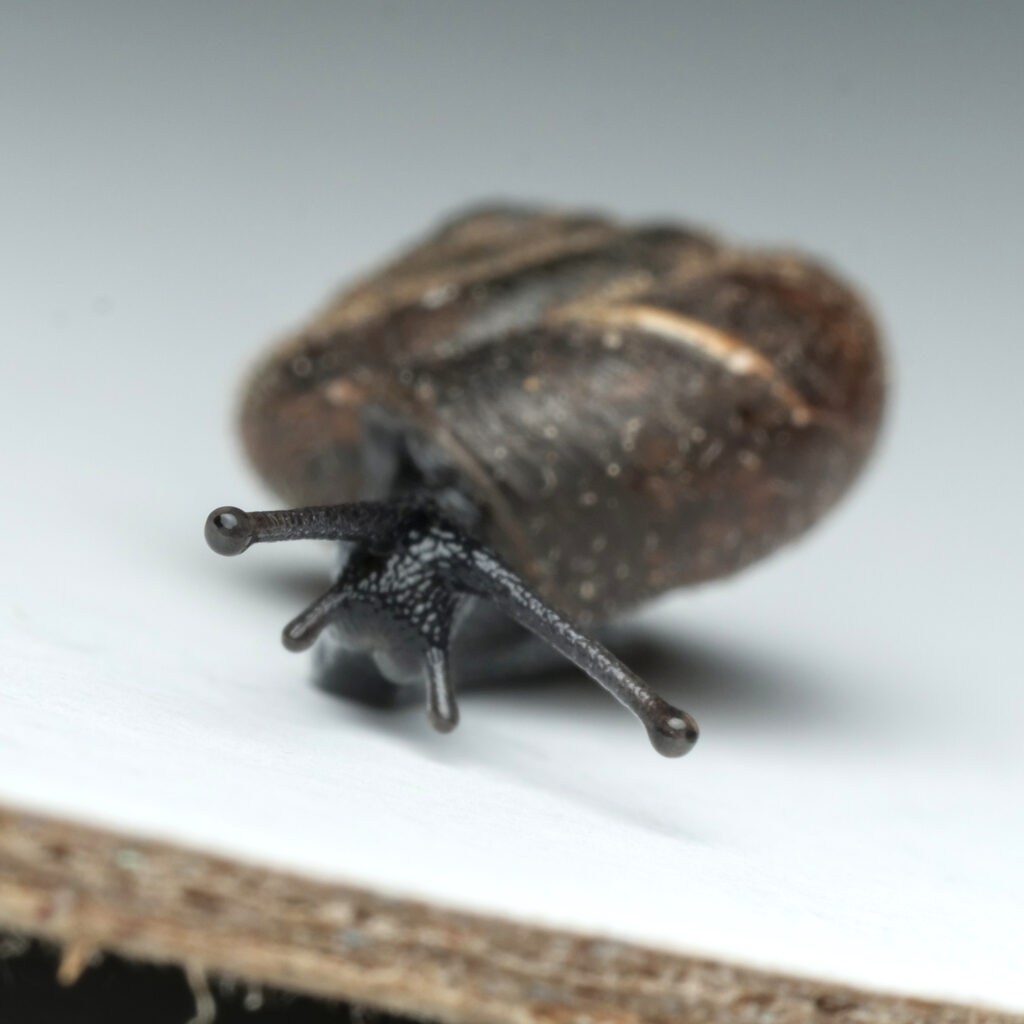
This snail varies in shape and sculpture depending upon habitat. Hairy, rounder shells with deep sutures are found in damp shady places, while more flattened, less hairy shells with shallow sutures are found in dry habitats (Kerney and Cameron, 1979; Anderson, 2016). Shells may be light to dark brown. The umbilicus is open. The hairs – processes that are part of the shell’s protein coat – are short and curved, and may be worn off many shells. There is a low, transverse barrier in the final whorl near the aperture, most noticeable basally. The animal is gray, lighter below.

Ecology

Trochulus hispidus is found most commonly in damp, shady, weedy places in Europe (Anderson, 2016). In laboratory observations, this species can reproduce at 1-2 years, at any time during their active season (Proćków and Kuźnik-Kowalska, 2016). They are short-lived, with approximately ¼ living past 300 days, and are immature for most of their lifespan (Proćków and Kuźnik-Kowalska, 2016).

Taxonomy

Synonyms are Trichia hispida, Hygromia hispida, Trichia concinna, Fruticicola hispida.

Distribution

This European snail has found a foothold in the rich farmland of central NY and scattered other locations in the Northeastern US and southeastern Canada.

Conservation

NatureServe Global Rank: G5, Apparently secure.

sidebar

About

  • Mission & Commitments
  • Directors Team
  • Museum History

Get Involved

  • Volunteer
  • Membership
  • Carnegie Discoverers
  • Donate
  • Employment
  • Events

Bring a Group

  • Groups of 10 or More
  • Birthday Parties at the Museum
  • Field Trips

Powdermill

  • Powdermill Nature Reserve
  • Powdermill Field Trips
  • Powdermill Staff
  • Research at Powdermill

More Information

  • Image Permission Requests
  • Science Stories
  • Accessibility
  • Shopping Cart
  • Contact
  • Visitor Policies
One of the Four Carnegie Museums | © Carnegie Institute | Privacy Policy | Terms of Use | Accessibility
Rad works here logo