• Skip to primary navigation
  • Skip to main content
  • Skip to primary sidebar

Carnegie Museum of Natural History

One of the Four Carnegie Museums of Pittsburgh

  • Visit
    • Buy Tickets
    • Visitor Information
    • Exhibitions
    • Events
    • Dining at the Museum
    • Celebrate at the Museum
    • Powdermill Nature Reserve
    • Event Venue Rental
  • Learn
    • Field Trips
    • Educator Information
    • Programs at the Museum
    • Bring the Museum to You
    • Guided Programs FAQ
    • Programs Online
    • Climate and Rural Systems Partnership
  • Research
    • Scientific Sections
    • Science Stories
    • Science Videos
    • Senior Science & Research Staff
    • Museum Library
    • Science Seminars
    • Scientific Publications
    • Specimen and Artifact Identification
  • About
    • Mission & Commitments
    • Directors Team
    • Museum History
  • Tickets
  • Give
  • Shop

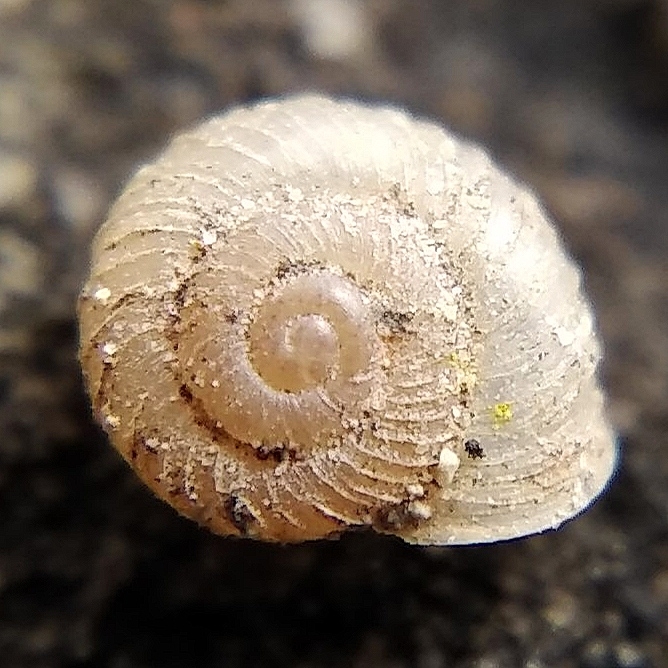
Vallonia costata

Image Usage Information

  • Guilherme Ramos
  • CC BY-NC 4.0 DEED
  • Additional information about this specimen

Family: Valloniidae

Common name: Costate Vallonia

Discovery: Müller, 1774

Identification

Width: 2.5 mm
Height: 1 mm
Whorls: 3+

A heavy reflected lip and radial ridges characterize the shell of this animal. It is larger than V. parvula and has a slightly smaller umbilicus, though it is still quite open. The apex of the shell is low. The aperture is nearly circular with a wide lip, except at the point near the upper termination.

Ecology

Vallonia costata is a denizen of forest gaps and dry, open, rich habitats (Kerney & Cameron, 1979). In Maine this species appears in anthropogenic habitats, probably introduced (Nylander, 1936; Nekola, 2008), and Nekola suggests it is a European exotic, while Kerney & Cameron call it “holarctic.”

Taxonomy

A synonym for V. costata is Helix costata. Prior to work by Sterki in the 1890’s, early collections of V. costata were considered to be a variety of Vallonia pulchella (in Pilsbry, 1946-48).

Distribution

In eastern North America this species is generally distributed through the Midwest, Great Lakes, Mid-Atlantic and western New England, and eastern Canada (Hubricht, 1985). It has been found in various places throughout Virginia, but not as often along the southern edge of the state.

Conservation

NatureServe Global Rank: G5
NatureServe State Rank: S4

sidebar

About

  • Mission & Commitments
  • Directors Team
  • Museum History

Get Involved

  • Volunteer
  • Membership
  • Carnegie Discoverers
  • Donate
  • Employment
  • Events

Bring a Group

  • Groups of 10 or More
  • Birthday Parties at the Museum
  • Field Trips

Powdermill

  • Powdermill Nature Reserve
  • Powdermill Field Trips
  • Powdermill Staff
  • Research at Powdermill

More Information

  • Image Permission Requests
  • Science Stories
  • Accessibility
  • Shopping Cart
  • Contact
  • Visitor Policies
One of the Four Carnegie Museums | © Carnegie Institute | Privacy Policy | Terms of Use | Accessibility
Rad works here logo