• Skip to primary navigation
  • Skip to main content
  • Skip to primary sidebar

Carnegie Museum of Natural History

One of the Four Carnegie Museums of Pittsburgh

  • Visit
    • Buy Tickets
    • Visitor Information
    • Exhibitions
    • Events
    • Dining at the Museum
    • Celebrate at the Museum
    • Powdermill Nature Reserve
    • Event Venue Rental
  • Learn
    • Field Trips
    • Educator Information
    • Programs at the Museum
    • Bring the Museum to You
    • Guided Programs FAQ
    • Programs Online
    • Climate and Rural Systems Partnership
  • Research
    • Scientific Sections
    • Science Stories
    • Science Videos
    • Senior Science & Research Staff
    • Museum Library
    • Science Seminars
    • Scientific Publications
    • Specimen and Artifact Identification
  • About
    • Mission & Commitments
    • Directors Team
    • Museum History
  • Tickets
  • Give
  • Shop

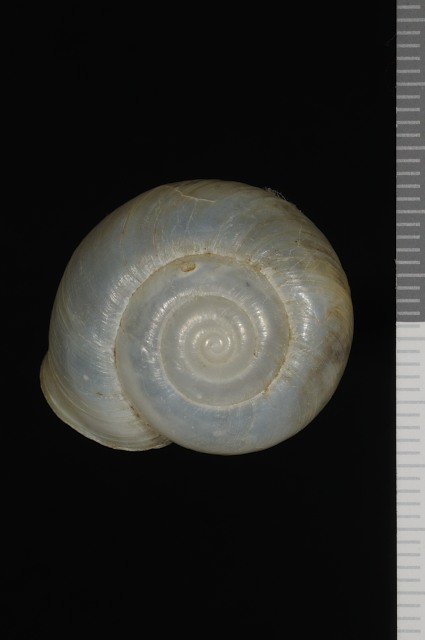
Ventridens acerra

Image Usage Information

  • The Academy of Natural Sciences of Philadelphia
  • CC BY-NC 4.0 DEED
  • For additional information about this specimen: Gary Rosenberg (rosenberg.ansp@drexel.edu)

Family: Gastrodontidae

Common name: Glossy Dome

Discovery: J. Lewis, 1870

Identification

Width: 12.6 – 18.3 mm
Height: 11.0 – 13.2 mm
Whorls: 7+

The usual diameter of the Ventridens acerra shell is 14 to 15 mm, with a shape that is moderately cone-like and a relatively flat base. It has a thin lip and a white callus lining, but no teeth in the aperture. The umbilicus is narrowly perforated and the shell is glossy. In comparison to V. ligera, its shell is more glossy, its umbilicus deeper, its apex lower, and its radial striae wider on the last whorl. The base of the shell is smoother than the top.

Ecology

While Pilsbry (1946-1948) said this animal is found at a variety of elevations and to the heights of the Great Smoky Mountains, Hubricht (1985) said that it occurs only below 2,000 feet (600 m) elevation, usually in rocky places on wooded hillsides or in ravines.

Taxonomy

Synonyms for V. acerra are Gastrodonta acerra, Helix ligera, Zonites acerra, Z. acerrus, and Zonitoides (Ventricallus) acerra.

Distribution

Ventridens acerra’s range is from northern Alabama to southern West Virginia. In Virginia it lives only in the far western counties.

Conservation

NatureServe Global Rank: G4
NatureServe State Rank: S3

sidebar

About

  • Mission & Commitments
  • Directors Team
  • Museum History

Get Involved

  • Volunteer
  • Membership
  • Carnegie Discoverers
  • Donate
  • Employment
  • Events

Bring a Group

  • Groups of 10 or More
  • Birthday Parties at the Museum
  • Field Trips

Powdermill

  • Powdermill Nature Reserve
  • Powdermill Field Trips
  • Powdermill Staff
  • Research at Powdermill

More Information

  • Image Permission Requests
  • Science Stories
  • Accessibility
  • Shopping Cart
  • Contact
  • Visitor Policies
One of the Four Carnegie Museums | © Carnegie Institute | Privacy Policy | Terms of Use | Accessibility
Rad works here logo