• Skip to primary navigation
  • Skip to main content
  • Skip to primary sidebar

Carnegie Museum of Natural History

One of the Four Carnegie Museums of Pittsburgh

  • Visit
    • Buy Tickets
    • Visitor Information
    • Exhibitions
    • Events
    • Dining at the Museum
    • Celebrate at the Museum
    • Powdermill Nature Reserve
    • Event Venue Rental
  • Learn
    • Field Trips
    • Educator Information
    • Programs at the Museum
    • Bring the Museum to You
    • Guided Programs FAQ
    • Programs Online
    • Climate and Rural Systems Partnership
  • Research
    • Scientific Sections
    • Science Stories
    • Science Videos
    • Senior Science & Research Staff
    • Museum Library
    • Science Seminars
    • Scientific Publications
    • Specimen and Artifact Identification
  • About
    • Mission & Commitments
    • Directors Team
    • Museum History
  • Tickets
  • Give
  • Shop

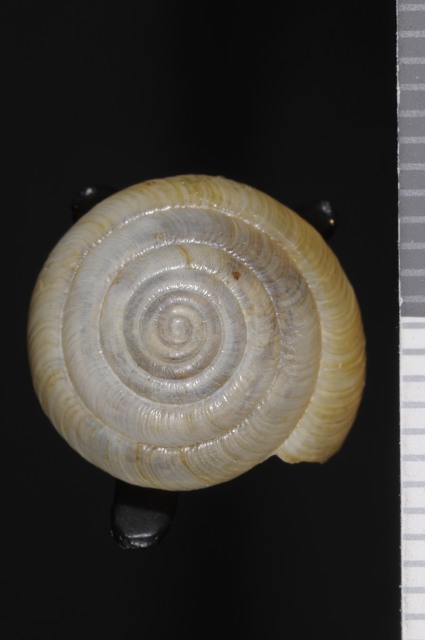
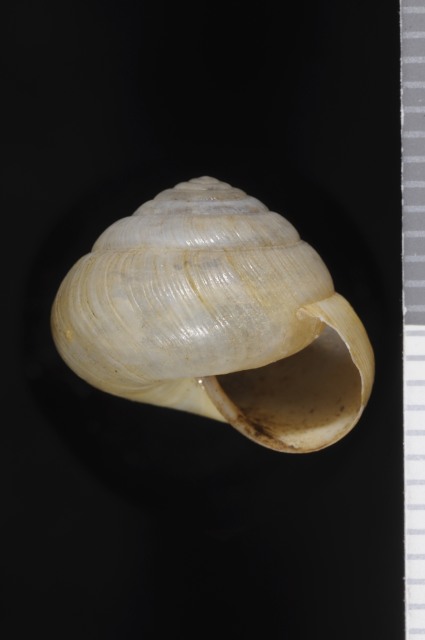
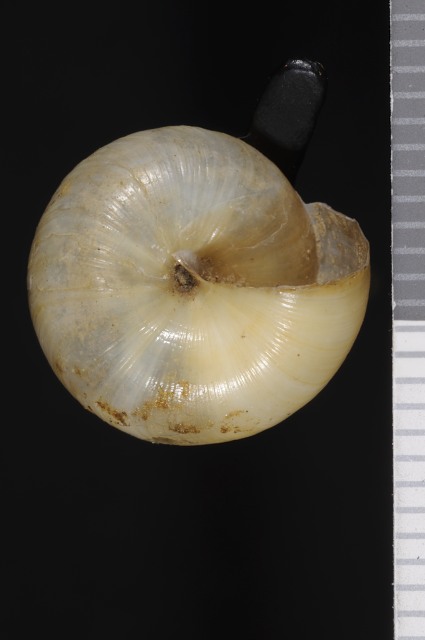
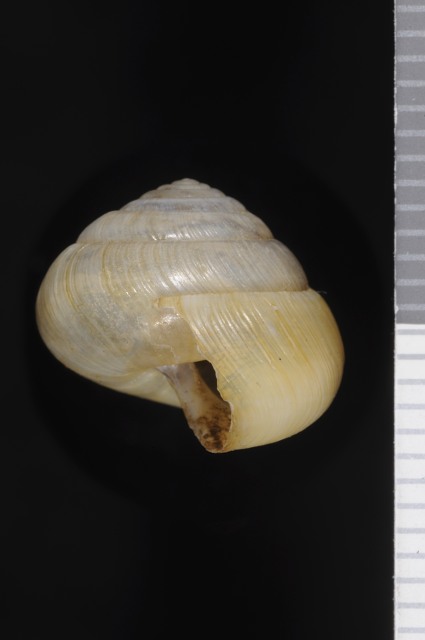
Ventridens ligera

Image Usage Information

  • The Academy of Natural Sciences of Philadelphia
  • CC BY-NC 4.0 DEED
  • For additional information about this specimen: Gary Rosenberg (rosenberg.ansp@drexel.edu)

Family: Gastrodontidae

Common name: Globose Dome

Discovery: Say, 1821

Identification

Width: 11-16 mm
Height: 8-13 mm
Whorls: 6+

The shell of Ventridens ligera is nearly as tall as it is wide, and whorls are well-rounded. It is glossy with radial striae, becoming smoother on the base where there are light spiral striae as well. The umbilicus is very narrow. It has a thin lip with no teeth. The animal is black above.

Ecology

This animal is a widespread habitat generalist, though it is most common on richer soils. It is reported in young forest, open weedy forest, floodplain, wooded river terraces, meadows, and roadsides (Hubricht, 1985; Dourson, 2010).

Taxonomy

Synonyms for V. ligera are Gastrodonta ligera, Helix ligera, H. rafinesquia, H. wardiana, Zonites ligerus, Z. (Gastrodonta) ligerus var. sagdinoides, and Zonitoides (Ventricallus) ligerus.

Distribution

Ventridens ligera is widespread in eastern North America, from New York south to North Carolina, and west to Kansas and Oklahoma. In Virginia it is reported from scattered western counties.

Conservation

NatureServe Global Rank: G5
NatureServe State Rank: S4

sidebar

About

  • Mission & Commitments
  • Directors Team
  • Museum History

Get Involved

  • Volunteer
  • Membership
  • Carnegie Discoverers
  • Donate
  • Employment
  • Events

Bring a Group

  • Groups of 10 or More
  • Birthday Parties at the Museum
  • Field Trips

Powdermill

  • Powdermill Nature Reserve
  • Powdermill Field Trips
  • Powdermill Staff
  • Research at Powdermill

More Information

  • Image Permission Requests
  • Science Stories
  • Accessibility
  • Shopping Cart
  • Contact
  • Visitor Policies
One of the Four Carnegie Museums | © Carnegie Institute | Privacy Policy | Terms of Use | Accessibility
Rad works here logo