• Skip to primary navigation
  • Skip to main content
  • Skip to primary sidebar

Carnegie Museum of Natural History

One of the Four Carnegie Museums of Pittsburgh

  • Visit
    • Buy Tickets
    • Visitor Information
    • Exhibitions
    • Events
    • Dining at the Museum
    • Celebrate at the Museum
    • Powdermill Nature Reserve
    • Event Venue Rental
    • Gift Cards
  • Learn
    • Field Trips
    • Educator Information
    • Programs at the Museum
    • Bring the Museum to You
    • Guided Programs FAQ
    • Programs Online
    • Climate and Rural Systems Partnership
  • Research
    • Scientific Sections
    • Science Stories
    • Science Videos
    • Senior Science & Research Staff
    • Museum Library
    • Science Seminars
    • Scientific Publications
    • Specimen and Artifact Identification
  • About
    • Mission & Commitments
    • Directors Team
    • Museum History
  • Tickets
  • Give
  • Shop

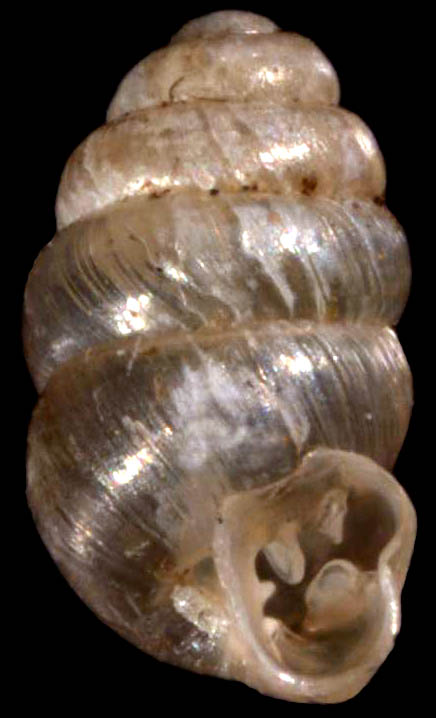
Vertigo clappi

Image Usage Information

  • Jeff Nekola
  • All rights reserved

Family: Vertiginidae

Common name: none

Discovery: Brooks and Hunt, 1936

Identification

Height: ~1.5 mm
Width:  ~0.8 mm
Whorls: 5

This species shares with Vertigo alabamensis an upper palatal lamella whose long-axis is exposed in apertural view. It differs from V. alabamensis by possessing a much smaller and more conical shell, with a deeper suture and an open umbilicus. It also shares a similar size and general shell shape with V. milium. However, it differs from V. milium by not possessing a long, curved lower palatal lamella.

Ecology

Vertigo clappi favors well-rotted, humid leaf litter and fine soil on shaded boulders, talus, ledges, and bases of forested lime-rich bedrock outcrops (Nekola & Coles 2010).

Taxonomy

This species has no synonyms.

Distribution

Vertigo clappi ranges from the mountains of southeastern Tennessee, north along the Appalachians to the north shore of Lake Ontario in southern Quebec. 

In Virginia, this species occurs in three counties in the northern and central mountains.  It is expected throughout the west, especially in cool, calcareous sites which wile not wet maintain high humidity. 

Conservation

NatureServe Global Rank: G1G2
NatureServe State Rank: S1S2
Virginia’s wildlife action plan: Tier III

sidebar

About

  • Mission & Commitments
  • Directors Team
  • Museum History

Get Involved

  • Volunteer
  • Membership
  • Carnegie Discoverers
  • Donate
  • Employment
  • Events

Bring a Group

  • Groups of 10 or More
  • Birthday Parties at the Museum
  • Field Trips

Powdermill

  • Powdermill Nature Reserve
  • Powdermill Field Trips
  • Powdermill Staff
  • Research at Powdermill

More Information

  • Image Permission Requests
  • Science Stories
  • Accessibility
  • Shopping Cart
  • Contact
  • Visitor Policies
One of the Four Carnegie Museums | © Carnegie Institute | Privacy Policy | Terms of Use | Accessibility
Rad works here logo