• Skip to primary navigation
  • Skip to main content
  • Skip to primary sidebar

Carnegie Museum of Natural History

One of the Four Carnegie Museums of Pittsburgh

  • Visit
    • Buy Tickets
    • Visitor Information
    • Exhibitions
    • Events
    • Dining at the Museum
    • Celebrate at the Museum
    • Powdermill Nature Reserve
    • Event Venue Rental
  • Learn
    • Field Trips
    • Educator Information
    • Programs at the Museum
    • Bring the Museum to You
    • Guided Programs FAQ
    • Programs Online
    • Climate and Rural Systems Partnership
  • Research
    • Scientific Sections
    • Science Stories
    • Science Videos
    • Senior Science & Research Staff
    • Museum Library
    • Science Seminars
    • Scientific Publications
    • Specimen and Artifact Identification
  • About
    • Mission & Commitments
    • Directors Team
    • Museum History
  • Tickets
  • Give
  • Shop

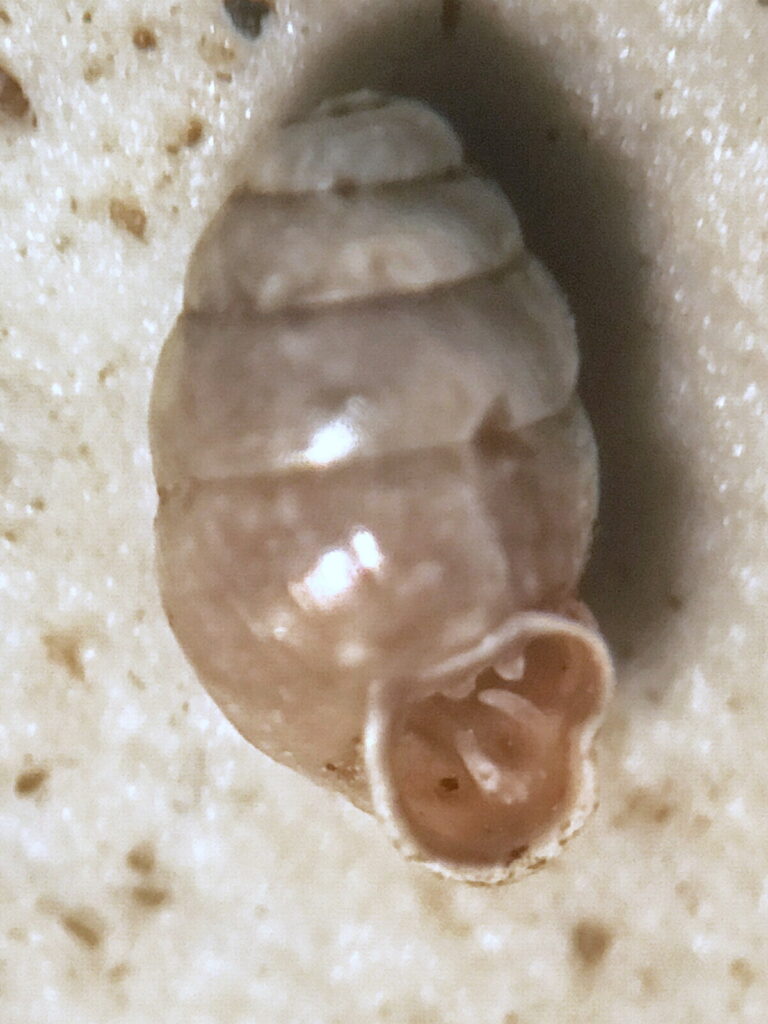
Vertigo milium

Image Usage Information

  • David Lang
  • CC BY-NC 4.0 DEED
  • Additional information about this specimen

Family: Vertiginidae

Common name: Blade Vertigo

Described by: Gould, 1840

Identification

Height: ~1.6 mm
Width: ~0.7 mm
Whorls: 4-5

This delicate species is characterized by its small shell size, ovate shape, shining luster, and its long, curved lower palatal lamella.

Ecology

Vertigo milium individuals are found in humid, well-decomposed thatch and leaf litter, across a wide variety of mesic to wet sites including rocky woodland, riparian woodland, cliffs, wet prairie, sedge meadows, roadside verges, fens, and swamps (Nekola & Coles, 2010).

Taxonomy

A synonym for this animal’s name is Pupa milium.

Distribution

This animal ranges from southeastern Arizona and west Texas, north to southern Manitoba, and east to the Florida Keys, Cape Cod, and easternmost Ontario (Nekola & Coles, 2010). It also extends south to Jamaica, Hispaniola, and Tampico, Mexico (Pilsbry, 1948). 

In Virginia Vertigo milium has been recovered in scattered locations across the state. It should be sought in particular from fens and seasonally wet limestone outcrops in the Shenandoah Valley and wetlands along the Atlantic seaboard.  The known Rockbridge County site is found on the naturally revegetated floor of a long-abandoned limestone quarry.

Conservation

NatureServe Global Rank: G5
NatureServe State Rank: S4

sidebar

About

  • Mission & Commitments
  • Directors Team
  • Museum History

Get Involved

  • Volunteer
  • Membership
  • Carnegie Discoverers
  • Donate
  • Employment
  • Events

Bring a Group

  • Groups of 10 or More
  • Birthday Parties at the Museum
  • Field Trips

Powdermill

  • Powdermill Nature Reserve
  • Powdermill Field Trips
  • Powdermill Staff
  • Research at Powdermill

More Information

  • Image Permission Requests
  • Science Stories
  • Accessibility
  • Shopping Cart
  • Contact
  • Visitor Policies
One of the Four Carnegie Museums | © Carnegie Institute | Privacy Policy | Terms of Use | Accessibility
Rad works here logo