• Skip to primary navigation
  • Skip to main content
  • Skip to primary sidebar

Carnegie Museum of Natural History

One of the Four Carnegie Museums of Pittsburgh

  • Visit
    • Buy Tickets
    • Visitor Information
    • Exhibitions
    • Events
    • Dining at the Museum
    • Celebrate at the Museum
    • Powdermill Nature Reserve
    • Event Venue Rental
  • Learn
    • Field Trips
    • Educator Information
    • Programs at the Museum
    • Bring the Museum to You
    • Guided Programs FAQ
    • Programs Online
    • Climate and Rural Systems Partnership
  • Research
    • Scientific Sections
    • Science Stories
    • Science Videos
    • Senior Science & Research Staff
    • Museum Library
    • Science Seminars
    • Scientific Publications
    • Specimen and Artifact Identification
  • About
    • Mission & Commitments
    • Directors Team
    • Museum History
  • Tickets
  • Give
  • Shop

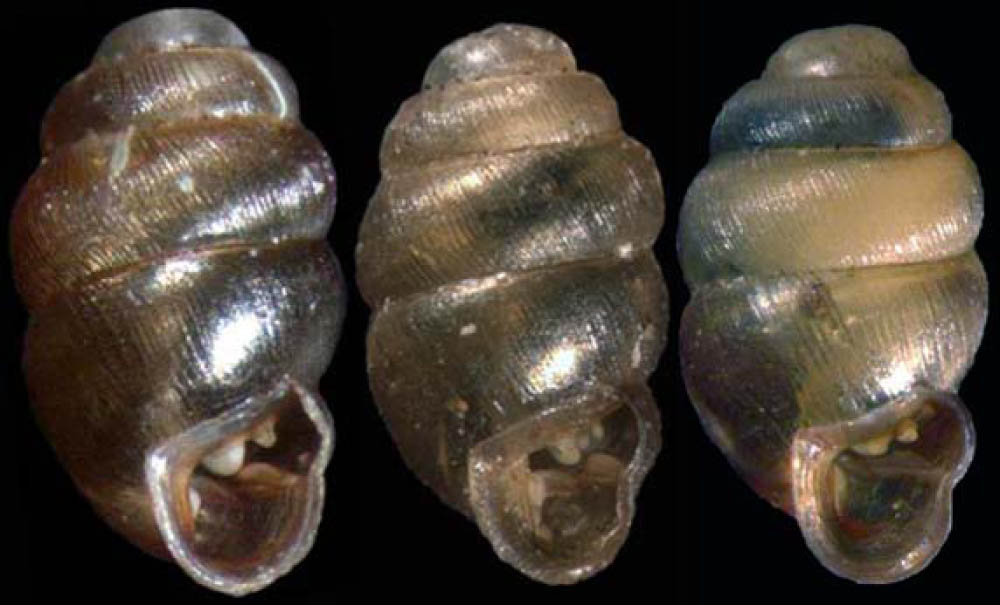
Vertigo nylanderi

Image Usage Information

  • Jeff Nekola
  • All rights reserved

Family: Vertiginidae

Common name: none

Described by: Sterki, 1909

Identification

Height: 1.6-1.8 mm;
Width: 0.8-0.9 mm
Whorls: 5

This species and V. arthuri possess the only shells in the subgenus Vertigo for which the lower palatal lamella is more deeply inserted into the aperture than the upper. Vertigo nylanderi differs from V. arthuri in its longer and more deeply inserted lower palatal lamella, taller than wide columellar lamella, and more prominent angular lamella.

Ecology

Vertigo nylanderi is limited to wooded wetlands dominated by northern white cedar, tamarack or alder (Nekola and Coles, 2010). In such habitats is often found in places with a well-developed graminoid ground layer). It is quite tolerant of acidic soil conditions. In places where it co-occurs with V. arthuri, V. nylanderi always favors wetter microsites. Type Locality: Woodland, Aroostook County, Maine, U.S.A.

Taxonomy

There are no synonyms.

Distribution

The known range of V. nylanderi extends from easternmost Maine west through central Ontario and the northern Great Lakes to northwestern Minnesota and central Manitoba (Nekola and Coles, 2010). It is expected from the Maritime Provinces of Canada and the taiga of Saskatchewan and eastern Alberta.

Conservation

NatureServe Global Rank: G3-G4. Vulnerable to Apparently Secure. This species could be listed as G5, given its extensive range and frequent occurrence within its favored habitats: for instance, two-thirds of all sampled white cedar-black ash wetlands in eastern Maine supported this species (Nekola, 2008).

sidebar

About

  • Mission & Commitments
  • Directors Team
  • Museum History

Get Involved

  • Volunteer
  • Membership
  • Carnegie Discoverers
  • Donate
  • Employment
  • Events

Bring a Group

  • Groups of 10 or More
  • Birthday Parties at the Museum
  • Field Trips

Powdermill

  • Powdermill Nature Reserve
  • Powdermill Field Trips
  • Powdermill Staff
  • Research at Powdermill

More Information

  • Image Permission Requests
  • Science Stories
  • Accessibility
  • Shopping Cart
  • Contact
  • Visitor Policies
One of the Four Carnegie Museums | © Carnegie Institute | Privacy Policy | Terms of Use | Accessibility
Rad works here logo