• Skip to primary navigation
  • Skip to main content
  • Skip to primary sidebar

Carnegie Museum of Natural History

One of the Four Carnegie Museums of Pittsburgh

  • Visit
    • Buy Tickets
    • Visitor Information
    • Exhibitions
    • Events
    • Dining at the Museum
    • Celebrate at the Museum
    • Powdermill Nature Reserve
    • Event Venue Rental
  • Learn
    • Field Trips
    • Educator Information
    • Programs at the Museum
    • Bring the Museum to You
    • Guided Programs FAQ
    • Programs Online
    • Climate and Rural Systems Partnership
  • Research
    • Scientific Sections
    • Science Stories
    • Science Videos
    • Senior Science & Research Staff
    • Museum Library
    • Science Seminars
    • Scientific Publications
    • Specimen and Artifact Identification
  • About
    • Mission & Commitments
    • Directors Team
    • Museum History
  • Tickets
  • Give
  • Shop

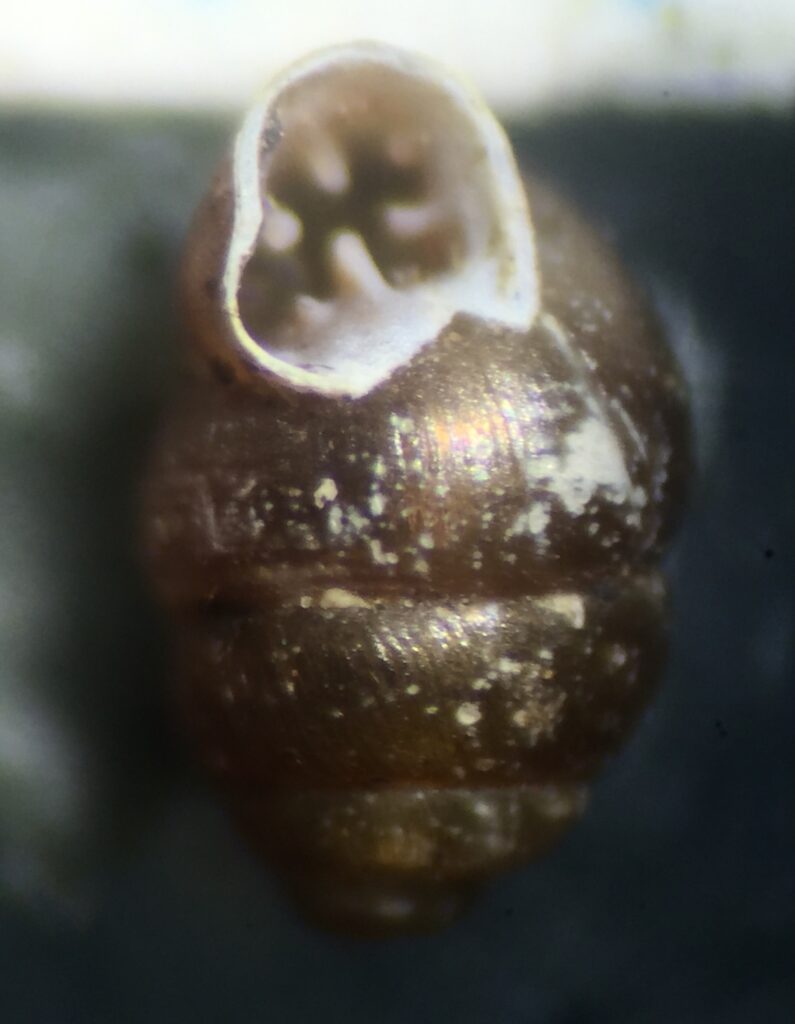
Vertigo oralis

Image Usage Information

  • Benjamin Schwartz
  • CC BY-NC 4.0 DEED
  • Additional information about this specimen

Family: Vertiginidae

Common name: none

Described by: Sterki, 1898

Identification

Height: ~2.0 mm
Width: ~1.2 mm
Whorls: 4-5

This species has a large, ovoid shell with at least five strong “teeth” in the aperture and a callus on the outer (palatal) wall. It is most similar in the regional fauna to Vertigo ovata, but differs by lacking an infraparietal lamella, and in possessing a silky shell luster. Vertigo oralis also has indistinct radial lines across the shell surface. While once considered a subspecies of Vertigo rugosula (Pilsbry 1948), recent genetics work shows V. oralis is highly distinct (Nekola, unpublished data).

Ecology

Vertigo oralis resides in broadleaf and grassy leaf litter accumulations, and under logs, in wooded cypress, oak and sweetgum wetlands, red maple swamps, and riparian and pocosin scrub (Nekola & Coles 2010).

Taxonomy

Synonyms for this animal’s name include Vertigo ovulum ovalis and Vertigo rugosula ovalis.

Distribution

This animal ranges from the southern Delmarva Peninsula, south along the Atlantic coast to south Florida, and west to east Texas. In Virginia, it is currently reported only from the Great Dismal Swamp region. It should be expected, however, throughout the southeastern Virginia seaboard, including the counties east of Chesapeake Bay.

Conservation

NatureServe Global Rank: G5
NatureServe State Rank: S1S3
Virginia’s wildlife action plan: Tier IV

sidebar

About

  • Mission & Commitments
  • Directors Team
  • Museum History

Get Involved

  • Volunteer
  • Membership
  • Carnegie Discoverers
  • Donate
  • Employment
  • Events

Bring a Group

  • Groups of 10 or More
  • Birthday Parties at the Museum
  • Field Trips

Powdermill

  • Powdermill Nature Reserve
  • Powdermill Field Trips
  • Powdermill Staff
  • Research at Powdermill

More Information

  • Image Permission Requests
  • Science Stories
  • Accessibility
  • Shopping Cart
  • Contact
  • Visitor Policies
One of the Four Carnegie Museums | © Carnegie Institute | Privacy Policy | Terms of Use | Accessibility
Rad works here logo