• Skip to primary navigation
  • Skip to main content
  • Skip to primary sidebar

Carnegie Museum of Natural History

One of the Four Carnegie Museums of Pittsburgh

  • Visit
    • Buy Tickets
    • Visitor Information
    • Exhibitions
    • Events
    • Dining at the Museum
    • Celebrate at the Museum
    • Powdermill Nature Reserve
    • Event Venue Rental
    • Gift Cards
  • Learn
    • Field Trips
    • Educator Information
    • Programs at the Museum
    • Bring the Museum to You
    • Guided Programs FAQ
    • Programs Online
    • Climate and Rural Systems Partnership
  • Research
    • Scientific Sections
    • Science Stories
    • Science Videos
    • Senior Science & Research Staff
    • Museum Library
    • Science Seminars
    • Scientific Publications
    • Specimen and Artifact Identification
  • About
    • Mission & Commitments
    • Directors Team
    • Museum History
  • Tickets
  • Give
  • Shop

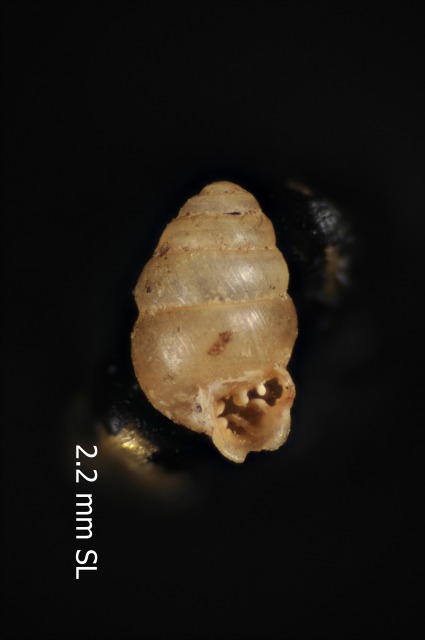
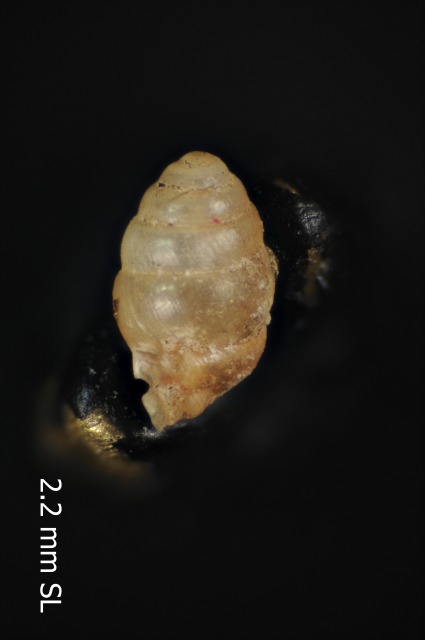
Vertigo ovata

Family: Vertiginidae

Common name: none

Described by: Say, 1822

Identification

Height: ~2.3 mm
Width: ~1.4 mm
Whorls: 4-5

This species has a large shell with smooth surface, and at least six apertural lamellae. With these characteristics it most resembles Vertigo teskeyae and Vertigo oralis. It differs from V. teskeyae by possessing a less obese shell with a deeper suture and a columellar wall of the aperture that curves back towards the central shell axis. It differs from V. oralis by its shiny shell luster and common presence of an infraparietal lamella.

Ecology

Populations are primarily found in graminoid litter and on cattail leaves in swamps, sedge meadows, wet and mesic prairie, low calcareous meadows, river banks, lakeshores, roadside ditches, and wooded wetlands. It is also occasionally found on bedrock outcrops, upland forest, and upland grassland habitats. It can climb vegetation to approximately one meter (three feet) off the ground (Nekola & Coles, 2010).

Taxonomy

A synonym for this animal’s name is Pupa ovata.

Distribution

Vertigo ovata ranges across all of North America from northern Quebec and the Alaskan interior to California, southern Arizona, the Gulf Coast, and south Florida. It also extends south into the West Indies (Pilsbry, 1948). In Virginia this species has been reported from most of the state.

Conservation

NatureServe Global Rank: G5
NatureServe State Rank: S4
Virginia’s wildlife action plan: Tier IV

sidebar

About

  • Mission & Commitments
  • Directors Team
  • Museum History

Get Involved

  • Volunteer
  • Membership
  • Carnegie Discoverers
  • Donate
  • Employment
  • Events

Bring a Group

  • Groups of 10 or More
  • Birthday Parties at the Museum
  • Field Trips

Powdermill

  • Powdermill Nature Reserve
  • Powdermill Field Trips
  • Powdermill Staff
  • Research at Powdermill

More Information

  • Image Permission Requests
  • Science Stories
  • Accessibility
  • Shopping Cart
  • Contact
  • Visitor Policies
One of the Four Carnegie Museums | © Carnegie Institute | Privacy Policy | Terms of Use | Accessibility
Rad works here logo