• Skip to primary navigation
  • Skip to main content
  • Skip to primary sidebar

Carnegie Museum of Natural History

One of the Four Carnegie Museums of Pittsburgh

  • Visit
    • Buy Tickets
    • Visitor Information
    • Exhibitions
    • Events
    • Dining at the Museum
    • Celebrate at the Museum
    • Powdermill Nature Reserve
    • Event Venue Rental
  • Learn
    • Field Trips
    • Educator Information
    • Programs at the Museum
    • Bring the Museum to You
    • Guided Programs FAQ
    • Programs Online
    • Climate and Rural Systems Partnership
  • Research
    • Scientific Sections
    • Science Stories
    • Science Videos
    • Senior Science & Research Staff
    • Museum Library
    • Science Seminars
    • Scientific Publications
    • Specimen and Artifact Identification
  • About
    • Mission & Commitments
    • Directors Team
    • Museum History
  • Tickets
  • Give
  • Shop

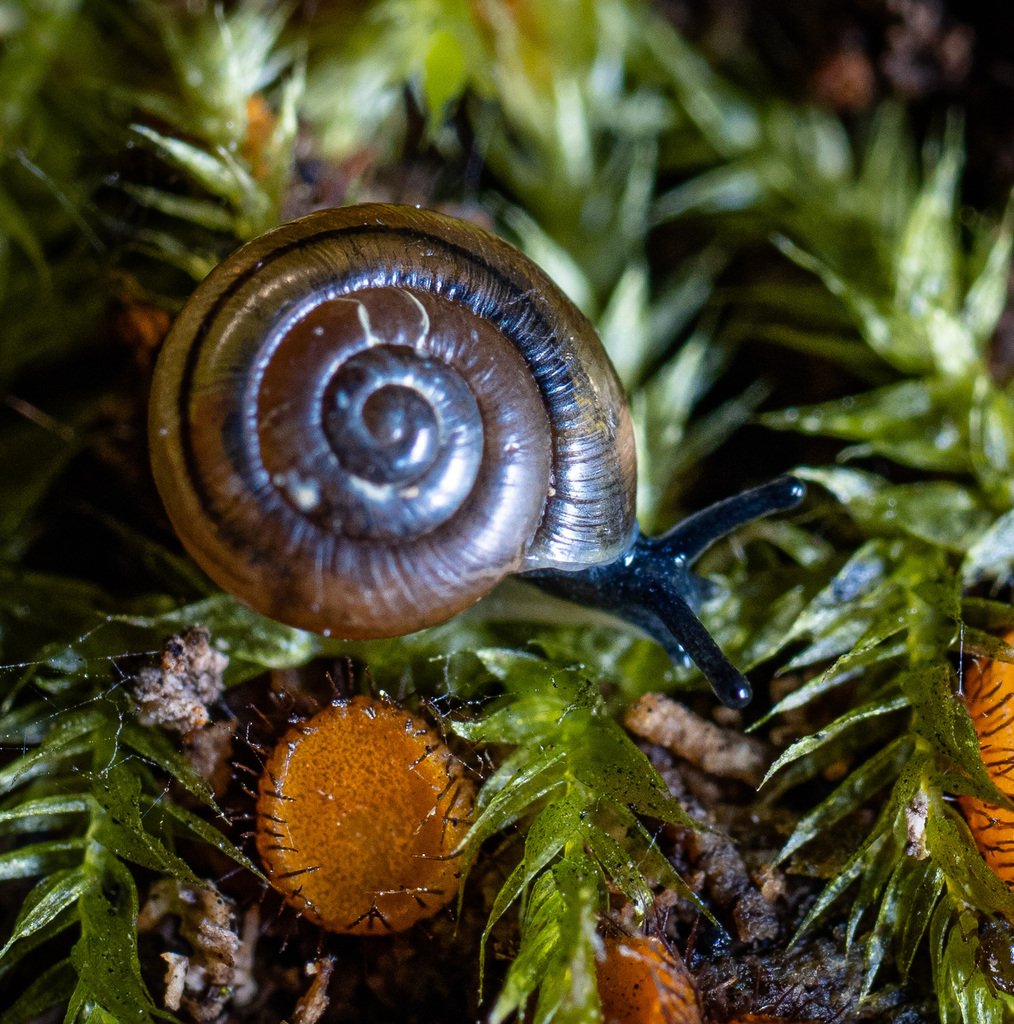
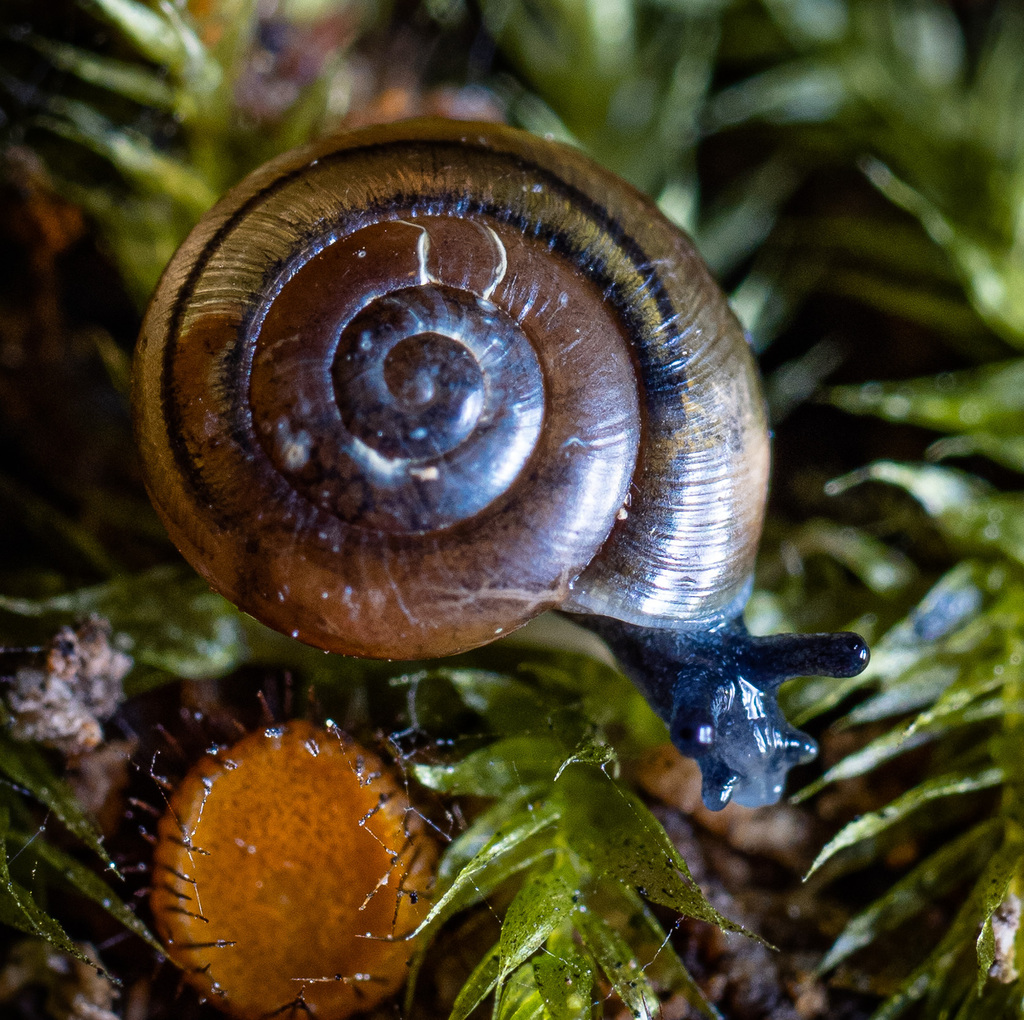
Zonitoides arboreus

Image Usage Information

  • Erik Danielsen
  • CC BY-NC 4.0 DEED
  • Additional information about this specimen

Family: Gastrodontidae

Common name: Quick Gloss

Discovery: Say, 1816

Identification

Width: 5-6 mm
Height: 2.4-3.0 mm
Whorls: 4.5

This snail has a subglobose, moderately glossy, brown shell, with indented radial growth wrinkles. The lip is simple and thin. The umbilicus is medium-sized and steep-sided. Zonitoides arboreus is bluish-gray above, with darker bands leading to the tentacles, and lighter-colored near the foot.

Ecology

Zonitoides arboreus is one of the most widespread forest snails in North America. It lives in upland forests under leaves and upon dead wood. In Tennessee this species was found in many habitats, but was significantly associated with log microhabitats (Coney et al, 1982). Likewise in Maine, it was common and found upon woody debris, often beneath the bark in the rotting cambium layer (Nekola, 2008). It has been found up to 2,000 m elevation in the southern Appalachian Mountains (Pilsbry, 1946).

Like other members of the Family Gastrodontidae, Z. arboreus has a reproductive “dart” used to transmit hormones during mating. Eggs are laid one at a time, scattered in damp leaf litter.

Taxonomy

Synonyms for Z. arboreus are Helix arboreus, H. ottonis, H. breweri, Zonites arboreus, Hyalina arborea, H. breweri, H. whitneyi, and H. roseni.

Distribution

In Virginia, Z. arboreus specimens have been found throughout the state, though a bit less frequently on the Piedmont.

Conservation

NatureServe Global Rank: G5
NatureServe State Rank: S4

sidebar

About

  • Mission & Commitments
  • Directors Team
  • Museum History

Get Involved

  • Volunteer
  • Membership
  • Carnegie Discoverers
  • Donate
  • Employment
  • Events

Bring a Group

  • Groups of 10 or More
  • Birthday Parties at the Museum
  • Field Trips

Powdermill

  • Powdermill Nature Reserve
  • Powdermill Field Trips
  • Powdermill Staff
  • Research at Powdermill

More Information

  • Image Permission Requests
  • Science Stories
  • Accessibility
  • Shopping Cart
  • Contact
  • Visitor Policies
One of the Four Carnegie Museums | © Carnegie Institute | Privacy Policy | Terms of Use | Accessibility
Rad works here logo