• Skip to primary navigation
  • Skip to main content
  • Skip to primary sidebar

Carnegie Museum of Natural History

One of the Four Carnegie Museums of Pittsburgh

  • Visit
    • Buy Tickets
    • Visitor Information
    • Exhibitions
    • Events
    • Dining at the Museum
    • Celebrate at the Museum
    • Powdermill Nature Reserve
    • Event Venue Rental
  • Learn
    • Field Trips
    • Educator Information
    • Programs at the Museum
    • Bring the Museum to You
    • Guided Programs FAQ
    • Programs Online
    • Climate and Rural Systems Partnership
  • Research
    • Scientific Sections
    • Science Stories
    • Science Videos
    • Senior Science & Research Staff
    • Museum Library
    • Science Seminars
    • Scientific Publications
    • Specimen and Artifact Identification
  • About
    • Mission & Commitments
    • Directors Team
    • Museum History
  • Tickets
  • Give
  • Shop

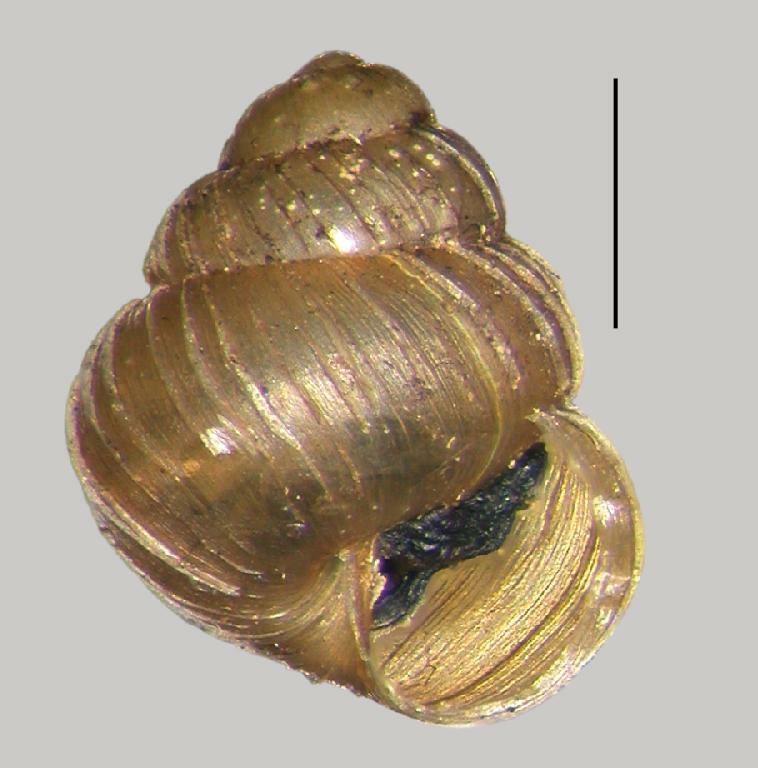
Zoogenetes harpa

Image Usage Information

  • Michael J. Oldham
  • CC BY-NC 4.0 DEED
  • Additional information about this specimen

Family: Valloniidae

Common name: Boreal Vallonia

Discovery: Say, 1824

Identification

Width: ~2.5 mm
Height: ~3.25 mm
Whorls: ~4

The shell of Zoogenetes harpa is ovate-conical, adorned with thin, widely-spaced ribs (Pilsbry, 1948). Colored brownish-green and somewhat glossy, the shell is narrowly umbilicate with an oval aperture.

Ecology

Zoogenetes harpa is found in damp leaf litter and moss near lakes and swamps according to Hubricht, (1985). However, in northeastern Maine, Nekola (2008) found it most often in upland habitat at sedimentary rock outcrops, aspen forest, and white spruce forest.

Taxonomy

Synonyms are Helix harpa, Acanthinula harpa, Zoögenites harpa (Pilsbry, 1948). Its common name in Swedish is blåbärssnäcka.

Distribution

Zoogenetes harpa is circumpolar. In Europe it occurs in Scandinavia and Switzerland (Bank and Ramos, 2016). In Russia in the Caucasus Mountains (Balashov and Kijashko. 2017). In North America it is found in Labrador, New England from Massachusetts and Vermont north, also in the upper Midwest, and in the West to Alaska and as far south as Colorado (Pilsbry, 1948).

Conservation

NatureServe Rank: G5, Secure.

sidebar

About

  • Mission & Commitments
  • Directors Team
  • Museum History

Get Involved

  • Volunteer
  • Membership
  • Carnegie Discoverers
  • Donate
  • Employment
  • Events

Bring a Group

  • Groups of 10 or More
  • Birthday Parties at the Museum
  • Field Trips

Powdermill

  • Powdermill Nature Reserve
  • Powdermill Field Trips
  • Powdermill Staff
  • Research at Powdermill

More Information

  • Image Permission Requests
  • Science Stories
  • Accessibility
  • Shopping Cart
  • Contact
  • Visitor Policies
One of the Four Carnegie Museums | © Carnegie Institute | Privacy Policy | Terms of Use | Accessibility
Rad works here logo