
When you hear the word “nature,” what scenes do you think of? Mountains, streams, and forests? Cities are probably not the first places that come to mind. Living in Pittsburgh, you might notice buildings and roads at first glance, but what happens when you start looking a little closer? Try searching for nature in unexpected places and you’ll see that nature has the power to survive in and transform spaces all around you.
Growing in Strange Places
Nature is most likely crawling past you while you’re walking on the sidewalk. Most sidewalks and roads have cracks where small amounts of soil form and different plants can begin to flourish. Shallow cracks will house things like mosses while larger cracks favor small weeds or flowering plants. Anything growing in a sidewalk crack or groove must adapt to harsh environmental conditions like heat and lack of nutrients.
Some people have even gone as far to purposefully grow plants or herbs in their sidewalk cracks. With replacement concrete being expensive, some homeowners have grown herbs like thyme or mint so when someone walks by the scent is released. Although this may expand the sidewalk cracks further, it’s a fun way to incorporate nature in your urban life.
Exploring Sidewalk Cracks
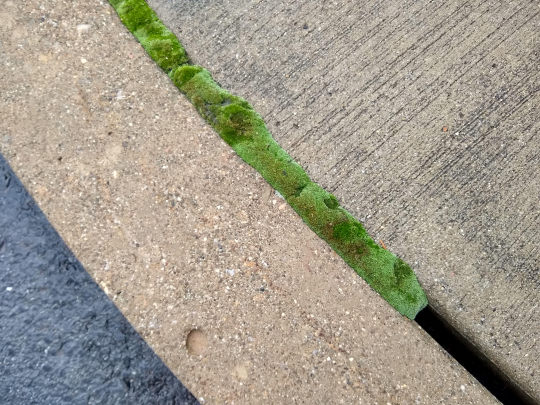
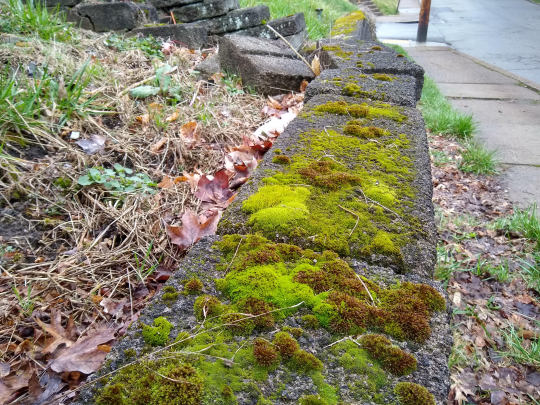
Pat Howe, coordinator of the Natural History Interpreter program at Carnegie Museum of Natural History, shared photos of plants growing in unusual places right in her neighborhood. She was able to find moss growing on rocks and inside of a sidewalk crack, garlic mustard growing between stairs, and grass beginning to sprout on a manhole cover.
If you’re having trouble identifying what you found, iNaturalist is a great tool for learning the names of some things we see daily but don’t know much about. Download the app, snap a photo, and let other users identify your findings for you! If you share your photos on iNaturalist between April 24 and April 27, 2020 you’ll be a part of the global City Nature Challenge!
What can you find in different cracks around you? The next time you’re walking down the street, take a closer look at your sidewalk and see what you can find! We’d love to see your findings. Email them to us at nature360@carnegiemnh.org or tag us on social media @CarnegieMNH.
