by Catherine Giles
Picture it: A crisp, early evening in late spring. The virtually cloudless sky cascades in a brilliant azure backdrop against your humble abode.
You’ve just arrived home from a long, exhausting day of work, yet your mind is still racing:
I need to remember that meeting on Tuesday, answer those important emails, what even is Windows 10?, did I put gas in the car?, what was that notification from my mother in law?
You are definitely ready to unwind and relax for the day!
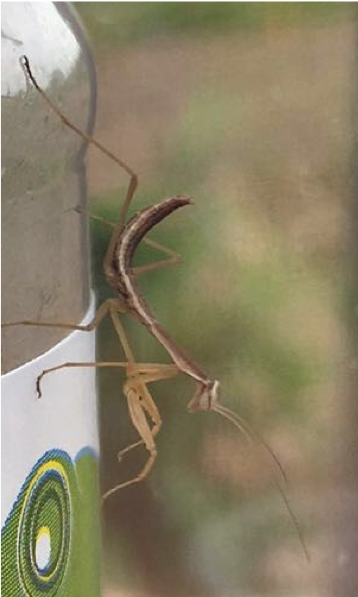
You sling your bags over a shoulder and balance your keys in one hand. You sigh wearily as you slide the key into the lock and, glancing over at the front window, notice a tiny, greenish-brown praying mantis staring back at you inquisitively, like the one pictured below.
Huh. That’s funny.
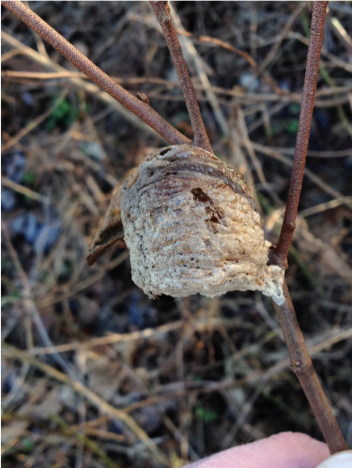
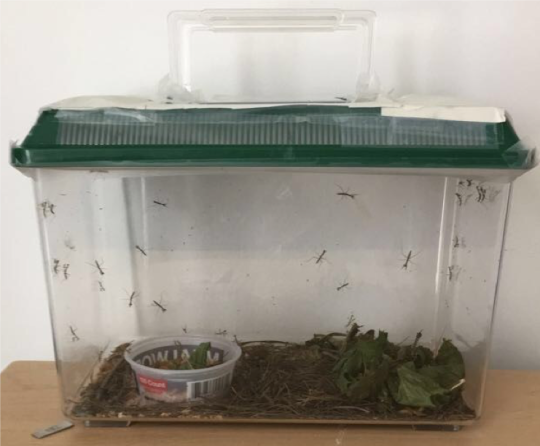
You, entomologist that you are, had found an ootheca, the foamy pouch in which mantises lay their eggs, last week, and decided to try and rear them on your own, giving them a better chance of survival for eventual release into the wild. Early this morning, you’d taken the ootheca out of a humid jar, and arranged it carefully into a brand new aerated container, mimicking seasonal outdoor changes.
How weird that you should see a singular mantis on your window, let alone one this tiny. It probably got in through an open screen or something. You make a mental note to send your landlord a work order.
You unlock and open the door to find another tiny praying mantis on your end table. Whoa! Definitely need to check the screens.
But there’s another mantis on your ceiling. And another on the couch. Two by the sink. Three all over the Taco Bell wrappers in the trash.
Slowly, with growing horror (and excitement!) you realize the mesh on your brand new aerated container is too large to contain minute mantises, and they’ve escaped to the refuge of your apartment.
You spend the next hour and 45 minutes frantically running around, grabbing handfuls of jumping mantises, throwing them into a (sealed) container, using a broom to pick the ones off the ceiling and praying to the old gods and the new, you can catch them all.
It’s a full-on Pokehunt, and you’re all out of potions and revives.
Nearly 200 thumb-nail sized, jumping, running, scuttling, adorable baby mantises play havoc on your heart strings (and your apartment) and you just have to take care of them. Knowing that mantises like to eat live food, and knowing they’ve gone a full day without it, you decide it’s time to get them some grub.
With all rambunctious insects fully secured, you race to Petco to grab their last container of crickets before closing, pulling Indie 500 stunts (you didn’t get gas earlier, by the way) along Route 8 to make sure your precious mantises have enough food for the day.
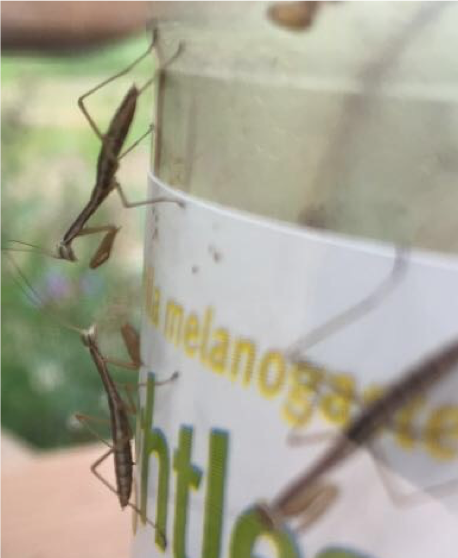
You bought about 30 Acheta domesticus, a common house cricket, in a small container. They’re nearly three times the size of your mantises! What a hearty snack these will be. Trying to be a good mantis Momma, you empty the crickets into the enclosure.
But you’re new at this. Caterpillars you can rear easily, with the right host plant. You’ve had a dog before for goodness sake, this should be easy.
A. domesticus, though, will eat meat. Meat the approximate size and shape of a baby praying mantis.
Oh no.
You wrangle the crickets away from their mantis midnight snack and call it a day. The next day, you’ll get some flightless fruit flies and rear the mantises with less tragic incidents for several more weeks.
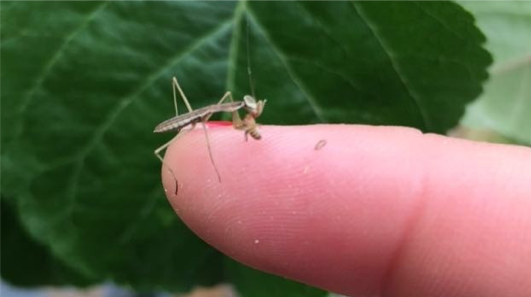
Eventually, the spring chill warms to light summer breezes, and you’re able to release the mantises into the wilds of your home garden. All in all, you’ve learned a tremendous lesson, and earned a great campfire story, when it comes to rearing and caring for praying mantises.
Catherine Giles is the Curatorial Assistant of Invertebrate Zoology at the Carnegie Museum of Natural History. Museum employees are encouraged to blog about their unique experiences working at the museum.
