By Amy L. Covell-Murthy
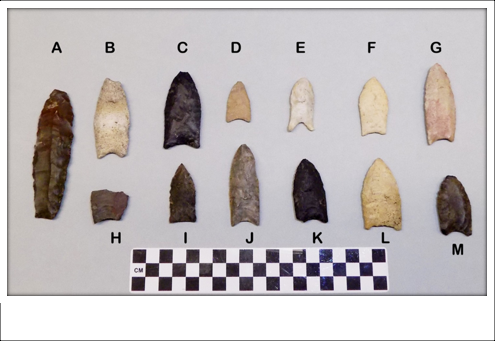
The Section of Anthropology houses a collection boasting 1.5 million artifacts. What you may not know is that most of those artifacts come from right here in Western Pennsylvania. It would be impossible to talk about Pennsylvania archaeology without mentioning Dr. Stanley W. Lantz. Dr. Lantz worked as a field and staff archaeologist at Carnegie Museum of Natural History from 1965-1990 and has continued as a research associate ever since his retirement. Before making archaeology his life’s work, Dr. Lantz was an Army Air Force, Staff Sargent, B-17 waist-gunner and photographer, and he owned his own supermarket and building business. His 10-year archaeological survey of 23 counties of Western Pennsylvania encompassed the drainage of the Upper Ohio Valley, and allowed him to record 365 Paleo-Indian artifact finds from 210 sites. In The Pennsylvania Fluted Point Survey, Dr. Lantz and Gary Fogelman display over 1600 photographs and over 100 illustrations of fluted points of the Eastern Woodlands. Below are some of the points that Dr. Lantz donated to CMNH that he used in the book.
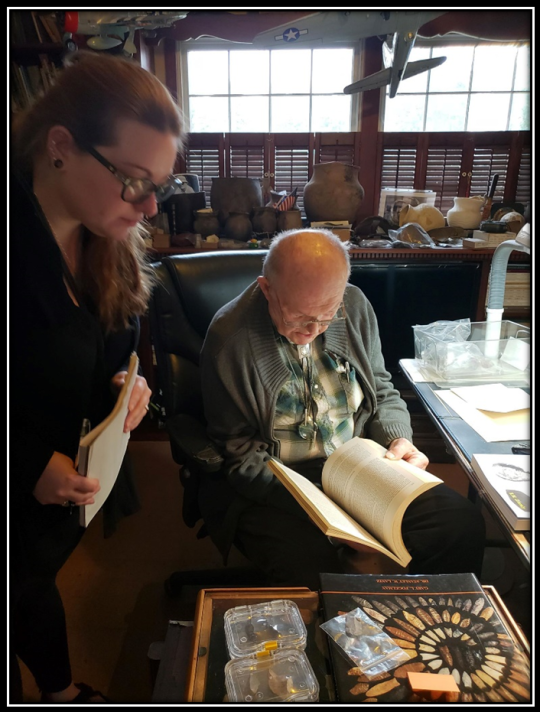
In May 2018, Dr. Lantz kindly assisted three CMNH anthropology interns with a poster that they presented at the 89thAnnual Meeting of the Society for Pennsylvania Archaeology, regarding the process of locating Clovis points in a site-specific museum collection. Clovis points, dating to the Early Paleoindian Period, 10,000-16,000 BP, are the earliest fluted styles found in North America. Rebecca Stewart, Brittany Creely, and Liana Thies were awarded second place. Liana is pictured in this photo with Dr. Lantz who is sporting his signature bolo tie.
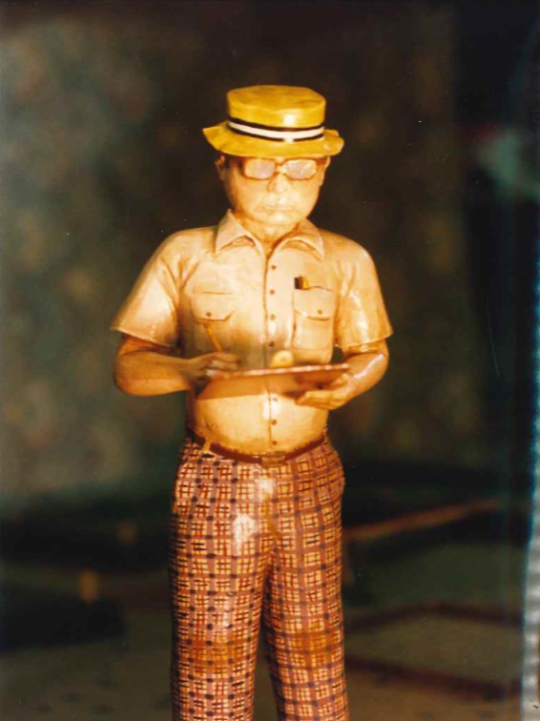
Dr. Lantz can be found on exhibit outside of the Anthropology Halls on the third floor. Look for his likeness in the Iroqouis longhouse diorama. He is missing his tie, but keep an eye out for his plaid pants! Fun Fact: Someone stole Dr. Lantz’s plaid polyester pants and buried them in a secret location so that he wouldn’t be able to wear them anymore.
Amy L. Covell-Murthy is the Archaeology Collection Manager at Carnegie Museum of Natural History. Museum employees are encouraged to blog about their unique experiences and knowledge gained from working at the museum.
