by Sara Klingensmith
Often hidden in plain sight, mushrooms are silent drivers of forest ecosystems. They are busy decomposing the dead, but sometimes, they secretly steal nutrients from the living. Underground, fungal mycelium networks are quietly abuzz with the latest arboreal gossip and tapped into nutrient supply chains that connect the forest in a “Wood Wide Web.” Occasionally, experienced foragers hunt for edible fruiting bodies; however, aesthetically, mushrooms are often outshined by wildflowers. Fungi are uniquely beautiful in their odd shapes and color. They deserve much more attention than simply “can I eat it?” So, grab your camera and keep a sharp eye out for these photogenic fungi (and more), many of which can be found at Powdermill Nature Reserve!
Be sure to share your findings on iNaturalist and social media during the City Nature Challenge on April 30 to May 3!
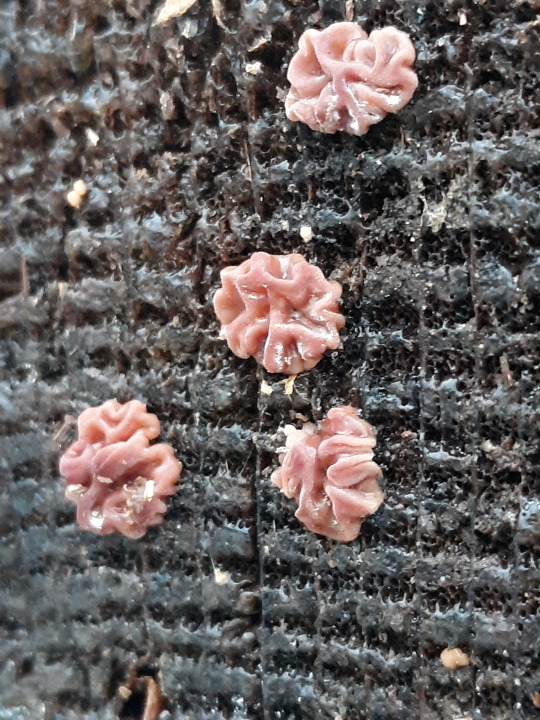
Hold on! Did that log sprout brains? Nope! This growth is not a part of the tree’s anatomy, but rather, it is an “intelligent-looking” crust fungus. It prefers to grow on aspens, but it can be found on other hardwood species. According to iNaturalist, the likelihood of observing this fungus peaks in April and November. (Note: The tree pictured is not the typical host species.)
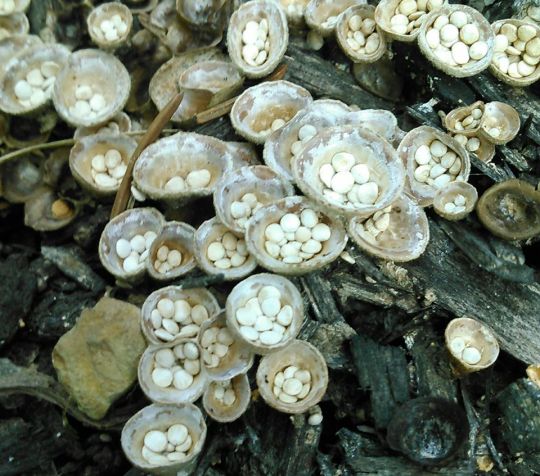
Measuring just 4-10mm across, these infinitesimal “nests” look as though they have been built by itsy-bitsy birds. The spore-containing “eggs,” called peridoles, are kinetically dispersed by raindrops. These little mushrooms can be found growing on woody debris and even in your mulch bed! You just need to look closely.
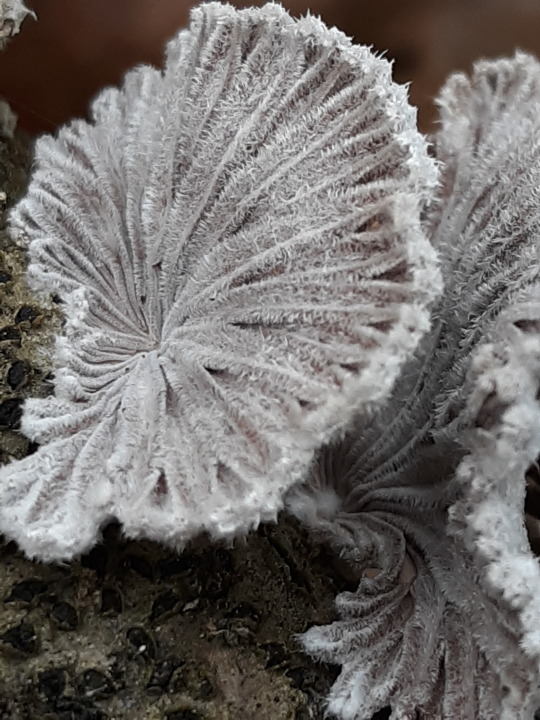
Spiltgill mushrooms are among the most widely distributed fungi. Beneath their plain caps lies a delicate fan containing basidiospores. These mushrooms have the unique ability to open and close their gills based on moisture levels. When the mushroom dries out, the gills split; hence the name. Look for this hidden beauty on fallen twigs and branches during your next hike.
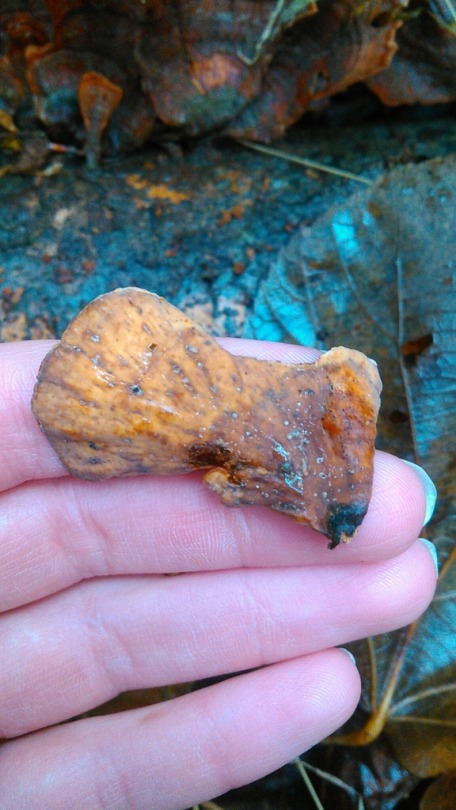
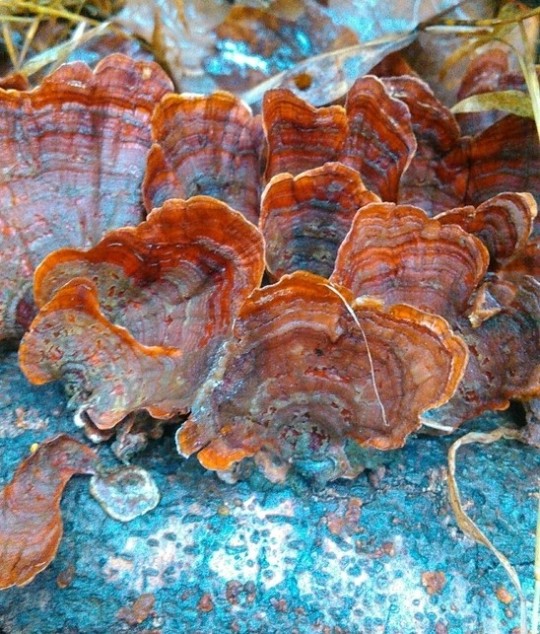
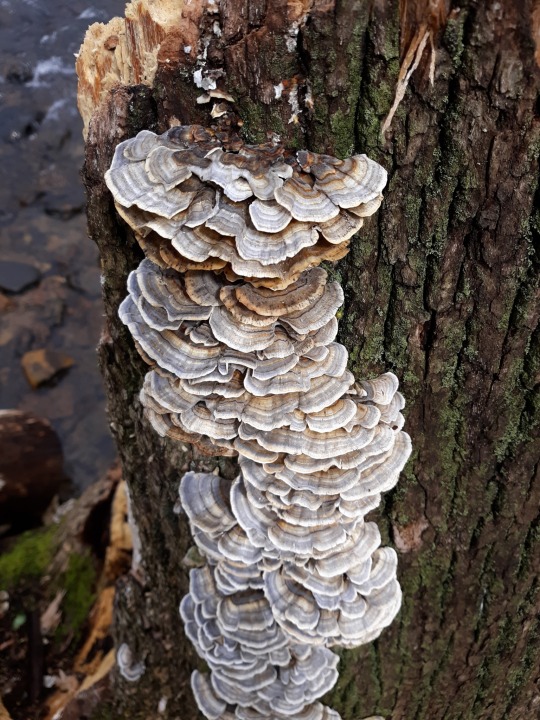
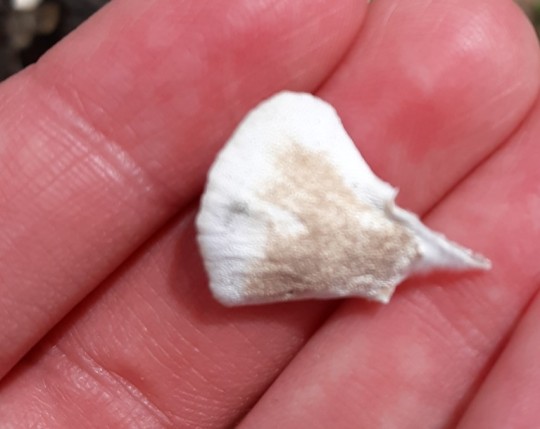
For starters, they look like a turkey’s tail! These seemingly ever-present fungi can be found growing on decaying hardwoods. False turkey-tail, with concentric rings that display deep hues of orange, red, or sometimes white, is often eye-catching. It is called “false” turkey-tail because of its similarity to another group of fungi colloquially called turkey-tail (Trametes sp.). One difference is that Trametes is a polypore (pores on the underside) and Stereum is a crust (smooth on the underside).
