by Patrick McShea
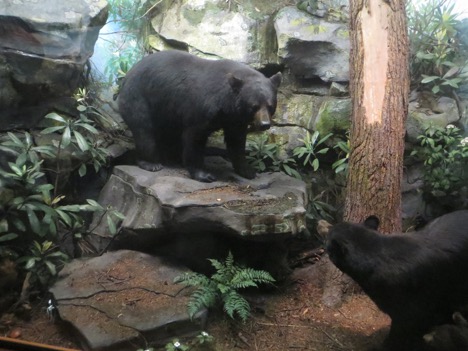
With the opening for The Power of Poison just weeks away, museum educators have been re-examining familiar displays for connections to our summer blockbuster exhibition’s major themes. This self-study process produced some surprising results. For example, a diorama depicting American black bears in a rocky corner of the Allegheny National
Forest is a good place to review meanings for the terms poisonous, venomous, and toxin. The bears in this scenario become mere directional reference points for locating a relevant supporting cast.
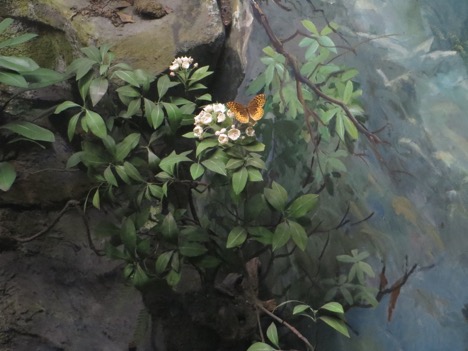
A blooming mountain laurel shrub is rooted in a rock crevice just beyond the rump of the smaller adult bear. The plant, Pennsylvania’s official state flower, is poisonous, meaning that it contains substances that create undesirable interference with another organism’s physiological processes. All parts of mountain laurel are poisonous if ingested. The chemical culprits are two toxins, or specific molecular compounds, known as andromedotoxin and arbutin.
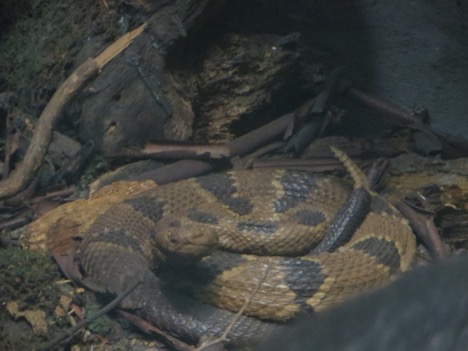
A bear’s width beneath the mountain laurel, an eastern timber rattlesnake lies coiled on a level rock. This ambush predator is one of three venomous snake species native to Pennsylvania. The modifier indicates amazing adaptations for capturing prey—the ability to produce, store, and inject venom, or poisonous fluids, in a lightning fast strike.
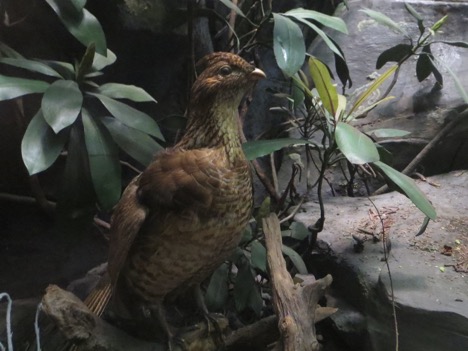
In the diorama’s far left foreground a ruffed grouse, Pennsylvania’s official state bird, perches warily on a worn stump. In discussions of poisons, the species merits an historical footnote. Accounts of people being poisoned after eating ruffed grouse from the 19th century linked symptoms to the bird’s diet of mountain laurel buds during periods of heavy snow cover. When regulations ended winter grouse hunts, poisoning reports sharply declined.
When The Power of Poison is on display (May 27–September 4, 2017), exhibits throughout the museum with poison connections will be marked with distinctive tags. The summer blockbuster exhibition itself is an immersive
experience that lets you venture down a jungle path or step into fairytale on a journey through science, history, and literature to explore poison’s power in the natural world.
Patrick McShea works in the Education and Visitor Experience department of Carnegie Museum of Natural History. Museum employees are encouraged to blog about their unique experiences of working at the museum.
